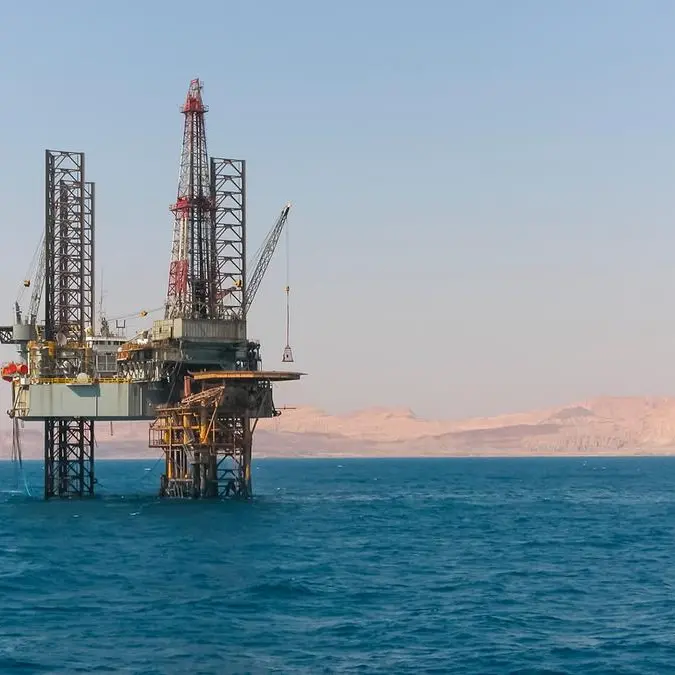
Chevron is studying a $10bn full field development plan to inject steam in Wafra heavy oil field in the Neutral Zone to recover 5-10bn barrels of heavy oil over 25-30 years. But it has to overcome fuel and water supply difficulties and having to contract unqualified local contractors with inexperienced staff. Nick Wilson writes from the Heavy Oil World Congress in Dubai, 29 May 1 June.
Chevron says steam flooding of part of the Wafra field in the Neutral Zone whose production is shared 50:50 between Kuwait and Saudi Arabia would be economically viable at $60/B. A four-year, $340mn pilot scheme is due to end in 2013, and Chevron and Kuwaits state-owned Kuwait Gulf Oil Company (KGOC) will take a final investment decision on full field development. KGOC says each company would invest $5bn in the project and steam flooding will stabilize onshore production (MEES 11 April).
Current onshore production capacity is 300,000 b/d. But Douglas Schoen, business development manager of Saudi Arabian Chevron, told MEES on the sidelines of the conference: There will be a substantial increase in production if the project goes to full field development. Saudi Arabias onshore operations are handled by Saudi Arabian Chevron, which markets the Saudi share of onshore production, and exports it via an offshore single point mooring. The partners say it would be the worlds first commercial application of conventional steam flood in a carbonate reservoir. It would require 10,000 producing, steam injection and temperature observation wells.
A Chevron spokesman tells MEES that the recovery rate would be in the 15-20% range, which would produce 5-10bn barrels over the projects 25-30 year lifetime. In November the pilot scheme produced 1,500 b/d a sevenfold increase from when it started in 2009. Chevron did not, however, give an average or most recent figure. KGOC is more optimistic and says the recovery rate may be as high as 40%, up from the current 5%. Each 1% increase in recovery rate would probably yield 100mn barrels, Chevron says.
Chevron has had to overcome corrosion and scaling problems by using special metals and materials. To produce steam it has been forced to use salt water found in the oil reservoirs. Finding a fuel source is also a problem. Many fuels are being considered, Mr Schoen tells MEES. Chevron is exploring for gas, and is considering importing LNG, fuel oil or burning some of the crude produced. In Canadas Long Lake tar sand development, which lacked a convenient gas supply, steam was produced from burning heavy ends of crude, after it had been run through a processing plant it upgrades the crude and provides fuel for a power generator in one go.
Chevron faces other obstacles too. Implementation is a big issue a contractor with extensive experience in Kuwait tells MEES. Chevron is the project manager and designer, but does not provide services itself, and has to follow the fiscal rules of Kuwait. Kuwait has a poor record of setting the bar for qualifying contractors sufficiently high, and attracting staff with the right experience. Look at the progress theyve made on heavy oil, the contractor says.
Kuwaits plan to develop 270,000 b/d of heavy oil from Lower Fars reservoir in the north may be put back to 2030 (MEES 30 May). And its 50,000 b/d target by 2015 looks increasingly unlikely. KPC is desperately trying to bring ExxonMobil into the project, a source tells MEES. The original plan key to hit Kuwaits target of 4mn b/d crude production capacity by 2020, included 900,000 b/d of heavy oil. KPCs upstream division KOC also hit problems when it tried to develop non-associated gas fields in the north, having contracted a local firm with no experience in high-temperature, high-pressure, sour gas to build the processing plant. It delayed the project by more than a year.
Oxy Boosts Oman Crude Output
US independent Occidentals Mukhaizna field has reached 120,000 b/d up from just over 100,000 b/d at the end of 2010 an Omani official tells MEES. The project needed double the amount of wells that Oxy planned when it won the concession, pushing costs from $2bn to $9bn (MEES 15 November 2010). It still needs more steam and more wells, but they will hit 150,000 b/d by mid-2012, he says. Oxy runs the project in partnership with the upstream division, Liwa, of Abu Dhabis state-owned Mubadala, and spiraling cost has caused tension between the two partners, pressuring Oxy to make an all-out effort with its Shah sour gas field development in Abu Dhabi, UAE sources tell MEES.
Omans main producer is Petroleum Development Oman (PDO) Omani government 60%, Shell 34%, Total 4%, Portugals Partex 2%. PDO is doing quite well in terms of test production from its heavy oil fields discovered in 2009, including Al-Ghubar South, a Muscat source tells MEES, but they are still being appraised. Al-Ghubar South could boost Omans reserves by 1bn barrels and PDO has carried out a successful steam trial, MEES learns. PDO says it is likely to be one of the largest oil discoveries ever made in Oman.
Conference panelist Khalfan Mahrazy, PDO Senior Planning and Design Well Engineer, tells MEES that PDO will start steam injection soon at Qarn Alam field. The project will lift 16 API crude output to 41,000 b/d within 18 months from 2,500 b/d. Meanwhile, the 2,000 b/d of output from Amin field will also be raised through steam flooding. The steam plant will come on stream in 2012 and production will hit 20,000 b/d by 2018, he says. PDO is implementing miscible gas injection at the Harweel cluster, and started polymer injection at Marmul in January 2011.
Bahrain Targeting 100,000 b/d From Awali
Oxy also teamed up with Abu Dhabis state-owned Mubadala Development Company and the National Oil and Gas Authority of Bahrain (NOGA) in 2009 to develop Bahrains Awali field. The joint venture, Tatweer Petroleum, said it would more than double output to 75,000 b/d within five years and plateau it at 100,000 b/d before 2020.
Awali has a number of shallow reservoirs with heavy oil, whose gravity varies greatly even within the same reservoir, MEES learns. Up to 10 years ago it was considered to be impossible to develop solid tar. But a study by Schlumberger showed that there were pockets of moveable oil.
The shift to heavy crude is essential to meet global energy demand, Trevor Morgan, senior energy economist at the International Energy Agency (IEA), told the conference. Half of the conventional resources will have been produced by 2035 32% have already been produced today, he said. But unconventional resources have been barely exploited. With higher prices and advances in technology, more oil will be produced longer term.
Copyright MEES 2011.