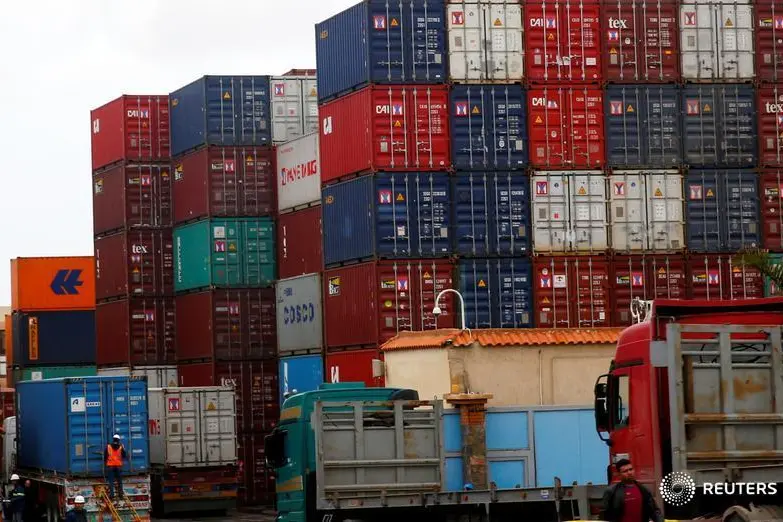
As domestic consumption of cement has shot up, the government has now abolished the 20% tariff imposed on imported cement. After the Hejira year 1426, however, the import duty will be reimposed at 5%.
Dr. Zamil A. R. Mokrin, general manager of the Eastern Province Cement Company (EPCCO), says: "Now you can import cement from anywhere in the world without paying any import duty for a period of one year."
Despite the zero cement import tax, local cement companies' domestic market is not much affected because tariff on imported cement has not been actually a form of protection from the government because there remains a restriction preventing local companies from increasing their prices even if there is a big demand, as what is happening now. Local cement companies are not also seeing a revival of cement importation because they are confident that the government will continue to protect and support local industries like cement.
Saudi Arabia's expected construction boom, bolstered by the recent government announcement of mega projects worth over SR2,340 billion during the next decades, has ushered in fresh expansion in the local cement industry.
The Saudi cement industry is currently producing more and operating at near full capacity. The eight major cement companies have existing clinker annual capacity of 21.4 million tons, which guarantees Portland cement production of 23 million tons. Domestic consumption, on the other hand, has reached 25.14 million tons in 2004.
The local consumption, which is well above the production of the industry, has been partly satisfied by a 7% import.
Domestic Production
As demand for cement continues to increase, an indication of the country's economic revival, the eight cement companies are now expanding their production capacity to a total of 11.25 million tons, which is 52.6% above their present production level.
This expansion thrust, which will cost the cement industry an estimated investment of SR.10 billion, will raise total clinker capacity to 32.65 million tons, which, in turn, can adequately produce 34.5 million tons of Portland cement.
The demand and supply position of the cement industry is now being balanced by the cement companies by increasing production. The position of the industry is that it is determined to meet the supply need of the local market first before going into export.
The ongoing capacity expansion of the eight major cement companies to raise clinker capacity to 32.65 million tons to produce 34.5 million tons of cement is sufficient to meet total local consumption, which has been growing at the rate of about 11.6% annually during the last five years, reaching 25.14 million tons last year.
Two new cement companies, which are expected to start commercial production by 2008 with combined output of 2.55 million tons of clinker, will further boost total production of clinker, including those of the ten companies, to 35.2 million tons, or 37 million tons of Portland cement.
On the demand side, given that consumption rate will level at around 5% through 2008, local supply requirement will rise to nearly 31 million tons. This demand would then be exceeded by the industry's designed capacity by nearly six million tons. Domestic consumption of cement has been in upward trend for years.
During the last six years, from 1999 to 2004, consumptions were as follows: 14.517 million tons in 1999, 15.778 million tons in 2000, 18.242 million tons in 2001, 20.851 million tons in 2002, 23.261 million tons in 2003, and 25.140 million tons in 2004. Imported cement supplied a small volume to the consumption, the biggest being 1.3 million tons in 2004.
The ongoing capacity expansions of the eight major cement companies (in million tons) are as follows: Saudi Cement Company (5.9), Arabian Cement Company Ltd. (4.9), Southern Province Cement Company (4.7), Yamamah Cement Company (4.6), Yanbu Cement Company (4.4), Eastern Province Cement Company (3.3), Qassim Cement Company (2.7), and Tabuk Cement Company (2.3).
The two new companies, which will add their capacity to the industry, are Riyadh Cement Company (1.4) and Khiat Cement Company (1.2) Granting that excess production will surface, there is always the export market that will absorb any idle capacity of the industry. However, with most of the companies operating at near full capacity and local demand still stable and increasing, looking for the export market many not be an option for most of the companies.
Cement companies have always considered the fact that supplying the local market, or the neighboring Gulf countries, is more profitable than selling overseas. The high costs of shipping and freight are factors that have prevented most of the companies in seeking market overseas.
Local cement companies have time and again adapted to the cyclical profitability of the industry, such as during the 1993-1995 and 1997-2000 period when excess capacity saddled the industry. Because of the high investment in the industry, local companies have always come out resilient in weathering off bad times and enjoying the bonanza when demand over stripped production.
As of now the industry is enjoying a big demand and all the eight companies are selling their products. The current and forthcoming construction activities, which have increased consumption of cement and steel products, are expected to last.
Mr. Abdul Mohsen Al Moushegah, chairman of the Al Moushegah Group of Companies, a diversified Saudi business group engaged in construction activities for the oil, gas, petrochemical, power, cement plants and other heavy industries, has said that over 90 percent of the total cement production will be supplied mostly to local buyers and contractors, particularly to housing projects in the government and private sectors.
Mr. Moushegah has indicated this during the signing of the Al-Yamamah Cement Company's SR.1.5 billion expansion program, which targets to increase production capacity to 20,000 tons of clinker per day.
In the Eastern Province, where most of the construction activities will take place, development projects are starting to trigger higher demand for cement and steel. Saudi Iron & Steel Company (Hadeed), which currently producing some 2.7 million metric tons of long steel products and 1.1 million metric tons of flat steel products, is also expanding its production, like the cement industry. By the year 2006, Hadeed will be producing over 5 million MT of both products.
The Saudi cement industry is confident that it will surmount any problem that may come in the way even if the construction boom will cool down in the medium term, given the projection that overcapacity of six million tons may happen by 2008 when most of the expansion programs come on stream. Investment in cement stocks has remained bullish and is expected to clinch double digit returns in the coming years.
J.A.
© Saudi Commerce and Economic Review 2005