PHOTO
15 March 2017
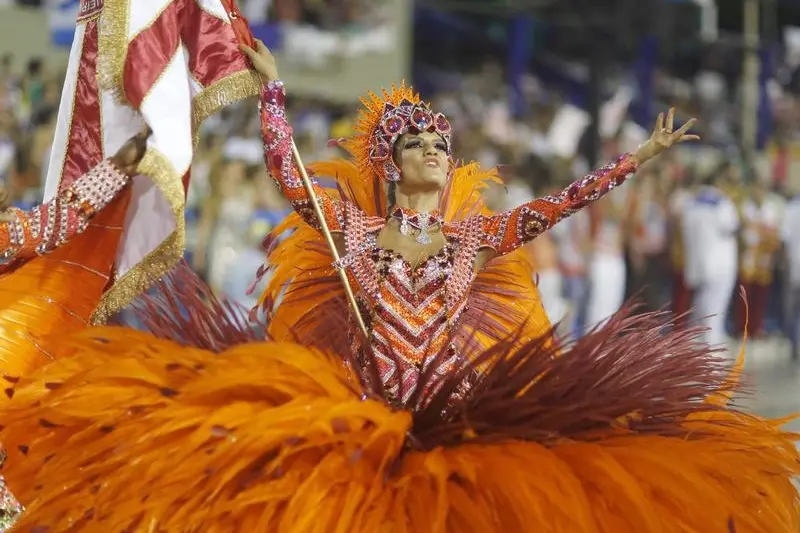
BEIRUT: In a whirl of vibrant colors, loud percussive music and samba dancing, the Brazil-Lebanon Cultural Center transformed its residence into a scene straight from the Brazil Carnival on the streets of Rio de Janeiro. In collaboration with the Embassy of Brazil in Beirut, the annual festivities paid tribute to the largest festival in the world, providing expatriate Brazilians with a piece of home while showcasing their culture to others.
There is a big [Brazilian] community, Najua Bazzi, director of the Brazil-Lebanon Cultural Center, told The Daily Star. Our estimate is that around 10,000 Brazilian people live here in Lebanon.
The party kicked off with live band Xango, performing traditional samba songs that had the dance floor packed and many singing along to well-known favorites.
To get everyone into the spirit of carnival, colorful masks, feather headdresses and flower wreaths were handed out to those who hadnt brought their own. These touches are the heart and soul of the festival, which traditionally has huge parades of floats, dancers and vast samba bands, with smaller local parties taking place in every spare corner.
As the biggest party in Brazil, [Carnivals] importance as an element that composes the Brazilian identity is undeniable, Bazzi said.
It is a national ritual that unites everyone and that highlights our culture internationally.
The second part of the evening saw samba dancers from Passos Alegres, a local samba and Afro-Brazilian dance and music school, take to the stage. Donning the typical samba costumes made to resemble birds of paradise, they led an interactive performance, stepping down to dance with the audience and encouraging people to copy the dance steps.
The final performance featured Bloco Rubra Rosa, an all-female samba percussion band. Samba bands provide the central rhythm for the entirety of the Brazilian carnival, with parades including hundreds of samba band schools to lead the procession. Each band has a leader with a whistle to sound out the rhythms that the band members then mimic back.
While this event focused on Brazil, there are many cultural overlaps between Brazil and Lebanon.
There are over 7 million Lebanese descendants living in Brazil and it is well-known how much Lebanese people have contributed in many fields to the formation of our country, Bazzi said.
Brazil is a melting pot of cultures and because of this we assimilated very well with the Lebanese in aspects such as gastronomy, business, literature and even some of our language. In my vision, the convergence point of both cultures is mainly our festive spirit, followed by our joy of living, the appreciation of good moments, the value of friendship, charisma and the capacity for resilience of our people.
Brazilian festival street food was also on offer at the event, such as empanadas (filled pasties), brigadeiros (condensed milk truffles) and churros, as well as sangria and other cocktails.
The festival is held annually before Lent, 51 days before Easter, and sees 2 million people per day fill the streets of Brazil. Depending of the region, the festivities can last between six and ten days, with many Brazilians carrying on at home after public celebrations end.
Shady Kostantine, who attended the event, said, Ive been coming for five years and each year is better than the last ... I hope all NGOs put forward events like this because culture exchange is an asset for people today. The Brazil-Lebanon Cultural Center hosts events throughout the year, offering opportunities for cultures to mix and exchange knowledge.
Copyright The Daily Star 2017.



















