The UAE's northern emirates are a drag on Abu Dhabi's expenditures, which it is trying to cut back
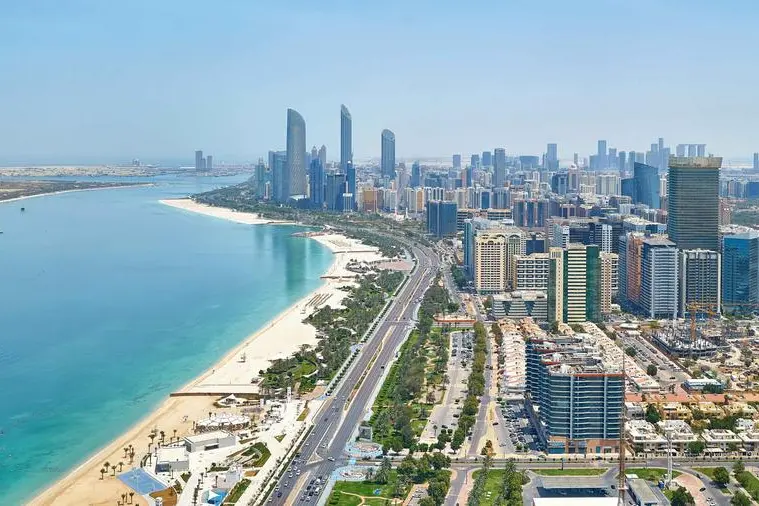
It is sometimes all too easy to forget that the economy of the United Arab Emirates is more than oil-rich Abu Dhabi or dynamic - and debt-ridden - services hub, Dubai.
It comes as a surprise to many first-time visitors that the country is in fact a federation made up of seven individual states, each ruled by a separate emir, and that there is a huge variety in the landscape, character, and level of development of Abu Dhabi, Ajman, Dubai, Fujairah, Ras al Khaimah, Sharjah and Umm al Quwain.
That difference was recently highlighted by the country's United Nations Development Programme (UNDP) director Elissa Sarrouh, who described the UAE's development as "unequal" in an interview in early August. More should be done, she said, to reduce the differences between Dubai and Abu Dhabi, where most of the country's wealth lies, and the poorer emirates like Ajman or Umm al Quwain.
With turmoil in Yemen, Syria and Libya and Gulf Co-operation Council (GCC) troops patrolling the streets of Manama, closing the gap - and hence tensions - between the richest and the poorest in the UAE should be a top priority for the federation's leaders. Yet with fears that the global economy could be about to hit another major bump in the road, and the travails of Dubai's 2008-2009 debt crisis fresh in the minds of the emirate's leadership, it looks unlikely that the governments of the northern emirates will receive much in the way of largesse in the near future.
In fact, when the UAE's federal government decided on its state budget for 2011-2013, it cut its spending by six per cent for this year while laying down a total spending plan of Dhs122 billion ($33.2 billion) for the three year period the new budget runs for. The decision to cut back spending came as Abu Dhabi, a major contributor to the federal budget, decided to focus on fiscal, rather than developmental matters, says Ayesha Sabavala, deputy economist for the Middle East and North Africa at the UK's Economist Intelligence Unit. The budgets for the next three years are all projected, at least, to be balanced.
"The focus, for Abu Dhabi in particular, is on finances for the moment and that will be a problem for the other emirates," she explains. "Abu Dhabi contributes one third of the overall budget. If you look at the federal budget for 2011, it gives the best indication of where spending will be in 2011. There has been a significant tightening in projects."
This is in line with Abu Dhabi's own spending, which it is reining in after committing to tens of billions in expenditure, says one UAE-based banker.
"Abu Dhabi is very wary about overextending itself after what has happened over the past few years," he says. "The absolute last thing they want is to end up where Dubai was in 2009 and 2010."
Most of the 2011 budget is devoted to meeting social demands such as healthcare, pension provision and social work, which take up 46 per cent of the Dhs41 billion allocated for the year. Only Dhs418 million has been allocated for major infrastructure projects like roads.
While the federal budget makes very little difference to Abu Dhabi and Dubai, which run their own emirate-level spending programmes, the poorer emirates are likely to lose out, Sabavala says.
"All the emirates are cutting back, reviving their plans and this is going to hold back investment in the northern emirates," she says.
Other issues are likely to impact the northern emirates even further, like the country's chronic gas shortage and the June 2011 decision by Dubai state fuel company Emirates National Oil Company (Enoc) to halt sales of subsidised fuel outside of its own borders. The emirate has been struggling to pay off an estimated $110 billion in debts run up by state-run firms, and wants to focus on balancing the books at home.
"Dubai is no longer willing to provide subsidies to other emirates," Sabavala says.
Inevitably, this has left the richest emirate, Abu Dhabi, to pick up the slack, and since July Abu Dhabi National Oil Company (Adnoc) has been providing subsidised gasoline and diesel to fuel stations across the UAE. This just adds to the strain being placed on the emirate, says one regional economic analyst, along with its commitment to spend around $1.6 billion on power generation and transmission capacity in the northern emirates, announced in March as unrest grew abroad.
"Abu Dhabi basically pays for the lion's share of the federal budget, sells cheap fuel to everyone, keeps the lights on with its power stations and helps Dubai pay down its debts," he says, referring to the estimated $20 billion Abu Dhabi lent Dubai during its 2009-2010 debt crisis. "No wonder it wants to at least see the books balanced on a federal level."
Not all of the northern states are entirely dependent on federal spending, however, and Ras al Khaimah and Fujairah are likely to see continued development driven by their local governments rather than federal spending. Charles Seville of UK ratings service Fitch singles out the economy of Ras al Khaimah as particularly well-managed. Fitch affirmed Ras al Khaimah's AA+ debt rating in April, citing the emirate's public finance management and continued budget surpluses.
"RAK has the advantage of being very small and well-located, a lower-cost alternative to Dubai with its free zones," he says. "They have diversified into education and health tourism, managed their debts and reduced their liabilities. They have good control of their state companies unlike Dubai, and have been able to divert their output to elsewhere in the Gulf."
Fujairah's access to the Gulf of Oman gives it a strategic advantage, meanwhile, and makes it an attractive investment destination for Abu Dhabi, which remains wary over security in the Gulf and the chokepoint around the Straits of Hormuz in particular. Abu Dhabi state investment fund International Petroleum Investment Company (Ipic) has already built a $3.3 billion pipeline linking Fujairah with Adnoc's Habshan oil gathering and processing facilities, and is planning to build a $3 billion refinery in the emirate.
"Fujairah is a big part of Abu Dhabi's plans for oil," Sabavala says. "But that is it," she adds.
Further investment in developing a diversified economy for the emirate is off the cards.
Seville and Sabavala both say that beyond budgetary assistance, what the northern emirates really need is for Dubai and Abu Dhabi to continue growing, generating more wealth and demand for services elsewhere in the union.
Meanwhile, Sabavala believes that further spending will only be forthcoming if unrest becomes widespread, particularly in Sharjah, which has suffered both fuel shortages and electricity brown and blackouts in recent months. In the late 1980s, Saudi Arabia helped end a debt crisis in the emirate, but obtained considerable influence, an event Abu Dhabi would like to avoid repeating.
© The Gulf 2011