The number of companies operating in Dubai International Financial Centre (DIFC) continues to increase, while prices of commercial properties are holding up too.
This is because "we are offering state-of-the-art infrastructure", Abdulla Al Awar, DIFC Authority Chief Executive Officer, told Emirates Business.
"The fees in DIFC are maintained in terms of office space accommodation.
"There is also the service level associated with that so one cannot package it as an office space only," he added. "This is a federal free zone and a federal free zone has certain legal benefits that are not available in regular office space."
Al Awar said 75 new companies have applied in the first half of this year, despite the crisis. The centre, which has an occupancy rate of about 90 per cent, is also running an "extensive" waiting list.
The centre is thus "on track" to complete its whole financial complex in the 2012-2013 period. With more units coming up beginning this year, DIFC is all set to further stimulate demand.
It will hold conferences in India and London this year and host the DIFC Week in the first half of next year. DIFC is also planning to launch offices in New York, Tokyo and Shanghai. "Most institutions in the first half were focused on sustainability and survival," he said. "We're now approaching the fourth quarter and I sense more activities both for ourselves and for our clients."
To what extent did the real estate downturn affect DIFC?
The price in Dubai has stabilised. The fees in DIFC have been maintained in terms of office space accommodation and that is due to the fact that we are offering state-of-the-art infrastructure as well as the service level associated with that - one cannot package it as office space.
This is a federal free zone and a federal free zone has certain legal benefits that are not available in regular office spaces.
Are the office spaces here running at full capacity?
We have about 90 per cent occupancy rates. We have maintained very good occupancy levels. Since the beginning of the year until June-end we have managed to attract 75 new businesses. That signifies that the momentum is still building.
Is there a long waiting list?
The list is quite extensive... The reason for the number of companies is due to the fact that in the past there was no space available in the centre. The buildings here are fully occupied. The new buildings were not up and running until 2009 and soon, 2010, 2011, which is happening now. We are continuing the (expansion). The plan is to have the centre completed by 2012-2013.
Considering the credit squeeze and the spur of retendering due to the drop in construction costs, do you think the 2012-2013 target will be delayed?
I don't believe so. If you look at the developments they are on track and we do have a market for the centre. We do attract international investors who do want to tap into the Middle East and into the Menasa region, specifically following the crisis as it presents them with new opportunities. The demand is there, we have attracted 75 new companies since the beginning till the middle of the year and that number is increasing as well.
But are developers slowing down? Although a lot of government measures have been undertaken to ease the credit market, financial institutions are still reluctant to lend.
In terms of the size of the centre you have to put things into perspective. Compared to other projects in Dubai it's not that massive. It's natural that the impact is not that massive that is why developers are on track.
Have you not seen a healthy correction here?
There has been a healthy correction in residential property to a certain extent.
The UAE has taken a number of steps to kick-start the economy, such as abolishing the minimum capital requirement for a new firm. Will DIFC cut its fees as well?
As far as the DIFC is concerned, our civil and commercial laws are comparable to international standards. As you know, we are running a common law system in the centre. It already matches international standards. From that perspective I wouldn't think there is a need of a revision of any sort.
The A1 rating of DIFC Investments (DIFCI), along with other state units, was placed by Moody's for a possible downgrade and one of the cited reasons was the limited transparency.
I am not sure that is the reason. As a matter of fact DIFC Investments is a subsidiary of DIFCA that handles and overlooks the commercial activities in the centre. It was set up to segregate government activities carried out by the authority from the commercial activities done by the DIFCA. Again it has to do with the scales, the scale of DIFC Investments is different from other institutions. DIFCI is aligned to DIFCA in terms of investment strategy. That differentiates it from other SWFs or any investment companies because the mandate for those funds will be purely commercial, which is not the case in DIFCI.
Any update on your global plans?
There is a concept called DIFC Global, which offers an ideal platform for companies to feel the ground before they come into the centre. It started with a few floors here in The Gate building, it has grown significantly, to the extent that we have decided to do it globally. There is a DIFC Global office in London and there is also one in Hong Kong, it opened more than six months ago now.
DIFC also plans to launch offices in New York, Tokyo and Shanghai. Will that be happening this year?
We are continuing to assess that. It is definitely a part of the planning exercise that we will be conducting in 2010 and beyond.
It depends on the level of demand in those markets.
DIFC has been operating under the self-sustaining model. This model was applied to most government agencies. This model, however, is under pressure due to the tight credit market. Will this model continue?
The model of operations is always like a business. There were grant of lands through a bidding process back in 2002 and that is why you see investors building properties here and that return is being used continuously to improve the operational capabilities of the centre. Whether it is Dubai Media City or Dubai Internet City or Healthcare City, the manner of operation is almost the same.
But some say this model has become a difficult now considering the credit squeeze.
This self-sustaining model started with Dubai Internet City, I believe. It was the first project that was intended to accelerate the development of the knowledge economy focusing on the IT cluster.
It did not start as a reaction to something. On the contrary there was a vision set by His Highness Sheikh Mohammed bin Rashid Al Maktoum [Vice-President and Prime Minister of UAE and Ruler of Dubai] which was clear in terms of developing the knowledge economy. For that to be developed you need a certain roadmap. It started with improving the core competencies of Dubai - from the transportation industry, infrastructure and tourism sector. That enables Dubai to enter into the second phase which allows us to create these institutions utilising those core competencies.
Such a model has indeed been successful. But some commentators point out that such a model went well when there was plenty of liquidity. Will this model be revised or reviewed?
I believe that the interest is still there. I believe the international business community is still heavily invested into the Middle East.
You can realise that by several factors: first you have the number of businesses that are applying [to us] - it means there is still a high level of interest.
If they didn't see those opportunities you wouldn't see the increasing trend of businesses coming in. The business model should work even though the crisis is here.
Registered companies in DIFC have ballooned from 16 in 2004 to 744 in 2008, and there are now about 850. Shall we see the same momentum in growth?
I would foresee growth, whether it's the same impact or not we would have to wait and see. Some companies might be very conservative in their approach. Some companies may be delaying their decisions but I do see growth. We've had good progress over the past four and a half years.
We are coming to our fifth anniversary in November. Overall, we have more than 850 companies that are registered, that's quite an achievement and the year-on-year growth is also good. We have about 350 fully-fledged financial centres regulated by the DFSA. That is a good critical mass for a centre in four years of operation.
Recently there have been talks that DP World, the bourse's main source of turnover, may move out. Are you preparing contingencies for a future without DP World?
I think that question has to be posed to Borse Dubai, the parent of Nasdaq Dubai. However in my opinion Nasdaq Dubai plays an integral role in the development of the capital markets. The underlying infrastructure for Nasdaq Dubai is the international standards set in terms of listing requirements and transparency and that provides an ideal venue for businesses, who want to tap into liquidity. In 2008 the world saw a crisis and it is natural that there will be some drawbacks. But most importantly, it is difficult now to create such infrastructure that Nasdaq Dubai has and that has a leading edge in my opinion.
To ride the wave of recession, do not you think a merger between DFM and Nasdaq Dubai could be feasible?
Now under a consolidated approach - because Borse Dubai owns both DFM and Nasdaq Dubai - that can be looked at and I think one thing is for sure, when we develop strategies we will be closely in contact with Borse Dubai and Nasdaq Dubai team. Not only them but also our regulators - the DFSA.
It can be looked at but is it in the pipeline of discussions already?
There isn't to the best of my knowledge, any specific talks.
But is it a possibility?
It could be, yes.
Going on to the economy as a whole, have we really passed the worst?
I think that question gets asked a lot. The crisis happened in the US and Europe mainly and it's natural to have a lag. Going forward we will see an upward trend. Most institutions in the first half were focusing on sustainability and survival.
We are now approaching the fourth quarter and I sense more activities in the fourth quarter both, for ourselves and for our clients. We are also becoming more active in awareness creation and we'll be going to India in October.
We will be going to London as well in November and that will stimulate a lot of activities and interests.
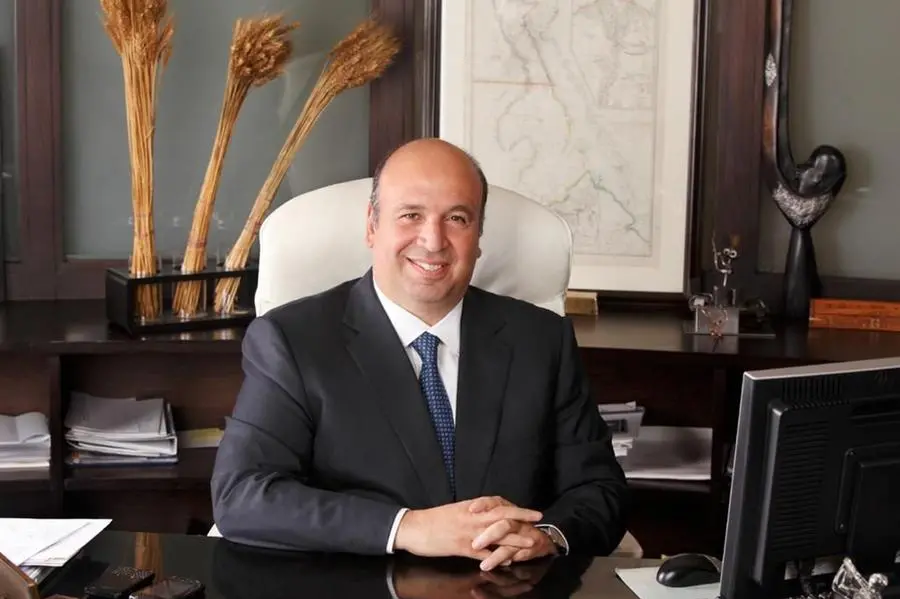
Profile: Abdulla Al Awar Chief Executive Of?cer, Dubai International Financial Centre Authority
Al Awar was appointed as the Chief Executive Of?cer of DIFC Authority in June 2009. In this role, he heads the organisation and looks after developing overall strategy and operational management of DIFC. Before assuming this role, he served as the Managing Director of the DIFC Authority, where he was responsible for attracting ?nancial institutions to operate in the DIFC as well as the creation of an ideal platform for non-?nancial and professional service providers that support the constant development of the ?nancial sector. Al Awar is also a member of the Sheikh Mohammed bin Rashid Programme for Leadership Development since 2005. He holds a Bachelor's of Science Degree in Business Administration from the University of Colorado, USA
By Karen Remo-Listana
© Emirates Business 24/7 2009