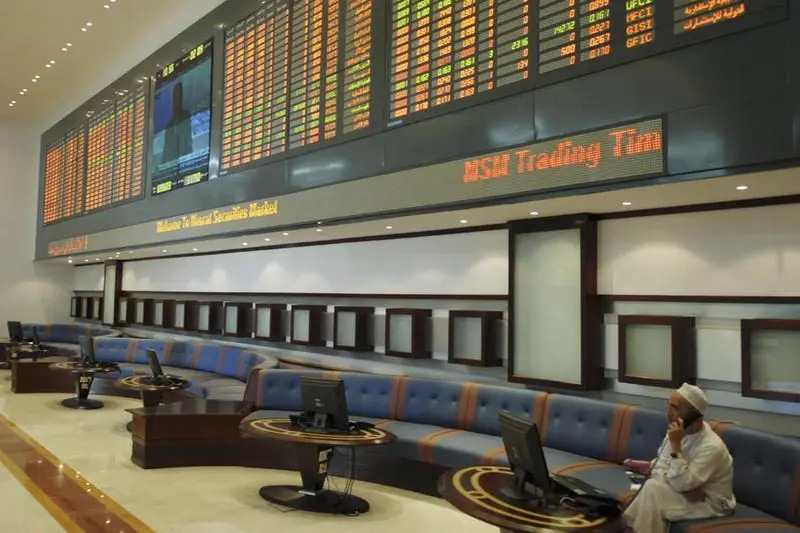
While some regional markets such as Egypt and Bahrain had a dreadful September - on account of their own domestic issues - other regional markets remained steadfast in the face of a severe crash in global stock markets.
Can regional markets continue to remain cautiously bullish even as their global counterparts enter bearish territory?
Saudi Arabia was the best performing Gulf market in September, eking out gains in what was a nightmarish month for global investors. The Saudi Tadawul, the largest in the region by market capitalization saw gains of 2.23% in the month.
Meanwhile, Bahrain was the worst performing market in the Gulf, falling 7.35% as economic and political conditions deteriorate in that country.
"The market's loss can be attributed mainly to the retreat of the industrial index, which dipped by 38.6 percent during the month, due to the retreat of share price of heavyweight Aluminum Bahrain (Alba) by 39.1 percent," says Global Investment House. "Alba came under strong selling pressure on investors' fears that a planned gas price hike will have a big impact on the company's earnings."
In the wider region, Tunisia was the best performing market, rising 3.75%, which is heartening given that the country was the first to feel the effects of Arab Spring with the ouster of strongman Zine El Abidine Ben Ali amid popular protests.
In sharp contrast, Egypt the other major country impacted by Arab Spring protests, fell nearly 11% in the month.
Verdicts passed against Ahmed Ezz, the ex-chairman and main shareholder of Ezz Steel Company (ESRS) reflected negatively on Egyptian shares, says Global.
"The market trimmed some of its losses after the appointment of Mohammad Emran as new chief of the stock exchange, before it went back to its declining trend. EGX30 index retreated by 10.83 percent during the month of September 2011, widening its YTD losses to 42.07 percent, to be the worst performing stock exchange not only in the Middle East, but also worldwide."
But some are holding out hope for the Egypt Stock Exchange, with Religare, an emerging markets investment bank, remaining bullish on the market.
"While we made a big call on the Egyptian market on September 27, we indicated our bias toward large cap stocks at the moment as the political process progresses and the witch hunt against Mubarak's allies reaches a nadir," says Emad Mostaque, an analyst with Religare.
"If the rulings given out over the next few weeks prove positive to shareholders, as we believe they will, then companies such as Talaat Mustafa Group (TMGH EY) (our favoured real estate play) and El Sewedy Cables (SWDY EY) may bounce extremely sharply. Certain Egyptian defensives have also been sold off aggressively, with E&P service provider Maridive Oil Services (MOIL EY) and agricultural stock Juhayna (JUFO EY) notable examples. We still believe there will be net selling pressure in this space, but things could turn around very quickly."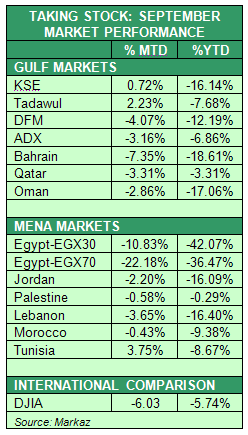
Q4 prospects
EFG-Hermes says a sharp rally in global equity markets is a strong possibility in the fourth quarter, with positive spill-over implications for MENA, but believes that we are still some way from the end of this bear market.
"MENA earnings revisions appear to be bottoming out after three years but, given global risks, we would prefer to see this trend cemented before becoming more positive, EFG told clients in a note.
"We therefore recommend that investors remain cautious. Local factors - such as pending 2011 dividend payouts, 3Q2011 earnings season and the approaching Egyptian elections - may also support MENA markets, which have become more correlated to global markets in recent months," notes the bank, recommending being overweight on Qatar."
EFG, however, does not expect an MSCI upgrade in December for the UAE and Qatar, given the lack of progress in addressing their concerns.
"Moreover, recently announced changes to MSCI's foreign ownership rules are likely to see Qatar's weight in the Frontier Market (FM) Index drop by c50% and the UAE's by 10% as the new rules put IQ, CBQ, Emirates NBD, FGB and Sorouh at risk of being removed from the index. We see a limited, temporary negative impact from this move as FM investors usually have significant flexibility in investing off-benchmark."
Q3 earnings
Global research shows that aggregate volume of shares traded on the GCC bourse during September, fell by 16.2%, while value of shares traded rose by 33.3% during the month.
The breadth of GCC stock markets tilted towards advancers in September 2011, as 288 stocks registered monthly gain, compared to 202 decliners, out of 566 traded stocks.
In fact, market capitalization of the GCC markets combined stood at $705.5-billion, up by $30 billion during the month (adjusted for cross-listed companies), according to Global data.
Over the next few weeks, investors are expected to monitor third quarter earnings closely prior to taking any new positions in the stock markets.
EFG-Hermes expects Middle East listed companies to see a 38% increase in earnings in the third quarter compared to the same period last year.
Bahrain-based Securities And Investment Company (SICO), believes a 21% increase in profits for the Gulf listed companies is in the cards.
"In 2Q11, more than 60% of the GCC listed companies' results beat analysts' consensus expectations for the second consecutive quarter," says SICO analysts in a note.
"The trend seems to be continuing in 3Q11 with three out of the four companies, which already announced their third quarter results (Jarir Marketing, Yanbu Cement, SAFCO, and Almarai) reporting above consensus profits."
SICO says that despite a strong double-digit profit growth of nearly 15% in the first half of this year, GCC equity markets' performance has been dismal with S&P's GCC Index, dropping nearly 12% YTD - similar to global markets.
"Global markets rebounded and outperformed GCC markets since 2009 wherein GCC markets' continued their subdued performance during that period. We believe that investors are ignoring the region's equities' strong fundamentals because of increased global economic concerns and regional political issues. In our view, this below par performance of regional equities is unsustainable and is likely to reverse with the continuing improvement in operating performance."
Meanwhile, Al Rajhi Capital expects the Saudi listed companies to post 'respectable results', which is understating its case, given that it expects petchem giants Yansab, Saudi Kayan and Spichem to post 129.9%, 110% and 81% improvements in profits respectively, compared to the same period last year. Bellwether Sabic is forecast to post 39% increase in profits, as oil prices remain high.
"Food companies are likely to have slightly weaker results due to high foodstuff inflation while we believe that retailers will continue delivering outstanding results supported by favourable demographics and consumer spending," notes Al Rajhi.
In the Saudi telecom sector, the Saudi investment bank unit expects Mobily to continue its momentum whilst STC will report 'decent results'.
"Zain, on the other hand, will continue its strong operating results; however, high debt will weigh on its bottom line. Furthermore, we expect a strong net profit growth for Ma'aden driven by higher gold prices and the launch of its phosphate business segment," says Al Rajhi
"As for Saudi Ceramics, we believe the company will continue its decent year on year growth, though Q3 is not the best season for the company."
Did anyone say IPO?
Incredibly in these tough market conditions, two brave companies opened for subscriptions. In the Kingdom, Saudi Hail Cement offered 50% of its capital at a book value of SAR10, and was rewarded with a 227% oversubscription.
In Oman, SMN Power Holding offered a 35 percent stake to investing public starting September 11, 2011. The issue will be open for public subscription for one month, ending October 10.
Conclusion
MENA markets have remained somewhat resilient in the face of a grim global financial market environment. How long can they continue to weather the storm depends on a number of external and internal factors.
Clearly, the regional markets are not an island, especially if oil prices ease as global demand dwindles. In August, Opec cut global oil demand for the year by 150,000 barrels, and now expect a growth of 1.2 million barrels per day for the year.
Meanwhile, the International Monetary Fund's Middle East economist Masood Ahmed says the Gulf market remain vulnerable to a global economic downturn.
Alifarabia.com has also argued in a report that if China suffers a hard landing it break the Middle East last line of resistance, especially as the Eurozone and the U.S. economies are already under pressure and could fall into a recession.
With all these clouds hovering over the Middle East market, even subdued growth will be seen as a major achievement.
Also read: China's Hard Landing And Its Impact on ME Growth
© alifarabia.com 2011