Bahrain's oil and gas sector is the focus of the country's single largest ever investment, a 20-year, $20 billion programme to overhaul oil and gas production and refining capabilities. But will it be sufficient to alleviate fears of future energy shortages?
All things considered, Bahrain's oil and gas industry emerged from 2011 in sound health, and with a lengthening 'to do' list for its executives.
Although activities at state oil company Bahrain Petroleum Company (Bapco) came under intense scrutiny in the wake of last year's unrest - which subsequently saw 300 staff dismissed - official statistics show oil revenues climbed year-on-year, as did oil and gas production, as new initiatives began to kick in.
Far from denting the government's ambitions for the oil and gas sector, last year's events, if anything, reinforced the urgency of securing additional energy resources and increasing export revenues for crude and derivative products, to underpin and drive the kingdom's long-term economic growth.
Against this background, the government recently highlighted a $20 billion investment programme for the kingdom's energy sector, to be implemented over the next two decades. Officials describe it as the single largest investment ever initiated in the country, and will hope it provides adequate return on investment.
While the minutiae are still at the conceptual stage, oil industry officials confirm to The Gulf that approximately $6 billion will be spent on overhauling the state-run Bapco refinery, which has been in operation since 1936. The upstream sector will, however, receive the lion's share of the commitment, with smaller downstream projects such as renewable energy also expected to vie for funding.
Funding mechanisms for the massive plan are currently being studied by the National Oil & Gas Authority (Noga), the government's umbrella organisation for energy-related companies in the kingdom. Foreign partners are, however, likely to play a role, as they have done with other capital intensive projects recently launched in the country.
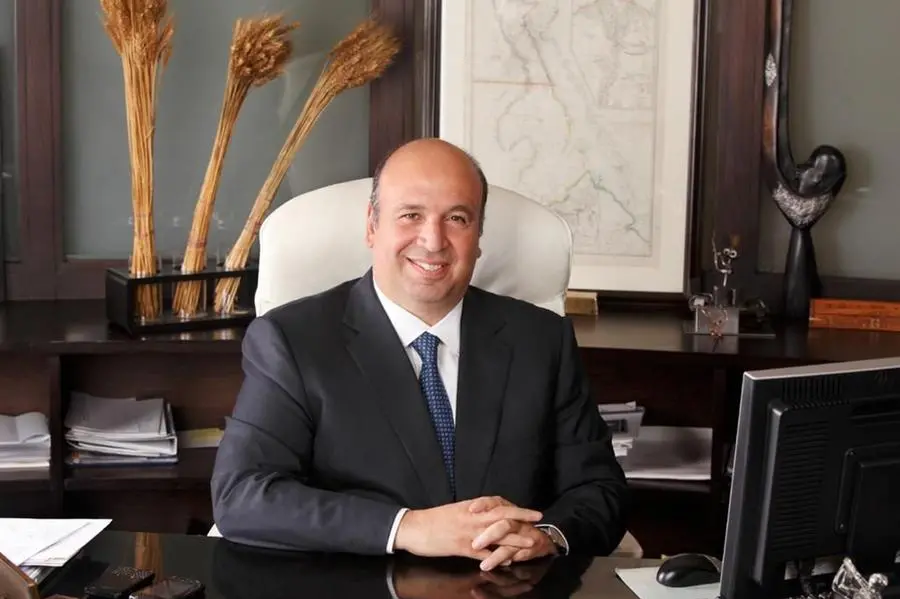
"Foreign companies have already invested a lot of money in this sector and a lot more investments are yet to be made," energy minister Dr Abdul Hussain bin Ali Mirza tells The Gulf. "Of course, if any [hydrocarbon] discoveries are made, joint ventures will be formed accordingly," says the minister, whose term in office has already coincided with a major restructuring of the kingdom's energy sector.
"The influx of foreign investment, knowledge, expertise and technology in this field, coupled with the intensive training that is being provided to Bahrainis will provide an excellent foundation for creation of a hub for skilled manpower, thereby attracting more foreign companies who will invest in the kingdom's oil, gas and petrochemical sectors and provide the necessary capital," he adds.
Some foreign capital and expertise will be channeled into addressing the kingdom's pressing energy security issues. The government worries that gas shortages will limit future industrial expansion and economic growth.
"In the longer term the nation may face gas shortages," the minister admits.
While he insists the kingdom could depend on its indigenous resources "for the foreseeable future", he has spearheaded a policy of lifting domestic oil and gas production and securing imports to bridge any domestic shortfalls in meeting demand from the power generation and desalination sectors, as well as for expanding industries.
In 2010 he visited Moscow and Tehran to discuss deals, and was later understood to have agreed a deal with the Islamic Republic until a dramatic breakdown in political relations with its neighbour last year scuppered the plan.
"We wanted a deal with the Iranians, which was originally suspended over rates, but it has now stopped definitely due to the political circumstances and contacts have ended," he told a Shura Council meeting last month.
He did confirm at the same session, however, that the country would begin importing liquid gas from Russia by 2014-15. Though import volumes have not yet been announced, the deal turns the heat back on the government to build gas import facilities in time. Last year 14 companies were invited to bid on a tender for the construction of liquefied natural gas (LNG) import facilities in Bahrain, with nine companies - including oil giant Shell and Norwegian company
I M Skaugen - said by the minister to have expressed strong interest in participating.
"The evaluation process is in its final stages and the finalist(s) will be announced before the end of this year," says Dr Mirza.
In the interim, work continues to boost output and raise available reserves in Bahrain's onshore and offshore oil and gas fields, with moderate success to date.
Tatweer Petroleum, the joint venture formed in December 2009 between Noga, Occidental Petroleum (Oxy) of the US and the UAE's Mubadala Development Company, has increased output of the onshore Bahrain oil field to 42,500 b/d from about 30,000 b/d, but it still has a long way to go to reach the original target of more than 100,000 b/d by 2017.
The government will also be hoping Oxy comes up with the goods on a major gas well drilling campaign, known as the Deep Gas Initiative. Under a 30-year deal (which could be extended by a further five years), which was fast tracked last summer over fears Oxy would instead invest in Iraq, Bahrain's gas supply could be quadrupled from 16 trillion cubic feet at present to 85 trillion cu ft.
"Gas excavated will be sold to us at cheap rates and they [Oxy] are already here to excavate for oil, so their equipment is in-field and we opted to have them continue," the minister told the Shura Council session last month.
"We didn't want them going to Iraq and we acted fast to have them sign the gas deal because we are here speaking about billions that the government may be getting as a reward," he added.
Current peak gas production capacity from the onshore Bahrain field is about 1.9 billion cu ft per day. To meet increased demand for power generation and industrial use the government plans to increase production capability by about 40 per cent to more than 2.7 billion cu ft per day by 2024, further augmenting production from the offshore fields (being worked on by Oxy and Thailand's PTTEP) and the Deep Gas Initiative when the resources become available.
"The approved development plan will provide the required gas production capacities that will ensure all gas demands in the Kingdom are met until 2024," the minister says.
Attention will soon turn to the massive multibillion dollar refinery facelift at Bapco, which by 2018 will, the Company hopes, deliver new revenue streams and higher standards of environmental compliance.
Chief executive Gordon Smith, who assumed the post on 1 January this year, says the masterplan conceived by his predecessors will create one of the world's most competitive and sophisticated refineries.
Refining capacity will, he tells The Gulf, be increased from about 272,000 b/d at present to 450,000 b/d. Several new units will be added to make it more energy efficient and environmentally-compliant, and will complement a series of strategic investments in the refinery in recent years, including an ultra low sulphur diesel plant, a unit which removes sulphur from refinery streams, and a high value lubricant manufacturing facility, commissioned last year.
Smith says a decision on who will foot the $6 billion bill will be made "sometime between the third quarter of this year and mid-2013" as different phases of the plan are evaluated. As with the upstream projects, joint ventures appear the most likely route, with Saudi Aramco an obvious candidate, though the chief executive admits that, either way, Bapco "will clearly have to think outside the box."
"Realistically, we expect the EPC [engineering, procurement and construction] contracts to be awarded from the FEED [front end engineering and design] study by 2013 and construction to start by 2014, with the upgraded refinery fully commissioned and online by late 2017 to early 2018," he explains.
A new pipeline to bring crude oil from Saudi Arabia to Bahrain for refining will be central to the upgrade.
Talks on replacing the existing 'A-B' pipeline - an ageing eyesore which passes through urban areas and whose throughput capacity limits the refinery's ability to expand - have dragged on for years as both sides failed to agree on a route, or who would pay for it. But the differences now appear to have been resolved.
"Construction is scheduled to start by the third quarter of this year," Smith confirms.
The new pipeline, to cost an estimated $350 million, will carry 350,000 b/d of Arabian Light crude from Saudi Aramco's offshore Abu Sa'afa field - which currently provides about 235,000 b/d of the 267,000 b/d refined in Bahrain - to the refinery, via Aramco's onshore facilities at Abqaiq. Provision is reportedly being made for the capacity of the 155km line to be extended to 400,000 b/d in the long term.
Bahrain's main petrochemical producer, Gulf Petrochemical Industries Company (GPIC), another Noga subsidiary, could also be expanded, says the minister.
"We are considering expanding GPIC, which may result in a new joint venture with Sabic [Saudi Basic Industries Corporation] of Saudi Arabia and PIC [Petrochemical Industries Company] of Kuwait," he notes, though upgraded capacities and timeframes are as yet unclear.
An expanded national oil and gas strategy is vital to Bahrain's long-term economic health. Failure is simply not an option.
© The Gulf 2012