It goes without saying that there is plenty of oil in the Middle East, but the cost of extracting and refining it is becoming increasingly expensive, as Mike Gallagher discovered
The price of oil has been making headline news across the world as it gradually approaches the much talked-about psychological barrier of $100 a barrel and its rise has amazed many oil market analysts who even two years ago believed it was unlikely to rise beyond $75. The rise has been brought on by a number of factors. One them of them is the demand coming from the booming economies of India and China, while geopolitical tensions with the likes of the US, Iran, Turkey and Iraq have also played their part. Alan Greenspan, the former boss of the US Federal Reserve recently said that there is plenty of oil in the ground, but that producers were not doing much to bring it out. Many of the producers would argue otherwise.
The Middle East is believed to hold at least two-thirds of the world's oil reserves and around 40 per cent of its gas reserves. So there is plenty of oil, but getting it to the refinery is another matter. Producers are struggling to shore up their oil and gas facilities which are unable to cope with the demands being placed upon them and at the same time build new plants to cope with the surging demand. The producers are hampered by soaring Engineering, Production and Construction (EPC) costs, a lack of specialised equipment and skilled staff.
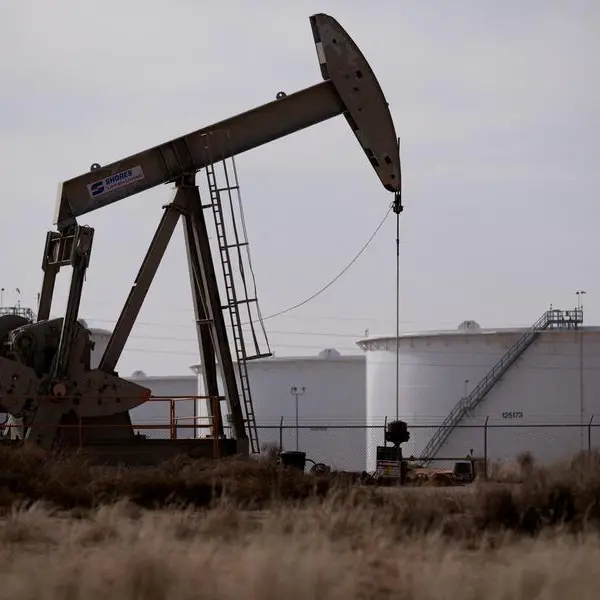
All this comes at a time when demand for oil and gas is at an all time high. There are fewer than 300 oil rigs in the Middle East, and about half of those are to be found in Saudi Arabia, which produces around 11 million barrels of oil a day. The state oil company, Saudi Aramco, recently indicated that it planned to spend somewhere in the region of $20 billion to boost its output to 15 million barrels a day within the next eight years. The kingdom is also thought to be spending $80 billion on refinery projects to increase its capacity in that area.
Saudi Aramco has been in discussions with ConocoPhillips about developing a 400,000 barrel a day refinery at Yanbu, 170 miles north of Jeddah in Saudi Arabia, but the project has struggled to get off the ground as forecast costs have reportedly risen from $10 billion to $14 billion. Meanwhile Chevron Phillips has been busy looking for around $2 billion in financing for a $5 billion petrochemical facility it plans to build at Jubail in Saudi Arabia.
All of the GCC countries have been pumping money into developing their oil fields and refineries in the past few years, but EPC problems frequently have them on the back foot. A number of projects in Abu Dhabi, which produces 95 per cent of the UAE's oil, have been delayed by up to a year, while Bahrain has been in negotiations with several neighbouring countries including Saudi Arabia and Iran about gaining access to oil and gas supplies. The island kingdom has been talking to Iran about developing a pipeline across the Gulf to supply the island nation with gas, although this could, in theory put it at odds with the US, with which it has just signed a free trade agreement. It is also negotiating with Saudi Arabia to double the amount of oil it receives from there. The current pipeline supplies it with around 250,000 barrels per day.
Dow Chemicals, which was planning to enter into a deal with the government of Oman to build a petrochemical plant at the industrial port of Sohar, had to put the project on hold after soaring EPC costs soared to nearly $3 billion from an earlier estimate of $2 billion. The Government of Oman said that gaining access to gas feedstock was also complicating the issue. Several oil and gas projects across the Middle East have been bedevilled by sky-rocketing EPC costs. The Egyptian government has been casting around for finance to construct new refineries, while Syria has also struggled to find banks willing to provide capital to upgrade its hydrocarbon facilities.
A number of companies have started to look at the capital markets for financing. Notable amongst them was Dana Gas from Qatar which decided to go down the Islamic finance route and opted for a $1 billion convertible Modarabah Sukuk, which was subsequently revised down to $875 million due to the effects of the midsummer credit crunch. Citigroup and Barclays Capital were the lead managers of the issuance, which was priced at 7.5 per cent and has a tenor of five years, while JP Morgan was the sole bookrunner.
Meanwhile Abu Dhabi National Energy Company, also known as Taqa, said it plans to spend to up $50 billion over the next five years as it embarks on an ambitious expansion plan. Taqa also went to the capital markets to finance its expansion plans. It issued $3.5 billion in bonds in 2006 and plans to issue around $2 billion in bonds this year, some of it in Canadian dollars. Taqa has already spent $8 billion this year on a number of acquisitions in North America.
Earlier this year Arab Petroleum Investments Corporation (Apicorp) mandated a number of banks including Sumitomo Mitsui Banking Corporation (SMBC), Bank of Tokyo Mitsubishi, BNP Paribas, Calyon, Gulf International Bank, Mizuho Corporate Bank, Natixis and Standard Chartered to arrange a fully-underwritten $400 million five year term loan at Libor + 28.5bps. Apicorp at the time said that it believed Saudi Arabia, the UAE and Qatar were planning to spend around $250 billion over the next four years on a range of oil and gas projects.
The Oman Refineries and Petrochemicals Company recently signed up with a number of banks, such as Bank Muscat, Gulf International Bank, National Bank of Abu Dhabi, HSBC and Standard Chartered, to arrange a refinancing facility worth around $1.4 billion. Only two international banks were involved and this may well have had something to do with the recent subprime effect on the credit markets.
The credit crunch has undoubtedly made things tougher for companies seeking project finance, so it is no surprise that some companies are turning to the capital markets for finance. Ali Sheikh, director of project finance at NBD said, "The liquidity is there for the top credits, but it is the widening of the cost of finance that is causing concern. If some of the top players want $1 billion, they will definitely get it, but it may be 10, 20 or 30 basis points more than they are used to."
"The top credits," he added "such as any project which has strong government involvement in it and has very strong sponsors, should not suffer unduly. We are unlikely to see mid-tier credits going around requesting finance because there is a chance some of the banks will tell them to wait a bit. However, the appetite for bank financing for infrastructure projects in the region is still there and I do not think it is going to slow down dramatically."
Meanwhile, SMBC recently announced that it plans to securitise project finance assets in an attempt to open up new areas of finance by bringing in new funding from institutional investors.
Saudi Arabia has, like Bahrain, been in talks with Iran, which has large supplies of gas, but limited processing facilities. Saudi Arabia is reported to be planning to invest substantial amounts of money in Iran, although exactly when this is due to happen is the subject of much debate. International sanctions on Iran have meant that its refineries are in a woeful state and it desperately needs foreign direct investment to boost its output. Iran's National Gas Company recently announced that it plans to spend around $90 billion over the next 20 years to upgrade its hydrocarbon production facilities.
Iran has also been going through protracted negotiations with Pakistan and India to build a 3000 km long natural gas pipeline and the project costs there have reportedly doubled to over $7 billion. The so-called 'Peace Pipeline' ran into difficulties in 2006 after Iran demanded $7.2 per million British thermal units (mBtu) of gas compared India's offer of $4.2 per mBtu. The pipeline should carry around 60 million cubic metres a day of gas.
An uncertain future means that even if oil does pass $100 a barrel, and some analysts have forecast that it may reach $150 within five years, that a combination of high construction costs, a shortage of staff, geopolitical tensions and the effects of the credit crunch could mean that tough times lay ahead for everyone.
© Banker Middle East 2007