Friday, Jun 01, 2012
The UAE hosts 19 per cent of the world’s International Branch Campuses (IBC) — the greatest number of IBCs worldwide, revealed a recent report.
There are now 200 degree-awarding IBCs in operation worldwide, 37 of which are in the UAE. Qatar comes in fourth as host of 10 IBCs with China and Singapore in third and fourth place with 17 and 18 IBCs, respectively.
The IBCs currently operating worldwide cater to an estimated 120,000 students.
The IBC data and developments report was released earlier this year by the Observatory on Borderless Higher Education (OBHE), a UK-based think tank. It is one of the first reports based on primary data supplied by parent institutions of branch campuses or branch campuses themselves; subsequently indicating significant trend shifts in IBC higher education.
The most notable is activity shifts from the Middle East to the Far East, driven by Asian governments’ accelerated establishment of education hubs to foster knowledge economies.
As the IBC landscape changes in tandem with present geopolitical currents, experts believe these shifting trends are not an immediate threat to Gulf higher education hubs like the UAE and Qatar.
“This is not a surprising trend because it follows the more general shift in economic power to the Far East,” said Dr William Lawton, Director of OBHE. “I don’t think it means the Gulf is losing ground; the Gulf is a more mature market in IBCs and now there are simply more players.”
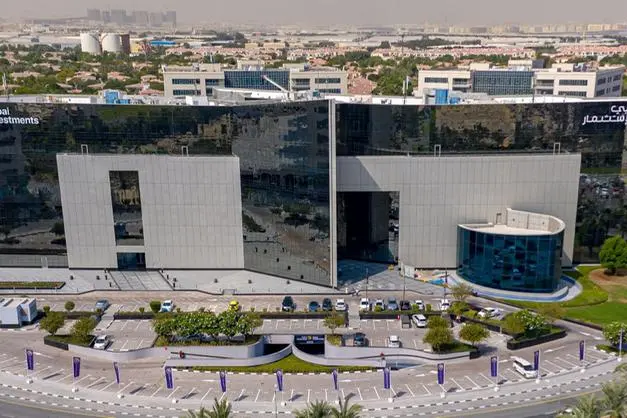
“Dubai International Academic City (DIAC) hosts 27 of the UAE’s IBCs, which reflects the UAE’s higher education sector’s attractiveness to an adequate number of IBCs,” said Dr Ayoub Kazim, managing director of Tecom Investments’ Education Cluster. “As the sector matures, the depth and scope of the programmes offered by the UAE’s IBCs will no doubt expand to meet the needs of the local and regional markets.”
‘South-to-south phenomenon’
Although the UAE currently remains the most popular destination for IBCs, OBHE figures indicate overall global activity is definitely increasing.
There were 24 IBC home countries recorded in 2011 — two more than in 2009 — of which China is now the source of one.
US universities continue to provide the greatest number of IBCs at 78.
This is set for expansion as a third of the reported IBCs in planning are from the US for destinations from China to Korea to Rwanda. The UAE has no new IBCs currently in the pipeline. The total number of IBC host countries now stands at 67, up from 52 in just two years.
The report documents the introduction of 22 new host countries, namely Afghanistan, Bangladesh, Ghana, India, Kazakhstan, Kenya, Syria, Nepal and Uzbekistan. Half of the new countries indicate a growth in the ‘south-to-south phenomenon’, in which both home and host institutions are in the developing world or the Middle East.
“We will see an increasing number of Asian universities projecting themselves to every part of the world, including Europe and North American,” said Dr Lawton. “Having said that, I think the south-to-south provision will always be much greater than south-to-north,” he added.
India hosts five IBCs in spite of widespread uncertainty with regard to its laws on foreign provisions.
“There seems to be a growing impatience with the Indian government’s inability to get the legislation [Foreign Education Institution Bill 2010] through. However, other countries like Malaysia are benefiting from the impasse,” said Dr Lawton. “If the Bill is passed and does not include major financial hurdles, it will likely increase the level of activity in India.”
To illustrate IBCs’ struggle with Indian laws, the report recalls the shelving of the UK’s Middlesex University’s plans for a campus in the Dehli suburb of Noida last year.
“We’ve seen increasing requests for partnerships to set up IBCs since starting our Dubai campus in 2005 and our Mauritius campus in 2010,” said Professor Raj Gill, regional director, Middle East and Africa, Middlesex University.
IBCs remain a minority pursuit
Although there is a significant movement in IBC activity, as higher education becomes increasingly global with institutions looking to access the international student market and cash in on student mobility, the OBHE report states from a holistic perspective of Trans National Education (TNE) activities that IBCs will remain a relatively inconsequential pursuit.
“I don’t think IBCs will be more than a minority pursuit because they require greater capital investment and pose high financial and reputation risks,” said Dr Lawton. “Distance education, including online teaching, comprises the majority of TNE activities.”
The report also recorded an emerging trend towards more niche campuses, which offer a limited range of courses within a single discipline, many of which are located in the UAE. A few examples are France’s ESMOD fashion school and Lebanon’s Universite Saint-Joseph which offers courses in law.
“Some universities decided not to set up off-shore campuses as a vital component of their international strategy,” said Dr Kazim. “Instead, they’ve adopted the approach of establishing small, focused campuses and it is precisely the niche focus of these campuses that help achieve significant impact in the host country.”
However it was duly noted in the OBHE report that the niche campus trend could possibly affect the holistic international student experience.
“After being in Dubai for four years, it would be fair to say that operating within a niche is not of great advantage for students,” said Professor John Grainger, pro vice-chancellor of Murdoch University Dubai. “IBCs can never offer a student experience identical to that at the home campus and that is probably even truer for niche campuses,” added Dr Lawton.
By Rania Moussly
Gulf News 2012. All rights reserved.