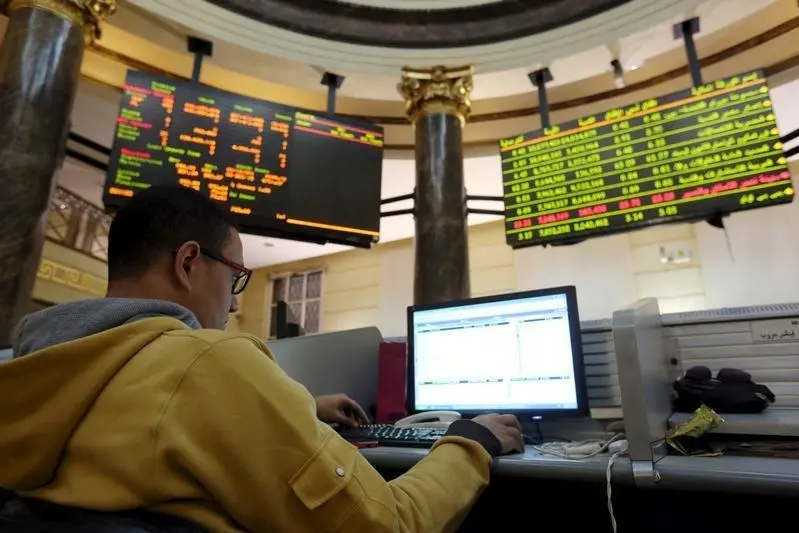
There is limited upside to the Saudi rally, according to Jadwa Investment, but EFG-Hermes expects a further 15% growth before the end of the year, with a second phase of the rally led by large caps.
The Saudi stock market has risen 19% even before the end of the first quarter, compelling some analysts to advise caution.
Jadwa says the Tadwawul rally has enough legs to grow no more than a further 7%, by the end of this year and expects the TASI to cross the psychological 8,000-mark by the end of the year. That would be the first time the index would cross 8,000 points since the mind-boggling days of September 2008 when the market was falling off a cliff.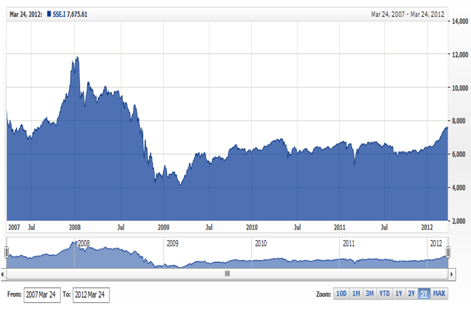
Jadwa's forecast aims to pour cold water on the bustling growth in the market, which has surprised even the most bullish investors.
"We are cautious about prospects for the rest of the year. Valuations look reasonable and unlike many markets the TASI is still below its close the day before the collapse of Lehman Brothers, despite the Kingdom's subsequent economic performance," wrote Paul Gamble, head of research at Jadwa Investment, in a note to clients.
"However, we are wary about the pace of the gains so far this year and particularly the surge in volumes and very high proportion of trading focused on a few small sectors and stocks. If money moves into larger stocks and is more evenly distributed it would give greater confidence that the rally can be sustained."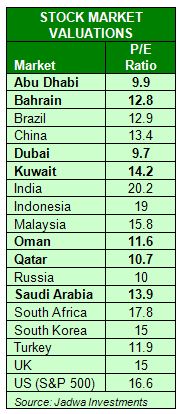
A SECOND PHASE OF THE RALLY
While EFG-Hermes analysts agree that the market has been led by small caps, it could lead to a new phase of growth.
"With markets now consolidating, we believe the rally will enter its second phase, led by larger cap names and, in particular, the banking sector," write Fahd Iqbal and Simon Kitchen, EFG-Hermes analysts. "We believe valuations warrant another 10-15% upside from current levels. Valuations could be further supported by potential upward revisions to banks' earnings estimates. We remain overweight Saudi Arabia and continue to favour exposure to banks over petrochemicals."
According to EFG-Hermes data, the 50 biggest Tadawul stocks have risen by 15.4%, the next 50 stocks by 21.5%, while the smallest 50 stocks have risen 35.4%.
By sector, insurance remains the favourite having risen 36% this year, and also made up 20% of trading activity year-to-date.
Other sectors that have historically been targeted by retail investors, such as agriculture (13%), have now given way to transport (+44%), real estate (+37%) and the newly listed telecom companies (SITC +186%, Zain KSA +76%), says EFG.
Meanwhile, the key banks and petrochemical sectors have lagged and underperformed the overall index, rising by a comparatively weak 17% and 13%, respectively.
MACROECONOMIC GROWTH
The Saudi market rally, of course, is at the back of robust macroeconomic conditions. Saudi Arabia's oil sector is set to grow at 5.5% in 2012, according to Riyad-based Samba bank, building on stellar growth over the past few years.
"Average oil production this year will now be higher than in 2011 as GCC oil producers, particularly Saudi Arabia, maintain high output levels to satisfy any shortfalls - perceived or real - stemming from the announced sanctions on Iran," says Keith Savard, director of economic research at Samba.
Jadwa's Gamble notes that the Kingdom's economic outlook remains healthy, especially with government spending continuing unabated along with greater bank lending and high consumer spending.
"Overall economic growth will be slower than in 2011, as oil production is not expected to rise as fast as it did last year, though in barrels per day terms it will remain substantial, and with oil prices also high, there should be another large budget surplus."
JADWA'S RATIONALE
The 8,000 point target may not look that ambitious, especially when you consider that the market was at 21,000 just six years ago. Clearly, investor confidence is shaken, leading to depressed volumes even though the market has been slowly edging up and was down a mere 3.1% in 2011, in what was easily one of the most difficult years faced by regional governments.
"In contrast, the current rally has occurred amid high volumes suggesting that investors are returning to the market seriously," says Gamble. "The total value of shares traded peaked at SR21.6 billion on March 19, the highest since March 2007, and has been above SR10 billion every day since February 19. This compares to a daily average of SR4.4 billion in 2011 and SR3 billion in 2010. Furthermore, an increasing number of dormant brokerage accounts are being reactivated."
Despite the breathless rally, the TASI price-to-earnings ratio remains at 13.9, which is lower than average P/E of 15.3.
But the valuation is less attractive on a global basis. "Fast-growing Asian markets usually trade on a much higher P/E than Kingdom and this premium has narrowed. Furthermore, the P/E is higher than many other emerging markets, and also indicates that the TASI has become more expensive versus major developed markets," says Gamble.
As such the investment bank does not believe there is not much more upside and the market will only grow 6-7% over the next nine months.
That's a bold contrary view especially when investors are piling into stock and the amount of volumes that Tadawul has attracted over years of sluggish growth.
"The upside risks to our forecast are local; either that the rally becomes less speculative and generates serious broad-based momentum, or that foreign inflows (in the event of the market being opened) are much greater than we anticipate," says Gamble.
EFG-Hermes is far more upbeat, expecting a 15% improvement from the current levels.
"We believe Saudi's valuation could reach 13.5x-14.0x 2012e earnings, suggesting further upside of 10-15% from current levels," says EFG-Hermes analysts. "At 14.0x earnings, we estimate Saudi's premium to MENA would be around 18%, all else being equal. On both an absolute and relative basis, therefore, we believe that Saudi valuation multiples can comfortably expand further."
FOREIGNERS IN TADAWUL?
Saudi Arabia is using the Chinese model for attracting qualified foreign institutional investors to the market.
This would allow the Capital Market Authority to screen investors and only permit major banks and other institutional players to enter the fray.
"Test trades under a new system have taken place and various administrative reforms to support its functioning have been implemented," according to Gamble. "No official announcement has been made on the timing of any opening, though there is expectation in the market that it will take place this year."
The bank expects uptake to be slow at first, similar to the Chinese experience, but will add another stream of investors into the market over the long term.
"The Chinese model is designed so that regulators can have a degree of control over the flows of funds. Given the official concern in the Kingdom about flows of "hot money" it is likely that the approval of foreign institutions will be very careful," says Gamble.
EFG-Hermes concurs with that assessment, arguing that foreign direct investment will be unlikely to make a huge impact on the Tadawul any time soon for three reasons:
1. Qualified investors should have at least USD5-billion assets under management - narrowing the scope of investors.
2 EFG estimates that the Saudi market trades at 12.1 multiples much higher than MSCI frontier market's 9.3 multiples and emerging markets' 10.8 multiples.
3 EFG expects bureaucracy and red tap to slow down the process.
And unlike Qatar and the UAE markets, the Saudi Tadawul is nowhere near an MSCI upgrade to emerging market status.
"Taking into account the requirements for foreign ownership and delivery-versus payment (DVP) settlement, we believe Saudi inclusion is likely to be around five years away," say EFG analysts.
IRAN CONCERNS
Iran remains a major concern, says Samba's Savard, which could upset Saudi and wider Gulf growth, derailing the rally.
Talks are to resume over Iran's nuclear program, but there appears little confidence that progress can be made. While the US appears reluctant to engage militarily, particularly during an election year, an Israeli strike cannot be entirely discounted.
"In addition, the intensification of sanctions on Iran (30 Iranian financial institutions have now been barred from the international bank transfer system, SWIFT) could prompt unpredictable response from Tehran - ranging from closing the Straits of Hormuz, to stirring unrest in places like Iraq, Lebanon, Syria, Afghanistan and possibly Bahrain," says Savard.
A global oil squeeze could send oil price spiralling out of control and cease global growth, which would lead to reduced demand for oil.
Gamble adds that global markets could also be undermined by a deterioration of economic data and a lack of new liquidity injections from central banks.
"The high volume of speculation will not protect the TASI from external shocks. It will add to volatility and will probably worsen the impact of any shock," says Gamble.
CONCLUSION
It seems that the Saudi stock market is finally catching up to the economic realities on the ground. Blistering growth in the non-hydrocarbons and the hydrocarbons sector, combined with a massive investment programme and rising populations.
Short of a global economic catastrophe or an escalation in Iranian conflict, the Tadawul should cross 8,000 points target without breaking a sweat.
© alifarabia.com 2012