Having been pushed to a corner by the global financial crisis, companies in Oman are fighting back with novel ideas, inventive solutions and creative thinking. Mayank Singh reports
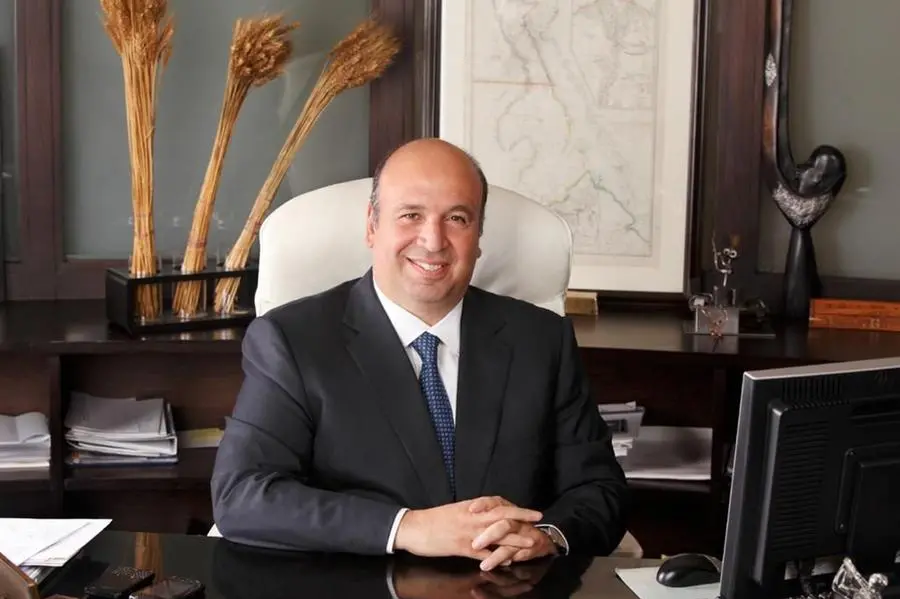
Hussain Ahmed Ghuloom, CEO, Al-Waqia Shoes Company, sits in his office with a fractured ankle. The mishap which took place during a game of squash means that his feet is going to be plastered for the next two months. Ironically, a broken ankle is the least of his worries, as Ghuloom grapples with bigger challenges facing his business. "Our sales are down by almost 35 per cent, our exports by 40 per cent and local sales have gone down by 26-27 per cent," he says stoically. Europe, one of Al-Waqia's biggest markets is the worst affected. Spain, where the company sold 9,000 pairs of shoes in 2008 and 28,000 pairs in 2007, has completely dried up. The UK, Poland and Switzerland markets have stagnated. In the GCC things are no better with sales in Saudi Arabia, the biggest economy in the region plummeting by 75 per cent, Dubai and Qatar are no better.
Al-Waqia shoes is not the only company that has been impacted adversely by the global economic meltdown - Technique LLC, a multi-product trading, engineering and service company has seen a 16 per cent drop in trade volumes during the first quarter of 2009. Says Nick Moulton Thomas, general manager of the company, "We have a large industrial sales division which deals with paints, lubricants, marine paints and fire resistant paints. Since many projects are going slow this is forcing people to buy less paint or to postpone their decision to repaint."
Go slow mode
The slowdown of projects is also forcing companies to go back to the drawing board. National Gas which supplies LPG, has not been affected in its primary business as the consumption of domestic gas has remained unaffected, but its engineering of gas systems business which comes under Innovative Energy Systems (Inersys) a joint venture company between National Gas owned Shoulat al Aman and Ashtech Gas Engineering & Services of UAE is facing the brunt of the slowdown. Says Goutam Sen, general manager, National Gas, "Engineering of gas systems is linked to projects and so its performance has been impacted."
Three major projects that the company was looking forward to have been delayed for one reason or the other. On one project though the company got a letter of intent four months back, it is still awaiting an advance to start construction. Another project that the company won has not taken off, but mercifully the company has not committed any resources to the venture. "The vibe that we get is that most people are going slow," says Sen.
A'Saffa Poultry Farms which completed a major capacity expansion in February 2009, got caught on the wrong foot due to the slowdown. The company's production went up from 31,000 chickens a day (12mn chickens a year) to 52,000 chickens a day (16mn chickens a year), post expansion. The initiative cost the company RO9mn and was was partly funded by doubling the company's equity base from RO5mn to RO10mn. "Unfortunately our expansion came on stream right in the middle of the economic downturn in the months of March, April and May. Due to this the purchasing power of people got reduced by 20-25 per cent," says Dr Nasser al Mauly, CEO, A'Saffa. This affected the off-take of its products in supermarkets and hypermarkets, forcing the company to look for newer markets to absorb the extra capacity.
Hitting cash flows
The reduced off take in hypermarkets is corroborated by others like National Mineral Water Company (NMWC). Says Pankaj Chugh, its general manager, "Sales in hypermarkets are down by 30-35 per cent. Though most of this erosion comes from non-essential items like garments and electronics, this indirectly has an adverse impact on us as our payments get delayed." As a result, the payments which NMWC used to get within 90 days has now been stretched to 120 days. The choking up of inter-company cash flows is creating an artificial liquidity crisis
in the market.
The malaise is not just restricted to Oman, The National Detergent Company (NDC) has encountered similar issues in Saudi Arabia. Though the company extended the payment window from 90 to 120, it was still finding it difficult to recover its payments. Says V Sundaresan, director and general manager, NDC, "We have become strict on delivery, if a party does not pay on time, we keep the subsequent orders on hold."
A number of small and medium sized companies operate as subcontractors for larger firms, so if the bigger company faces a problem, it automatically filters down to the SME. Smaller players do not have strong cash flows as large companies, so even a few delayed payments can prove to be a fatal blow for them. The worst of the lot are SME's who are entirely dependent on a single company for business. Abdulnasir al Raisi, head, SME credit and marketing department, BankMuscat explains the spiral effect, "It is a matter of psyche, people have become scared of moving their money - there is a feeling that if one pays others, they may be stuck without cash as their payments may get delayed in future."
There are reports about bigger companies in the construction sector forcing their suppliers to extend payment periods from 90 to upto 130-140 days. Nakheel, the construction major based in Dubai, has claimedly been using payments as a bargaining chip with its suppliers. The company is asking suppliers to either reduce costs by 30 per cent and get the payment right away, or to wait for two-to-three years to get their money. "It is important to keep the money flowing and the government needs to intervene in the matter," says Thomas. As the cost of borrowing in international markets have moved up, banks are renegotiating their interest rates with companies. On an average interest rates have firmed up by 0.75 to one per cent, adding to the financial burden of companies.
Fluctuation in commodity prices is another challenge for companies. Corn and soya, the feedstuff for chickens make upto 70 per cent of the cost of production for A'Saffa. These commodities are sourced from various countries like Argentina, Brazil, America and India. The price of soya has gone up from $470 per tonne in March 2008 to $530 per tonne in June 2009. Corn processes have escalated from $310 per tonne in March 2008 to $330 per tonne in June 2009. Says Mauly, "We have to absorb the increase in cost and this wreaks havoc on our financials."
Apart from a price rise, businesses are also being forced to grapple with uncertainty of supply. AATCO which uses ingredients like tomato paste, pepper mesh, egg yolk and oils for its products like ketchups, mayonnaise etc is faced with an unprecedented situation. Says Mahesh Rao, general manager, AATCO, "A number of our suppliers have become shaky and the stability of supply has become an issue." A number of it's suppliers in China, the US and Turkey have been inserting restrictive clauses like asking for the money upfront before delivery, restraining the company's cash flow.
More than a match
Undeterred by these problem, businesses have been working out novel solutions to deal with the unprecedented situation. For example, a carrot and stick approach is being employed to deal with errant (cash) defaulters. Companies like NDC, Technique and AATCO have worked out changes in their credit policy laying down harsher credit terms for parties that do not pay on time, while discounts are given to dealers who are ready to make a cash payment.
As orders from traditional markets dry up, companies are looking at new markets. All out marketing efforts are being made to break into virgin markets. For example, Al-Waqia shoes is working on tapping the Yemen, Jordan, and North African markets like Algeria and Tunisia. And the efforts are yielding results - in Algeria, it supplied 19,000 pairs of shoes in 2008, while in the first six months of 2009 it has already sold 14,000 pairs. Tunisia which ordered 16,000 pairs in 2008, has been supplied 10,000 shoes till now this year. In Syria, the company got an agent who has ordered 10,000 pairs.
Till November 2008, Al-Waqia had its hands full with existing orders and was reluctant to chase new customers. A firm belief that booking orders and not delivering on time, was a perfect recipe for losing customers, the company went slow on scouting for new clients. But a steep drop in sales from January this year, forced the company to look for potential clients. "There was a customer in Jordan who had been approaching us for a while, but since we already had a lot of orders, we could not meet his requirements. We wrote to him in March and have started delivering to him lately," says Ghuloom.
Faced with a slowdown in the domestic market, A'Saffa diverted the extra volumes generated by its capacity expansion to markets like Qatar, Bahrain, Yemen and Egypt. In April 2009, the company started exporting to Egypt. Yemen, where it was supplying a container (25 tonnes) per month, is now being sold 2-3 containers a month. The company is also exploring the possibility of exporting to Malaysia and Singapore in future.
Similarly, AATCO is targeting the West African markets like Senegal, Mauritania, Luxury Coast, Liberia, Angola and Ghana. Says Rao, "European and US manufacturers will be going slow on these markets and so it is a good opportunity for companies like us." Though the company has a market in European countries like Holland, Italy, UK, Denmark and others, it is looking at strengthening its presence. The fact that AATCO guarantees good products and an assured supply at a three to five per cent price advantage compared to multinational companies gives it a competitive edge in present times.
Exploring new product lines
In an effort to leverage synergies, companies have also been looking at related areas of business. National Gas for instance tied up with Bharat Petroleum in November 2008 to supply Bharat Metal Cutting Gas (BMGC) in Oman. BMCG is used for cutting steel and works out to be 25 per cent cheaper than asytelene, the traditional cutting option in the market. It also beats its competitor in terms of storage - as seven cylinders of asytelene are equal to one cylinder of BMCG. Says Sen, "We have captured 15 per cent of the market since its launch in November 2008 and are looking at a 50 per cent marketshare."
Inersys has plans of getting into natural gas, by setting up intermediate stations to supply gases like Methane to industrial customers. The gas is supplied from the source till the intermediate station by the government and carried forward by the specialist company. Inersys has tied up with RMG, a German company, which specialises in setting up intermediate stations. It has also entered into an agreement with SAG, an aluminium downstream firm to supply such gas. National gas is also devising fire fighting systems for users.
Says Thomas, "The choice for companies is to either increase volumes or price and since both of these are extremely difficult in the prevailing circumstances, we have little choice apart from innovating." Technique has a specialist paint which is used to refurbish forts. Though the company fabricated the paint six years back and used it for painting one fort, the product has been largely unused since then. The company is now looking at reviving the business. A new manufacturing process to fabricate the paint has been put in place and Technique is talking to the Ministry of Culture about prospective business opportunities. Given the governments thrust on renewable energy, potential has floated a division to look into solar and wind energy as the company cash generator.
Faced with an erosion of marketshare in the washing powder segment, NDC relaunched its No. 1 detergent, in November 2008 with FWA (fluorescent whitening agent). The relaunch was backed by a market promotion helping the product to gain lost ground. To counter the erratic supply of raw materials like sulphuric acid and benzene the company has been braodbasing its sourcing options. "We buy from China, India, Europe and our effort is to do beneficial material substitution wherever possible," says Sundaresan.
Rejigging products to suit the changing tastes of the market is something that other companies are also working on. AATCO has introduced new product lines like honey mustard sauces, dressings, vinaigrettes. Says Rao, "We have to innovate to attract consumers. The effort is to give a value add for the same price." The company elicited a good response for its products during the Gulf Food exhibition held from February 23-26, 2009 and it is looking forward to Anuga, the world's biggest food exhibition to be held in Germany in October this year.
NMWC has floated a new company called, Value Deal Trading (VDT). The new company is supposed to service clients with NMWC's other products. The company has redesigned its trucks which carry its bottled water brands like Tanuf and Salsabeel, to distribute other goods. Thus the same vehicle is now used to distribute Tanuf tissues, Juju packaged drinks, sparkling flavoured water and Red Bull (which NMWC distributes). Says Chugh, "Our trucks are like shops which can deliver anything. The choice is to either shrink and fit or to adopt and grow." The company's average revenue per truck in the last two years has grown helping it to do a turnover of RO7.2mn in 2008. It has also entered into an agreement with Shaktibhog Atta and Milkfood Ghee from India to distribute their goods in the Sultanate. It will also be distributing the CAMEL brand of nut products as a part of its deal with Seng Hua Hng Foodstuff. A veggie wash that can be used to wash vegetables and fruits is also on the cards.
Tightening seatbelts
Given the slowdown, a rationalisation of costs is no longer a choice but a necessity. Most companies are discovering the value of being prudent. National Gas implemented an online fleet monitoring system a year back. The IT system works as a logistics controller, giving the company updates on how its trucks are being utilised. NMWC, has rationalised its truck routes, for its 75 strong fleet. The exercise has helped it to cut two routes. As offtake dropped in the first quarter of 2009, the company realigned its routes - so a truck covering four hypermarkets was given a few more supermarkets on or close by, helping it to save money.
Says Raisi, "There is no person or entity that has not been impacted by the crisis. The good news is that every failure creates opportunities for others to do the same business better." The silver lining is that the crisis is forcing companies to cut flab, reduce redundancies and get more efficient. While the fittest will survive the weak and inefficient will perish. After all getting back on one's feet whether it is a game of squash or a business requires agility and fitness.
© Oman Economic Review 2009