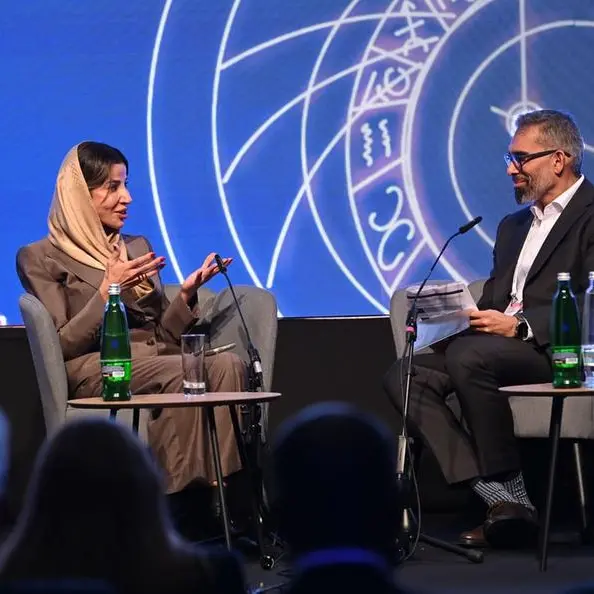
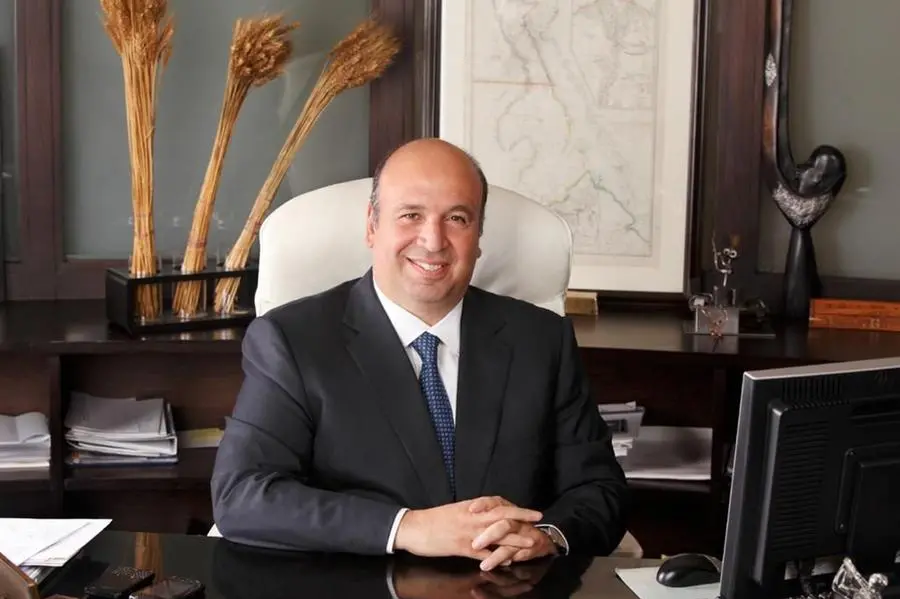
Bain & Company is one of the world's foremost names in private equity (PE) consulting and has a growing presence in the Middle East. With offices in Dubai, Bain serves PE funds and institutional investors, in addition to providing consulting to governments. Executive asked Bain's director and partner in Dubai Christophe de Mahieu about the ins and outs of the regional PE scene.
How do you define 'dry powder' in the private equity industry?
It is the fund's ability to call for money. A fund typically has an eight to 10-year lifecycle and there is a five-year commitment, which means for five years the LPs [Limited Partners, or fund investors] are committed to fulfill the calls that the GPs [General Partners, or fund managers] are making.
How much dry powder does the Middle East and North Africa have today?
In this region in 2006, 2007 and 2008, more or less $20 billion [AED 73.46 billion] was raised and about $10 billion [of that] has been invested. So theoretically there is $10 billion, but we estimate that because of a number of factors -- a reduction in the number of players, defaults of LPs, decisions by funds to shrink their initial size - that there is $3 billion to $4 billion left, or at best $5 billion.
Is there an expiry date on that dry powder?
As most of the fundraising took place between 2006 and 2008, and counting five-year commitment of the funds, most of the dry powder [that is] left will have to be invested this year and next year, because after that most of the commitment periods are coming to an end.
Do such amounts of dry powder actually constitute a large overhang of liquidity?
No. If you have $3 billion to $5 billion left, that would be what the private equity world would deploy in a normal year in this region. So what we see is not an overhang of dry powder. What we actually face is a nascent industry that is going through its normal S-curve. It started to develop in 2002 to 2003 and is going through a shakeout right now where we are seeing a reduction in the number of players. Now you will see a renaissance period with the strongest players staying in business and with the appearance of new players with new strategies and new value propositions.
Do you think that the $3 billion to $5 billion could be placed in 2011?
No. Our projection is that we will still see a relatively subdued market in 2011 where we will be more or less at the level of investment that was experienced in 2009 and 2010.
Do you expect any sectors or geographies to escape the downturn in investment activity this year or even benefit from the upheavals that we have seen in the region since the start of 2011?
People will invest in defensive industries and certainly [that will include] industries such as oil and gas or oil and gas servicing; they will go to agricultural businesses if they see opportunities; they will try to see businesses that are working across several countries. A number of people say that Turkey will be a market where you will see activities and I think that Saudi will see activity and the [United Arab Emirates] will be a [busy] market. North Africa will probably be a lot quieter.
Egypt was, for many investors and companies, seen as a market with a lot of potential. Where do you see it going?
We are business advisors and I don't have a view politically but I think that logically the Egyptian market is a very important one, noting the size of the population and the size of the economy. I think private equity players will not shy away from Egypt. Obviously, they will want to have more visibility before they re-engage but they will come back into that market at a point in time, I am sure.
One area with particular expectations for investment opportunities in the MENA is public-private partnerships, or PPPs. How do you see political changes in the region impacting the potential for PPP?
Our estimate is that in a normal year, the total market in opportunities for private equity is about $10 billion in the MENA region, including Turkey. Out of that, $4 billion to $6 billion is going to be infrastructure and within that infrastructure you have PPP. We see the buyout [market] as much smaller. Whereas in Europe and the United States you buy the whole company and leverage it, buyout activity [in the MENA] is likely to remain quite small, maybe $500 million to $700 million [annually] in the years to come. But I see a significant set of opportunities in infrastructure, including PPP, and also in privatization of certain sectors.
Would you expect political risk to enter the pricing of deals - such as PPP or agreements between several governments in a cross-border infrastructure project - as a risk premium?
Private equity players and business people make their own decisions. Within the notion of risk reward, certain people might shy away from certain types of investments; other people might feel this is the risk-return profile they are looking for. I have noticed too often that there is no one perspective; there are different perspectives. The market is big enough for people to develop.
In troubling times, safety is often a priority for investors and we have seen and heard of much flight to safety in global markets. Could this trend involve a risk of safety where investors might lose return potentials in deals in a region such as ours?
I think sophisticated investors will look at this from a portfolio point of view and so will not put all their eggs into one basket or another. They will diversify their investments, and I think this region has a number of interesting dimensions -- one of them for instance is the level of valuations right now. If you look at market to book [ratios], at PE [price to earnings] ratios or at PE to EBITDA [earnings before interest, taxes, depreciation and amortization], it is an interesting market. There are merits to continue to invest in this region, absolutely.
Do you expect fundraising cycles to restart in 2012?
I think number one that there is a tremendous amount of cash in this region. OPEC producers at current prices will have about a trillion dollars of cash, so this has to be invested somewhere. I see that private equity as an asset class has a future and Middle East private equity has a future in that asset class. But the people that will be able to attract that money will have to demonstrate track record, governance and transparency and really convince those LPs that they are the right players to invest in. I think 2012 will naturally be a logical year to see a significant increase in fundraising for the people that have a compelling value proposition to the LPs.
Will the GPs who survive the shakeout you mentioned be likely to dominate in fundraising or do you see ways where newcomers could do well and attract fresh funding?
Newcomers could come and say 'I am a new fund but I bring a number of attributes, e.g. I have done two transactions, these companies are on my balance sheet, they are performing very well and I am ready to move them in the fund.' New funds will have to find clever, interesting ways to convince LPs that they have a compelling strategy and that certain features they bring to their fund will develop a compelling value proposition.
Is there a specific area in transparency that needs improving?
PPMs [Private Placement Memoranda in which PE funds describe their offerings to potential investors] in this region clearly need to reach the quality and specificities that you see in Europe and the US. This relates, for instance, to the fees and how they are charged, at what time, and how they are offset against other fees. In the relationship between the LPs and the GPs, a tremendous amount of improvement can also still take place in communication and transparency of reporting how the portfolio companies are performing.
© Executive 2011