Morgan Stanley exec Sadek Wahba talks about why governments, including Egypt, should privatize infrastructure
During the last decade, private investment in everything from phone lines to highways has seen a resurgence in developing countries, but the Middle East and North Africa have largely been left out of the boom.
That, however, could be changing.
In January, American investment giant Morgan Stanley announced the start of a joint venture with Orascom Construction Industries to develop infrastructure in the MENA region. Experts believe the area -- home to a host of countries starved for sewage systems, roads and ports could be the next hotspot for private investment.
One of those optimists is Sadek Wahba, the Cairo-born head of Morgan Stanley's infrastructure division, which has $4 billion (LE 22 billion) in equity under management.
The New York-based Wahba, who grew up in Garden City and has a PhD in economics from Harvard, sat down with Business Today to talk about the merits of privatizing infrastructure and which sectors Egypt should put on the block. Edited excerpts:
Why should governments privatize things like power companies, highways and sewage systems?
One challenge to government ownership is that some infrastructure assets require a lot of specialization and expertise, which ultimately the private sector can handle better. Should the government be in the business of constructing roads? Many people would say no.
The privatization of infrastructure has long been a controversial issue. How can governments ensure that corporations serve the public interest?
You say [to the private sector]: "You go and build a road. Here are the terms under which you build a road. This is how much you can charge."
The government monitors and supervises that. This is a traditional public-private partnership, or PPP, where the government partners with the private sector.
Does that model work?
If you look at the electricity system in the US, a large part of it is in the hands of the private sector, but it has a well-defined regulatory framework.
Should a government be involved in the management of an electricity system, for example? Or should it be responsible for ensuring that there are proper regulations to encourage people to invest in the power sector and to ensure that people will receive electricity consistently?
Why does the Middle East need private investment in infrastructure?
The private sector has been operating assets for a long time. In Egypt, the electricity, water and sewage companies were all managed by the private sector and some were listed on the Cairo stock market.
Unfortunately, over the last 50 to 70 years, especially after the First and Second World Wars, we saw a move towards greater government intervention and state ownership.
When you adopt [a privatized] model you eliminate huge amounts of inefficiencies and extra costs.
According to the World Bank, North African countries have been much slower than their Asian counterparts in taking up privatization. Why?
It is hugely political. Sometimes, countries don't have a proper system in place and it takes some time to establish it. Sometimes you need to close [government] departments and people are not willing to leave. Yet we now see that Morocco and Algeria have their own public-private partnership programs.
And what about Egypt?
In Egypt, the population is growing very fast and there is an increasing need for infrastructure.
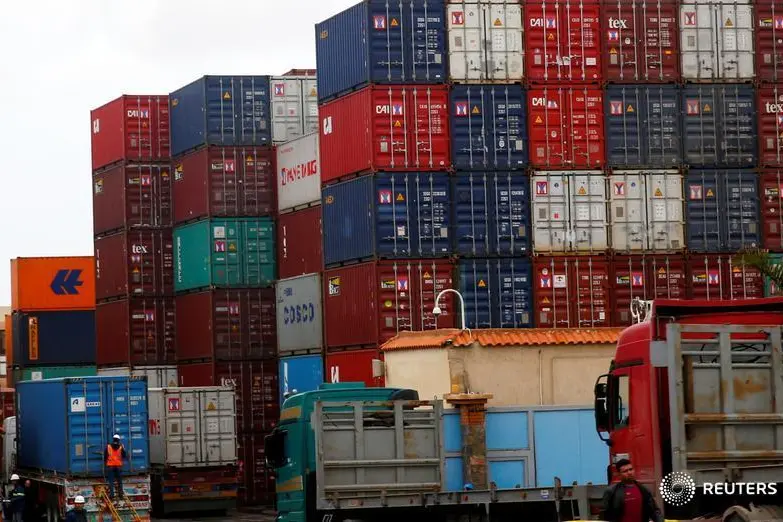
I think the Egyptian government has made enormous efforts to address that need. Take ports, for example. Twenty years ago, the container port system was non-existent. Now, in Egypt there are several excellent ports and every major shipping company operates throughout Egypt.
What other sectors should the government open up to investment?
I think the government is looking to privatize electricity, roads and even [support services] in schools.
We all know that there is a huge need to develop the rail sector. Airports also need investment. There can also be private-sector investment in gas distribution, water plants and sewage treatment stations.
What are the benefits of investing in infrastructure?
For every dollar you invest in infrastructure, you get back a multiple of that in GDP growth. We have seen it in countries like China and India, where they have invested heavily in infrastructure.
How so?
In China, for example, they knew that to develop their manufacturing capabilities, they needed electricity for factories, along with roads and ports to transport goods. They understood that they would not be able to sustain massive growth without developing infrastructure.
So they deployed an enormous amount of resources to do it.
China has been lauded for its approach to infrastructure building. What else has it done?
Many of the toll roads in China are privatized. Many of the airports are owned and publicly listed.
Europe is way more advanced, and has also privatized its assets [including] airports, electricity to some extent, and gas distribution.
Sadek Wahba
Born in the Cairo neighborhood of Garden City, Wahba attended Business School at the American University in Cairo and graduated in 1987. Following the advice of Galal Amin, one of the country's best-known economists, he did his Master's at London School of Economics before joining the World Bank's Washington office. He was hired at Lehman Brothers in 1996 before moving to Morgan Stanley, where he was promoted to his current position as the head of the investment giant's infrastructure division.
Wahba is married with two children.
By Ali El-Bahnasawy
© Business Today Egypt 2010