09 August 2011
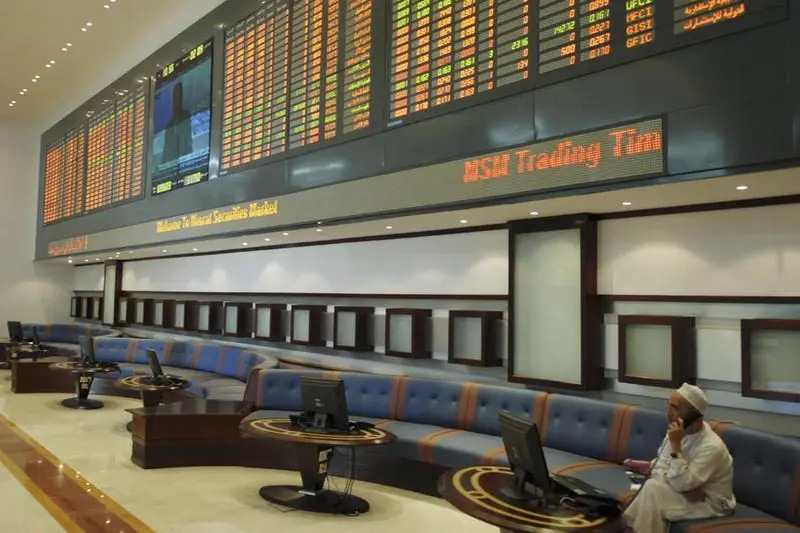
MUSCAT -- GCC markets were down again in July as investors turned their eyes to the US debt crisis in addition to on-going sovereign issues in Europe, the Kuwait Financial Centre (Markaz) stated in its monthly review.
Corporate and regulatory issues at home kept investors away from the market ahead of the holy month of Ramadhan. The S&P GCC lost 2.8 per cent after shedding 2 per cent in June, bringing YTD losses to almost 7 per cent. Dubai was flat while Qatar eked out a gain of 0.50 per cent. The largest decline was in Kuwait's Weighted Index, down 4.24 per cent, said Markaz.
News in the region included:
• The UAE made a surprise announcement post the conclusion of the US debt deal; the Central Bank said it had no US Treasury Bills in its reserves or any other financial instrument issued by the US government, citing "very low return". The announcement came as a surprise given the currency peg to the Dollar. Anecdotal evidence suggests that the Central Bank has turned to Japan for Dollar-denominated government debt.
• The Kuwait market hit a 7-year low in the middle of the month, dipping below 6,000 points on a compendium on poor news. The Central Bank Governor announced that the economy suffered from precarious imbalances which needed to be addressed urgently.
• The Kuwait Capital Market Authority extended the deadline for fund compliance with investment limits, under Article 347, to March 2012 from the previous September 2011 deadline citing adverse market conditions and a need to review the article.
• Kuwait Airways privatisation process has begun with a 35 per cent stake on offer for expression of interest through August. The airline is hoping for interest from regional or international strategic partners and will exclude local airlines.
Liquidity was down significantly in July; GCC value traded declined 22 per cent to $20.8 bn while volume was down 31 per cent to just 7 billion. Saudi and Kuwait saw value traded decline by 21 per cent and 12 per cent, respectively. GCC Value Traded in the YTD period is at $215 bn, 10 per cent higher than the same period last year.
Risk in the GCC (as measured by the Markaz Volatility Index -- MVX) was up just 1 per cent in July after increasing 21 per cent in June. MVX Kuwait was up the most, jumping 56 per cent for the month while MVX Qatar saw a fourth consecutive month of declines, down 37 per cent for the month.
Monthly returns were negative across the board; excepting a flat Asia Pac ex. Japan and a scant 0.17 per cent monthly gain on the Nikkei 225. Losses were led by India and MSCI Europe which lost 3.4 per cent and 3.3 per cent, respectively. The S&P 500 shed 2 per cent for the month as the debt crisis peaked.
Global markets were preoccupied with the US Debt deal saga which reached a fever pitch during the month. Gold was up on the uncertainty, gaining 8.5 per cent for the month. Crude oil gained almost 4 per cent for the month, with a YTD gain of almost 27 per cent.
Investors shifted to the US as the debt crisis boiled over with political stalemates causing S&P ratings to indicate a 50 per cent chance that it would downgrade the US if a deal was not reached as the country rapidly approached the $14.3 trillion debt ceiling.
An 11th hour deal was finally struck which advocated a $2.1 trillion, 10-yr deficit-reduction plan, about half the aimed for $4 trillion. Following the announced, Moody's affirmed the US 'AAA' rating but placed the country on "Negative" outlook due to low economic growth and fiscal weakness while S&P downgraded the US credit rating from AAA to AA+ with a "Negative" Outlook.
The ECB is expected to put a stop to its tightening policy as economic growth shows signs of weakening while trouble brews in Spain and Italy in addition to resuming purchases of distressed government debt.
MUSCAT -- GCC markets were down again in July as investors turned their eyes to the US debt crisis in addition to on-going sovereign issues in Europe, the Kuwait Financial Centre (Markaz) stated in its monthly review.
Corporate and regulatory issues at home kept investors away from the market ahead of the holy month of Ramadhan. The S&P GCC lost 2.8 per cent after shedding 2 per cent in June, bringing YTD losses to almost 7 per cent. Dubai was flat while Qatar eked out a gain of 0.50 per cent. The largest decline was in Kuwait's Weighted Index, down 4.24 per cent, said Markaz.
News in the region included:
• The UAE made a surprise announcement post the conclusion of the US debt deal; the Central Bank said it had no US Treasury Bills in its reserves or any other financial instrument issued by the US government, citing "very low return". The announcement came as a surprise given the currency peg to the Dollar. Anecdotal evidence suggests that the Central Bank has turned to Japan for Dollar-denominated government debt.
• The Kuwait market hit a 7-year low in the middle of the month, dipping below 6,000 points on a compendium on poor news. The Central Bank Governor announced that the economy suffered from precarious imbalances which needed to be addressed urgently.
• The Kuwait Capital Market Authority extended the deadline for fund compliance with investment limits, under Article 347, to March 2012 from the previous September 2011 deadline citing adverse market conditions and a need to review the article.
• Kuwait Airways privatisation process has begun with a 35 per cent stake on offer for expression of interest through August. The airline is hoping for interest from regional or international strategic partners and will exclude local airlines.
Liquidity was down significantly in July; GCC value traded declined 22 per cent to $20.8 bn while volume was down 31 per cent to just 7 billion. Saudi and Kuwait saw value traded decline by 21 per cent and 12 per cent, respectively. GCC Value Traded in the YTD period is at $215 bn, 10 per cent higher than the same period last year.
Risk in the GCC (as measured by the Markaz Volatility Index -- MVX) was up just 1 per cent in July after increasing 21 per cent in June. MVX Kuwait was up the most, jumping 56 per cent for the month while MVX Qatar saw a fourth consecutive month of declines, down 37 per cent for the month.
Monthly returns were negative across the board; excepting a flat Asia Pac ex. Japan and a scant 0.17 per cent monthly gain on the Nikkei 225. Losses were led by India and MSCI Europe which lost 3.4 per cent and 3.3 per cent, respectively. The S&P 500 shed 2 per cent for the month as the debt crisis peaked.
Global markets were preoccupied with the US Debt deal saga which reached a fever pitch during the month. Gold was up on the uncertainty, gaining 8.5 per cent for the month. Crude oil gained almost 4 per cent for the month, with a YTD gain of almost 27 per cent.
Investors shifted to the US as the debt crisis boiled over with political stalemates causing S&P ratings to indicate a 50 per cent chance that it would downgrade the US if a deal was not reached as the country rapidly approached the $14.3 trillion debt ceiling.
An 11th hour deal was finally struck which advocated a $2.1 trillion, 10-yr deficit-reduction plan, about half the aimed for $4 trillion. Following the announced, Moody's affirmed the US 'AAA' rating but placed the country on "Negative" outlook due to low economic growth and fiscal weakness while S&P downgraded the US credit rating from AAA to AA+ with a "Negative" Outlook.
The ECB is expected to put a stop to its tightening policy as economic growth shows signs of weakening while trouble brews in Spain and Italy in addition to resuming purchases of distressed government debt.
© Oman Daily Observer 2011