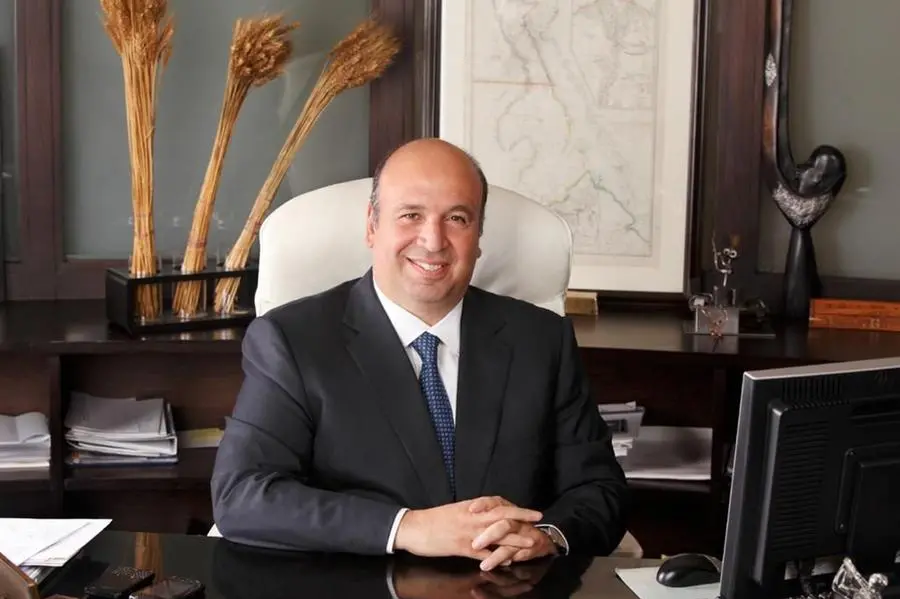
Hassan Jarrar's innings with Standard Chartered has certainly been a tough one with the recession posing one of the biggest challenges the banking industry ever had to face. But the three years since the financial world first saw the signs of a slow-down - the third quarter of 2008, have indeed given the top bankers a few key lessons, and also redefined the mechanics of banking. The one question at hand is, will the banks continue to have the same urge to lend. In a recent exclusive interview, Hassan Jarrar, Managing Director, Country Head of Origination and Client Coverage UAE, said the newly evolving banking rules would render the borrowers more responsible and the genuineness of the business will be a key factor in getting bank finance. According to Jarrar, the capital is becoming costlier for the banks and lending will cease to 'amuse' the banks the way it did in the past. "One thing is sure; the era of cheap money is over," Jarrar said. The following are the excerpts from the interview BBR had with Jarrar
Do you think most of the debt restructurings are over in the UAE?
It depends on many things, and importantly, on how you look at restructuring. We see this as a part of the normal developments in the market. Other than the government entities and very big corporate houses, there are many others who have investments outside this country; and many of these investments may not have turned out the way they expected them to do. So the answer to the question, will these investors (companies) also approach financial institutions for their debt restructuring, is yes - to me.
We are now talking after a gap of around two years. How comfortable is Dubai now?
The problems Dubai faced, sorted out and being sorted out [now] have once again proved to the world that the emirate has a real solid vision and it knows very well what it does and talks about. I had said time and again that this was a temporary cloud, which would disappear after some time. For smart businesses, there is no place like Dubai.
Dubai has set itself ten years ahead of any other places in the region and it is very unlikely that any other place can catch up with Dubai now.
Do you believe that Dubai is gaining from the so-called 'flight to quality and flight to safety?
It is happening. But I don't know and I don't want to quantify at what measure and pace this is taking place now. You will see more movements towards real estate as we now see more transactions taking place in Dubai compared with a few months ago. And this pace will further increase in the months to come.
As a Banking & Business Review (BBR) analysis showed, four banks hold half of the total assets in the UAE's banking system. Where do foreign banks like Standard Chartered position themselves in this crowded [with about 50 banks] market?
After the crisis, we have gained market share considerably. We grew in double digit even during 2010. We have become one of the most profitable banks in the UAE, and the number one among the foreign banks. We have improved our goodwill during the crisis by proactively addressing our clients' issues. I don't think any other banks have stood by the clients like we did. We didn't panic during the recession, rather focused more on our job. Not only we helped the clients restructure their loans but were active lending during the peak of recession and we did not shut down lending. I know many foreign banks that just 'kept quiet' during recession.
How good or bad is Standard Chartered on the NPL front?
We are very comfortable with our NPLs and the ratio is very reasonable. I believe we are one of the best [lowest] in the industry in terms of NPL ratio.
Though UAE's dirham is pegged to dollar, the Eibor-Libor gap is still substantial. How do you view this?
Banks are not lending each other now as much as they did before the recession because in this country, banks cannot use the inter-bank deposits as part of their overall deposits while computing credit-deposit (CD) ratio. I think Central Bank is aware of this issue and I believe it is looking into this matter seriously. Many feel, currently, the stand on CD ratio could prove to be punitive to the banks.
It is a fact that we cannot take cue from US on the interest rate. How important is for the UAE to establish a yield curve at a time when the country is embarking on long-term infrastructure projects?
I believe the Federal Government is really serious about establishing a bonds program like what US is doing through treasury auction programme. And I think the size could be anywhere between $5 billion and $10 billion. This is the first step towards forming a fiscal policy for a small country like UAE. We need to have a local currency curve.
We need to establish different indices, which people can use for different types of funding with different maturities. We need to have benchmarks to lend to different clients, different types of loans and at different tenures. The absence of proper benchmarks is a limiting factor both to borrowers and lenders.
Dubai plans to raise Dh2.9 billion ($800 million) through the securitisation of Salik future cash flow. How does this scheme of things suit Dubai?
This is a good model for Dubai. You capture the future receivables of Salik and monetise it and through this, the issuer company gets hold of the funding in advance, which in turn can be used for generation of fresh earnings. There are many other eligible candidates, whose future cash flows can be effectively monetised. You can securitise traffic fines, visa fees, licence and so on.
What are the other financing models suitable for Dubai's infrastructure funding?
I think Dubai now needs to think seriously about project revenue bonds. If government wants to build roads or bridges or take on any other infrastructure projects, it should look at issuing bonds strictly to fund these projects. In return, the fee, toll or salik collected from these completed projects can be paid back to the bondholders. This will help the government raise funds efficiently and the government exchequer will not be burdened from the funding of these projects. I think this is best suitable for Dubai or for that matter, UAE as a country. GCC has embarked on infrastructure projects worth hundreds of billions of dollars and project revenue bonds could prove to be a very good answer to their funding. Having said that, one has to realise that UAE is a young country and is in the learning process.
How do you view 2011 for corporate/wholesale banking?
Let me tell you, even 2010 had been very good for us. We have closed the first quarter of 2011, and we are very much on track to top 2010.
If the momentum of the first quarter continues, we are confident that 2011 will top the previous year in business deal numbers and volume.
We don't get to hear anything about syndications [lending] for the last two years. Does this mean that the lending market has dried up?
No, lending is taking place in the market, but the issue at hand is two-fold. Not that all banks have the appetite to lend as before because they may be more risk averse now. More importantly, the borrowers themselves may not be keen to borrow in the given geo-political situation in the Mena region wondering what they could meaningfully do with the money thus borrowed. It is not the recession that is discouraging the companies or banks in the lending space, as most banks are now comfortably liquid. Many large corporates are waiting on the sidelines as to when they should resume the real action.
So you are also waiting for an opportune time?
We have seen all the bad patches Dubai and UAE went through, be it the real estate crisis or the dirham revaluation rumour that attracted hundreds of billions of dirhams worth hot money into the country. We see the current slowdown also as an opportunity to deepen relationship with our clients. Loans are taking place, syndications are coming back and we ourselves have got a strong pipeline mostly comprising large local corporates including family businesses.
Is the practice of underwriting [lending] taking a backseat now?
Yes, banks are not that keen on underwriting though there is a good fee involved in it. We, at Standard Chartered, have never been a 100 per cent underwriter for any deals. As a policy, we always made sure that our balance sheet is available for the next client as well. So we would not take on any deals unless the distribution channel is properly set.
What must be the key reason for this shift?
Typically, most local banks are sitting on short-term deposits and very long-term assets and they are stuck with this, leaving them with the key challenge of mismatch. We won't commit if we don't have the proper funding resources available with us to do so. We have a limited balance sheet and so we need to make sure the paper is properly distributed in the market and enough takers are there for the loan. I cannot choke my balance sheet for one client, as I should make available my balance sheet to other clients also. Though there is a good fee assured for underwriting, most banks are hesitant to take that mandate in the current scenario.
How far is the fact that Standard Chartered has a strong parent to help the UAE operations true?
It's not true in the sense that we are self-sufficient and we ourselves raise the funds we need in this market. We do not depend on Singapore or our parent in London for our funding needs. We have our own assets-deposits ratio, which we maintain religiously here for this market.
Is the practice of selling loans to the other banks after originating still rampant in this market?
This is an old-fashioned practice with the international banks, which do not hold 100 per cent of the assets they fund. They distribute most of them within six months to one year so as to make sure not more than 10 or 20 per cent of the original assets remain on their books.
Otherwise, not only you restrict your balance sheet to very few clients, but also the asset-deposit (AD) ratio will go beyond the limit set by the regulator. The buyers of these assets could be banks, investment funds, pension funds and so on. Normally it is easy for us to get international funds or institutions to buy our foreign currency assets. There is strong demand for our risks as the investors believe that, 'our risks are as good as we are'.'
How is the liquidity position among the banks now?
It has improved a lot. Most banks are now able to maintain less than 100 per cent AD ratios, which used to be much higher than 100 about two years ago.
But the comfort has come from 'not lending'. Right?
A big chunk of the asset portfolios of local banks are confined to real estate funding and contractor financing. In the last two years, these facilities have been downsized, and they are not replaced with new facilities. But the size of the bad loans has steadily been dropping. Though the capital has never been a problem with the UAE banks, AD ratio has restrained the banks from lending in the last more than two years. From an average of about 115 per cent, the industry average of AD ratio has come down to mid-90s now. We ourselves are in mid-80s a far as AD ratio is concerned.
Here the banks are capitalised more than they are required to. Don't you think this affects the return on equity (RoE) of the banks here?
In the current times, a good capital base is more important than anything else. You should realise that a solid capital base is one of the many regulatory requirements the banks the world over will be required to maintain in the coming months and years. Of late, our Central Bank has also been more active in bringing in new regulatory measures.
Post recession, what is the new trend in the private sector financing scenario?
I don't rule out new restructurings taking place in the private sector also, going forward. But more importantly, more private sector entities will approach their banks to get away from all their bank loans and overdrafts. They will more likely ask their banks to help them in reshaping their balance sheets with high yield bonds, sukuks and other capital market products. We will see more private equity and mezzanine financing deals taking place in the financing space. Since all banks do not have the capability to structure these deals, only sophisticated banks with these structuring skills will be seen doing it. The banks may be able to take these companies to bond market. But if companies are in urgent need for funds and are not equipped to go to the bond market, mezzanine and private equity could be the way out. It is a fact that Mezzanine may prove to be more expensive for a good corporate. We are in discussions with a few corporates on these new structures in the range of $25 million to $50 million. Mezzanine financing is basically debt capital that gives the lender the rights to convert it to an ownership or equity interest in the company if the loan is not paid back in time and in full. It is generally subordinated to debt provided by senior lenders such as banks and venture capital companies.
Going forward?
Going forward, we still see curtailed asset growth in the banking sector. The industry has learnt precious lessons from the recession, and hence banks will be more cautious about the Loan-to-Value (LTV) in the future deals meaning that the banks will require the borrower to put more of his equity into the project. Another aspect will be the documentation, and I understand that a lot of banks are currently busy revising their documentations with a focus on jurisdiction, tightening collateral requirements and market disruption clauses.
Will there be a perceptible change in the role of big banks?
Sheer lending is not a friendly product for banks; it is the riskiest and the least remunerative offering from the side of banks. So banks will start guiding borrowers through other alternative funding sources, especially debt and capital market products.
What about equity deals?
We have not seen many equity deals in the recent couple of years. I believe corporates should start looking closely at equity markets.
Will syndicated deals remain the same in the future?
I think, in the future, greater attention will be paid to distribution rather than underwriting. Documentation will have stricter norms. The era of cheap capital is over; it is going to be much dearer in the future.
Sukuk will continue to grow in the market in the coming years also. With the healthy AD rates, the deposit rates will not have upward pressure. As the alternative funding sources set to gain precedence over loans, more corporates will be seen working towards getting 'ratings' from international agencies. But this is not going to happen that quickly, as the amount of disclosure the corporates from the region will have to make is substantial. But it is always advisable for the corporates to work towards that target.
© Banking & Business Review 2011