PHOTO
Friday, Apr 01, 2016
Sharqia, Egypt: Until a few years ago, lush green fields stretched out as far as the eye could see in this Nile Delta province. Not any more.
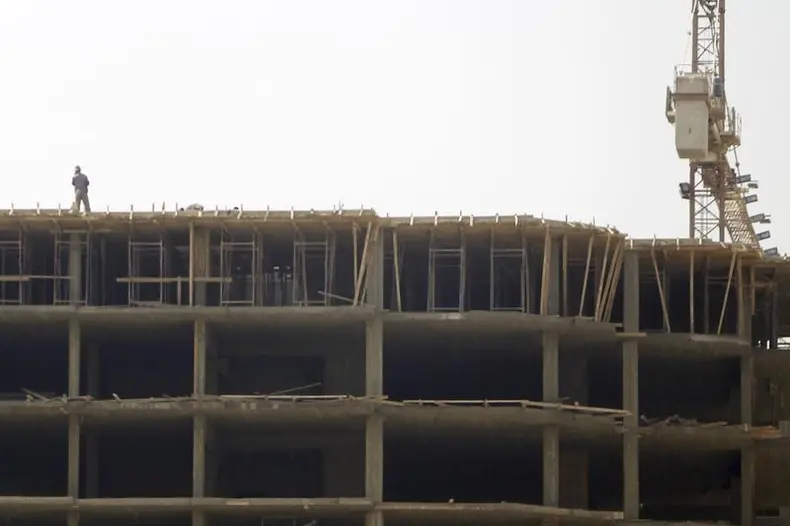
Like other Egyptian provinces, Sharqia, some 80 kilometres northeast of Cairo, has seen a surge in illegal conversion of fertile agricultural land into housing developments in the past five years.
Offenders took advantage of the collapse of the police system following the 2011 uprising that forced long-standing president Hosni Mubarak out of office.
Nearly 65,000 feddans (acres) of agricultural land have since been lost due to illegal and random urbanisation, according to official figures.
In recent months, authorities have stepped up a crackdown on unlawfully built structures on once-fertile agricultural tracts in a desperate attempt to save the country’s shrinking farmland.
Under Egyptian law, such offences are punishable by five years in prison and a fine of 300,000 Egyptian pounds (around Dh123,486).
Observers say that the penalty is too lenient and it takes long for punishment to be meted out because of ineffectual bureaucracy.
Farmers, meanwhile, blame authorities for the problem.
“The government has long neglected us as if we didn’t exist,” says Mahmoud Abdul Gani, a farmer-turned-truck-driver and a father of six.
“Our children have grown up and need to get married. But we don’t have enough money to provide them with a roof over their heads. So, the agricultural land seems to be the solution in the absence of housing units from the state at reasonable prices.”
Abdul Gani, 51, says he abandoned his ancestral vocation of farming more than a decade ago and became a truck driver to support his family. “This shift was necessary because cultivation stopped to become rewarding many years ago.”
He says that several of his neighbours who clung to farming eventually either sold their patches of land to developers or built houses for their extended families on them.
They declined to speak to Gulf News for fear of legal trouble with authorities.
Sharqia is Egypt’s third most populous province after Cairo and Giza with 6.6 million people, according to a recent census.
President Abdul Fattah Al Sissi recently launched an ambitious scheme to reclaim and cultivate around 1.5 million acres in the desert with the aim of helping improve food security in the country of around 90 million.
Experts say this is not the best way to meet Egypt’s burgeoning food needs.
“To say that reclaiming the desert to grow food and make up for the agricultural land lost for building in the Nile Delta, is wrong,” says Salama Hamdan, an agronomist.
“Desert reclamation could not be an alternative for preserving the old fertile land, especially as the country’s population keeps increasing at high rates.”
According to Hamdan, Egypt’s population stood at around 11 million in the early 20th century when its overall cultivation area reached about five million acres.
“Now the population’s number has climbed to more than 90 million while the area of agricultural land is estimated at around 8.6 million feddans. The situation is very serious and has dangerous implications for the future.”
A majority of Egyptians live in the narrow confines of the Delta and Nile Valley that accounts for around 5.5 per cent of the country’s area, which mostly comprises desert.
Hamdan has urged the government to work out a contingency plan to curb encroachments on farmland.
“There is an urgent need for an unconventional approach to the problem such as toughening penalties and setting up special courts to handle the related cases in a short time,” he argues.
“The state has also to pay more attention to the housing needs in the countryside by making use of the desert hinterland of each governorate,” he adds.
“Incentives must be offered to farmers to encourage them to keep the agricultural land in use rather than turning them into concrete buildings either for commercial or personal purposes. In a country that imports more than 65 per cent of its food, this must be a national security issue.”
Ramadan Al Sherbini Correspondent
Gulf News 2016. All rights reserved.