KUWAIT : Internet service in Kuwait and other parts of the Gulf was disrupted on Wednesday due to a snag in a fiber optic cable connecting Europe and the Middle East, a source from FastTelco, an Internet Service Provider (ISP) told the Arab Times on condition of anonymity. The source explained the submarine fiber optic link between Alexandria, Egypt and Marseilles, France has encountered some technical problems and that the company is not in a position to tell when the Internet services will be fully restored. The transcontinental link known as SEAMEWE4 connects South East Asia, Middle East and West Europe. Sources close to the ISPs said all internet lines through Saudi Arabia and Egypt were down while those through Dubai were okay.
On Wednesday, subscribers of QualityNet service complained that they were unable to get Web connectivity while FastTelco and Q8 subscribers said the traffic was sluggish. A subscriber of one of the services told the Arab Times that he had been unable to access connectivity for the past two days. However, this could not be immediately confirmed as several calls to the service provider went unanswered. Callers to the Arab Times from Bahrain and the UAE also said they were experiencing difficulties with the Internet and their services were down. A problem with two international optic cable lines off Alexandria City on Tuesday has caused slow Internet services in Kuwait, the Kuwaiti Ministry of Communications said on Wednesday. The two international lines in the Mediterranean region were disrupted due to bad weather and sea navigation, Ahmad Ramadan, manager of public relations at the ministry, told Kuwait News Agency (KUNA).
The cables are expected to be repaired within 12-15 days, Ramadan added. However, the ministry will do its best to find appropriate technical alternatives within three or five days, he said, predicting online services to improve gradually. Internet outages disrupted business and personal usage across a wide swathe of the Middle East on Wednesday government officials and Internet service providers said. In Cairo, the Ministry of Communications and Information Technology said the cut in the international communications cable had led to a partial disruption of Internet services and other telecommunications across much of Egypt.
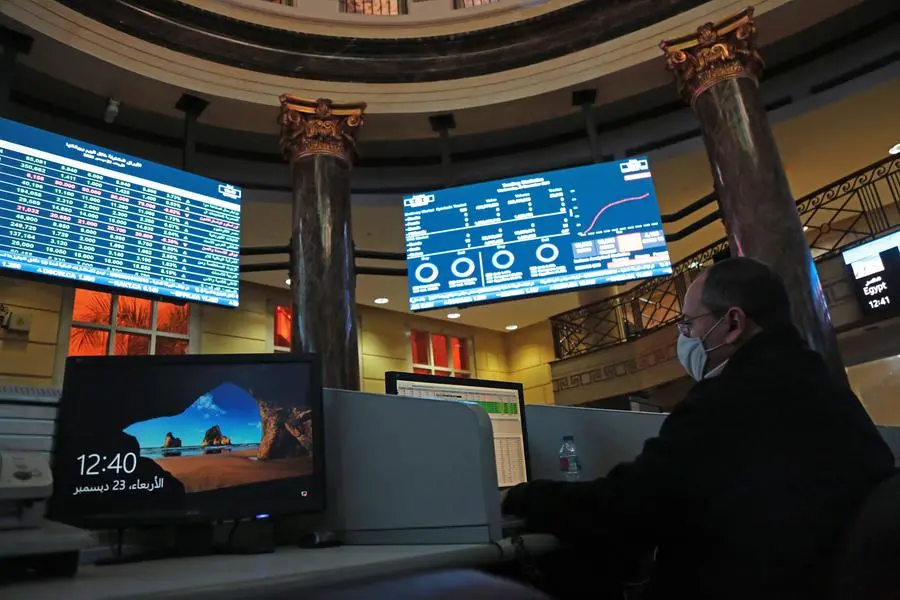
At the Egyptian stock market, IT department engineer Mahmoud Mansour said the disruptions did not affect the operations at the exchange. Emergency teams were quickly trying to find alternative routes, including by satellites, to end the disruptions, said Minister Tariq Kamel. But service was still slow or nonexistent by late afternoon Wednesday. A telecommunications expert at the Egyptian communications ministry, Rafaat Hindy, told The Associated Press that the government is "engaged in efforts to try and overcome the consequences of the problem" but cautioned that "solving this could take days." "Despite this being an international cable affecting many Gulf and Arab countries, we are closest to it and so we have a lot of responsibility. We are working as fast as we can," he said.
Internet service also was disrupted in Dubai in the United Arab Emirates in the Gulf, which markets itself as a top Mideast business and luxury tourist hub. Both Internet service providers was affected and one was completely down in the morning. DU restored Internet service by the afternoon although browsing was very slow. The other carrier, Etisalat, and DU said international telephone service was also affected by the cable break. DU attributed the disruption to a fault in "two international cable systems" in the Mediterranean Sea but gave no details.
It was not clear what caused the damage to the cable. An official who works in the customer care department of DU told The AP that the reason for the outage was a fault on a submarine cable located between Alexandria, Egypt, and Palermo, Italy. The official, who identified himself only as Hamed because he said he was not authorized to speak publicly, said he was not in a position to describe the technical fault but that engineers contracted by DU were working to solve the problem. By early afternoon, the service was flooded with complaints and the ISP had found alternative routes but Hamed said "there is slowness while browsing on the Internet." DU services Dubai media city, Internet City and Knowledge Village, which houses major university campuses.
The ISP also serves the Dubai International Financial Center (DIFC), including the Bourse, major malls, and big residential communities including the Palm Jumeira artificial island off Dubai's coast. The deputy business editor of Khaleej Times newspaper said the overall trading volume was low at the DIFC due to a sharp drop of on-line trading. "There was a drop in the trading activity," said Issac John, although he was not sure it was entirely due to the Internet problems. Wednesday's trade volume amounted to nearly US$330 million, which is well short of closer to US$1 billion on a good day. There was no total outage in Kuwait, but service was interrupted Tuesday and Wednesday. The Gulfnet International Company apologized in an e-mail Wednesday to its customers for the "degraded performance in Internet browsing," which it said was caused by a cable cut in the Mediterranean.
In Saudi Arabia, some users said Internet was functioning fine but others said it was slow or totally down. A staffer at a Saudi ISP said that they were told that a cable rupture was the cause of the problem, which began early Wednesday. He spoke on condition of anonymity because he was not authorized to speak to the media. Calls to Saudi Telecom went unanswered Wednesday afternoon, the start of the weekend in Saudi Arabia. Users in Bahrain and Qatar also complained of slow Internet. India also reported serious disruptions to its services and Rajesh Chharia, president of the Internet Service Providers' Association of India, told Reuters: "There has been a 50 to 60 percent cut in bandwidth."
Chharia told the Headlines Today news channel that a "degraded" service would be up and running by Wednesday night, but full restoration would take 10 to 15 days. "The big operators have transferred their small broadband connectivity through the Pacific route, and that's the reason there's no hue and cry in the country," he said. One Indian Internet service provider affected by the cut, Videsh Sanchar Nigam Ltd (VSNL), said its service had been "largely restored" by diverting to another cable. Two outsourcing firms in Bangalore reported minimal disruption. "There has been a small outage in the evening today. But it has been restored now," said a spokesman for Satyam Computer, India's fourth-biggest outsourcing firm.
By Francis A. Clifford Cardozo
© Arab Times 2008