BUKHA -- Oman Oil Company Exploration and Production (OOCEP), the upstream subsidiary of the government owned energy investment firm Oman Oil Company, will invest around $600 million in the development of a major Oil and Gas Processing Scheme at Bukha in Musandam Governorate.
The project, part of a sizable integrated development centring on the offshore West Bukha field, has the potential to spur economic growth in this strategically important Omani enclave overlooking the Strait of Hormuz. Gas volumes produced by the facility will not only provide energy feedstock for the governorate's first gas-based Independent Power Project, but also potentially spur investments in industrial projects as well. Additionally, the venture will also help establish a new oil export terminal on the Sultanate's north coast.
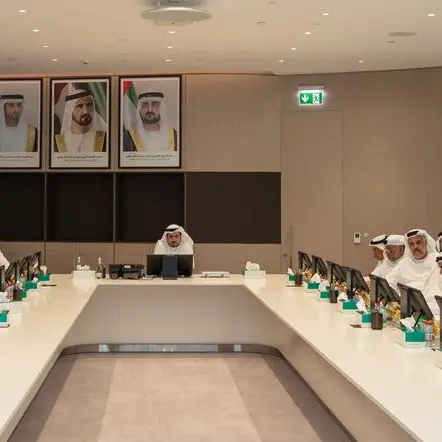
Underscoring the significance of the project, top civil and security officials of the governorate joined high-ranking executives of OOCEP at a foundation-laying ceremony yesterday marking the formal construction of the oil and gas processing scheme, also called the Musandam Gas Plant (MGP) project.
The ceremony was held under the auspices of Sayyid Khalifa bin Almurdas bin Ahmed al Busaidi, Governor of Musandam. Also present were Ahmed al Wahaibi, CEO of Oman Oil Company, and Salim al Sibani, CEO of OOCEP.
Hyundai Engineering Co Ltd, which is the prime contractor for the implementation of the project, was represented by Sang-Rok Sung, Senior Executive Vice-President. South Korean Ambassador Choe Jong-hyun was also among a number of dignitaries in attendance.
Speaking at the event, OOCEP's CEO Salim al Sibani commented: "This is a very significant project for Oman and Musandam Governorate. The Musandam Gas Plant is part of a major integrated development comprising the West Bukha field development, offshore production pipeline, crude storage, and export facilities. The gas will be used to feed a future power plant to provide reliable electricity for Musandam.
Further, the project will act as a foundation for additional oil and gas developments in the region."
According to officials, the project will utilise the region's hydrocarbon resources - currently exported to the neighbouring UAE emirate of Ras al Khaimah - for the socio-economic development of Musandam Governorate.
At present, Oman has two offshore producing fields adjacent to the Musandam peninsula. The two fields, Bukha and West Bukha, are both operated by RAK Petroleum. While the Bukha field has been in operation since 1994, the West Bukha field came on stream in 2008. Output from both fields are presently comingled on the Bukha platform and transported via a subsea pipeline to the Khor Khawair processing plant in Ras al Khaimah in the UAE.
However, upon the completion of the Musandam Gas Project, initial feedstock will be supplied from West Bukha via a new subsea pipeline originating from the Bukha platform.
Giving details, Al Sibani of OOCEP said the greenfield project entails the construction of complete oil and gas infrastructure comprising not only an oil and gas processing plant, but also facilities for the treatment of the gas to gas pipeline specifications. Additionally, storage capacity for the produced oil is envisaged, as well as an export terminal from where the oil will be shipped to international markets.
The rated inlet capacity of the plant is 20,000 barrels of oil per day and 45 million cubic feet of gas per day, said Al Sibani. "It also entails the construction of 23 kilometres of offshore pipelines bringing the products from the West Bukha platform to the plant, and eventually another four kilometres of export pipeline for the crude oil. Another internal gas pipeline will connect the gas plant to a proposed power station which will be built very close to the project."
Plans for the power plant itself, which will be initially sized at 120 MW but expandable to 240 MW in the future, are being overseen by the electricity authorities. The gas-based power generation scheme is slated to be operational by 2013-end, roughly coinciding with the completion of the Musandam Gas Plant, Al Sibani said.
While initial volumes of gas from the Musandam Gas Plant are committed for power generation, any additional volumes will be earmarked for industry, the CEO stated. "Initially, gas will be made available to the power station, but we envisage additional gas will be available for industries to be built in Musandam. In the event of gas being available more than Musandam's requirements, we are interconnecting between the Oman gas grid, the new Musandam grid and the UAE grid via Ras al Khaimah. So there will be a gas interlink between Oman and the UAE via this project."
Importantly, the Musandam Gas Project will also cater to volumes likely to flow from other blocks in the area that are being targeted for exploration and development. PetroTel, which operates Blocks 17 and 40 in the Musandam region, plans to kick off appraisal and exploration activities in Block 17 from next year. Developmental plans targeting other fields in the area are also likely to be accelerated by their respective operators now that a processing plant is coming up in the governorate, Al Sibani noted.
Significantly, the Musa-ndam Gas Plant will also yield around 80 tonnes per day (TPD) of LPG, as well as 50 TPD of sulphur as a by-product of treating sour gas. While the LPG will be trucked to market from the plant, liquid sulphur will be solidified and pelletized and marketed to industries in the region. The processed crude oil will be exported to oil tankers via a single point mooring system.
South Korea's Hyundai Engineering, which was awarded the contract for the Engineering-Procurement-Construction (EPC) of the project last December, will employ around an army of 2,000 workers at the peak of construction. JP Kenny's Abu Dhabi office is handling the Front End Engineering and Design (FEED) for the offshore production pipeline.
© Oman Daily Observer 2011