PHOTO
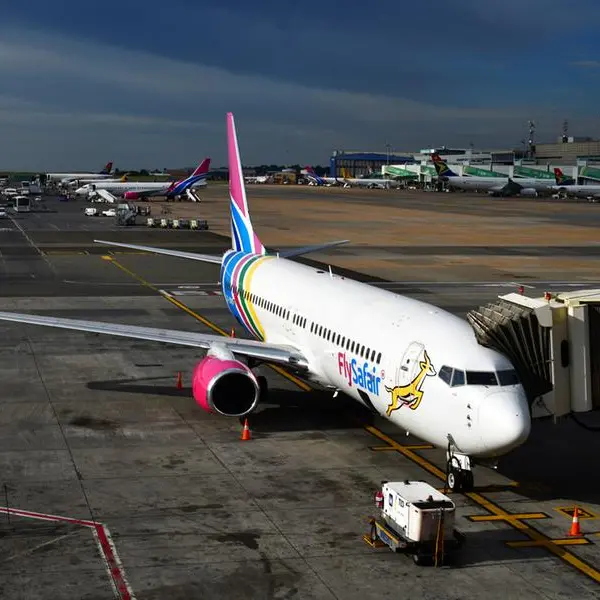
High taxes, fees and charges on airlines in Africa have been cited among the measures keeping air transport development on the continent aground.
Air transport in Africa is still considered a luxury service, as governments tend to overtax the supply chain, leading to excessive service charges for the airlines.
According to African Airlines Association (Afraa), the average amount of passenger’s paid taxes and fees applied to air tickets is twice as expensive in Africa than in Europe and the Middle East.
According to a study by Predictive Mobility, the elasticity price/demand for air transport within Africa vary from -2.34percent to -3.15 percent, meaning that a reduction of 10 percent on the ticket price can increase demand at continental level, from 22.3 to 30.1 million passengers annually.
Thus, the reduction of taxes and charges can allow a significant stimulation of demand on the continent, help airlines to become more competitive against foreign operators, who are based in regions where the taxation is comparatively lower.
Taxes vary within the region but, on average, constitute 25-30 percent of the ticket. For example, fares on Entebbe-Nairobi fluctuate between $300 and $350. Taxes on the route constitute about $100 for a return ticket.
In East Africa, taxes and fees paid by passengers on regional departure in airports are: Kinshasa at $77.5, Entebbe ($57.2), Dar es Salaam ($54), Nairobi ($50), Mogadishu ($42), Bujumbura ($40) and Addis Ababa ($31).
According to Afraa, Central and Western Africa have the best regional taxes policy, as they allow passengers to save on average $12.68 and $10.12 respectively.
The initiative has been in development since 2006, with lobbies and businesses pushing for lower airfares, increased connectivity to ease travel and cargo transportation.
Drafting of the framework has been ongoing under the Sectoral Council on Transport, Communications and Meteorology (SC-TCM). A report by the 18th meeting of the Sectoral Council shows efforts to domesticate the East African air space.
Draft regulations for air transport market liberalisation have provided for aviation freedoms up to the fourth. But stakeholders are demanding that the region expedite the Fifth Freedom.
The Fifth Freedom is the right of an airline to carry passengers and cargo between two foreign countries, as long as the flight originates or terminates in the airline's home country.
The EAC draft regulations awaiting signatures from partner States allow regional air operators to “exercise the services referred to as the first, second, third, fourth and fifth freedoms of the air within the community.”“Partner states may, at their discretion, grant each other any other rights beyond the Fifth Freedom of the air,” the draft days.
EAC Council of Ministers chairperson Beatrice Askul told The EastAfrican that the region was making good progress on the issue of air liberalisation.“The issue is part of our agenda as the council. We are making a lot of progress. ...there are specific ministries including Transport, Communication and Infrastructure, which are directly dealing with the liberalisation and the domestication of the EAC airspace,” she said.“Communication and consultation are still within that level of specific ministries consultation. After that, they will forward recommendations to the council to adopt, when they have all agreed on give and take.”
Partner states will subsequently negotiate their regional air transport bilateral arrangements under the Multilateral Air Services Agreement,” said Ariik during the 19th Meeting of Directors General of Civil Aviation and Airports Authorities.
But the partners have been reluctant to implement the Fifth Freedom, slowing down the efforts.“EAC members have been reluctant to liberalise their air services because they want to protect their airlines. Partner States think some of the routes are strategic for their national carriers so they are limiting full liberalisation on the Fifth Freedom,” said Adrian Njau, acting chief executive of the East African Business Council (EABC).“The Fouth Freedom -- the right to fly from one's own country to another -- is currently on, but it is not enough.”The freedoms of the air are international commercial aviation agreements, under the International Civil Aviation Organisation (ICAO) granting a country's airlines the privilege to enter and land in another country’s airspace.“We want the EAC to grant the Fifth Freedom,” Mr Njau insists.
Without an open skies regime in place, the EAC partner states have been relying on bilateral air services agreements to operate, presenting challenges of concluding multiple negotiations between several countries.“As a region we need to do away with bilateral agreements on air travel among EAC partner states because bilateral agreements are very restrictive. We want to make air travel domestic for EAC,” the EABC boss said.
Part of the reason why air travel is expensive and cumbersome within the EAC and the rest of Africa is failure by countries to ratify and implement the Single African Air Transport Market (SAATM). Currently, Kenya, Rwanda, and the Democratic Republic of Congo are the only EAC countries that have fully joined the SAATM.
Authorities in Kampala indicated that Uganda would join in this financial year.“We are left with approval by the Cabinet. Once that is done, we will be good to go,” said Fred Bamwesigye, director-general of Uganda Civil Aviation Authority at a meeting in Kampala early this year.
To date, 34 countries have signed up to the SAATM representing over 80 percent of the existing aviation market in Africa.
Even though the EAC concluded the regulations that would streamline the aviation industry, boost trade, promote tourism, and improve global connectivity, transport costs remain some of the highest in Africa.“We pay $3,000 for delegates for DRC (to fly from Kinshasa to Arusha), for instance, and less than $1000 to fly to Europe,” said Kennedy Mukulia, chairperson of the Committee on Legal, Rules and Privileges within the East African Legislative Assembly.
Inside the regulations, plans are also underway to reduce fares.“The cost of airfare in the region needs to be addressed,” said Ariik. “There is therefore a need to look into the possibility of harmonising the current regulatory fees and charges under the spirit of the EAC CMP and to consider and designate the EAC air transport market as domestic for EAC-registered operators and apply charges applicable to domestic parties and eventually lower passenger tariffs.”But a study by Africa Airlines Association in 2024, shows that airline passengers pay on average 3.5 different taxes, charges and fees for international departures, representing an average amount of $68.
Taxes and fees generally represent more than 55 percent of airlines' most affordable base fares, and more than 35 percent of total ticket price. Given the low purchasing power in Africa, it is urgent to assess the issue of taxes.
© Copyright 2022 Nation Media Group. All Rights Reserved. Provided by SyndiGate Media Inc. (Syndigate.info).