PHOTO
US-based management consultancy Arthur D. Little (ADL) has launched a data-driven framework to help Gulf Cooperation Council (GCC) countries make more informed decisions on the allocation of natural gas resources.
The Resource Utilisation Index (RUI) enables policymakers and corporate planners to evaluate the economic, industrial, and social value generated by gas in a structured and comparable manner.
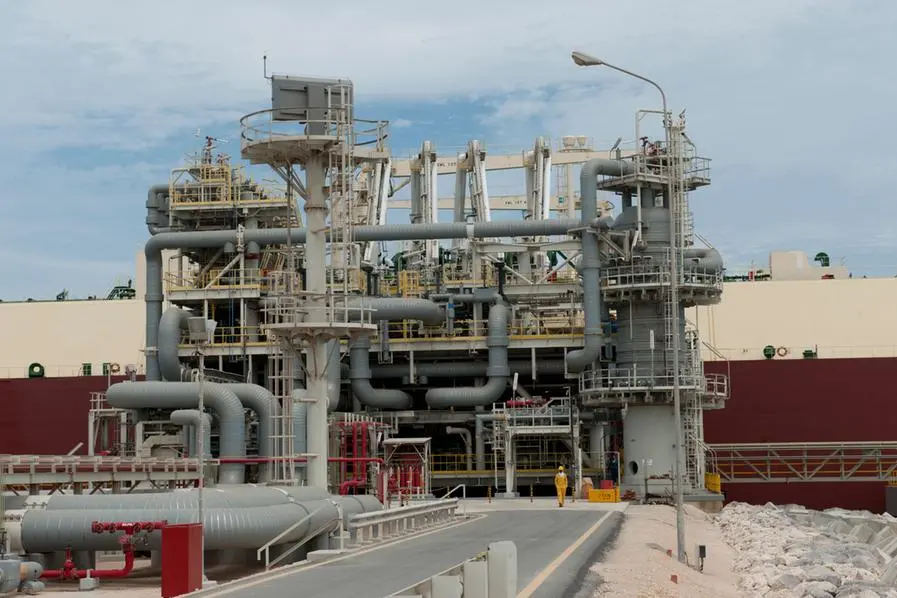
The GCC collectively holds more than 40 trillion cubic meters (tcm) of proven natural gas reserves, representing about 20 percent of the world’s total.
Qatar alone accounts for 24.7 tcm, making it the largest holder in the region and a global leader in liquefied natural gas (LNG) exports.
Qatar produces 211 billion cubic meters (bcm), Saudi Arabia 124 bcm, the UAE 56 bcm, and Oman 54 bcm. In contrast, Kuwait and Bahrain each produce 20 bcm or less and rely heavily on imports to meet demand.
Historically, gas allocation decisions in the GCC were intended to meet domestic power needs, support key industries, and fulfill export commitments.
However, ADL's research warned that without a more systematic approach, significant value could be left untapped.
The RUI addresses this challenge by integrating five interlinked strategic dimensions into a single comparative score and helping decision-makers weigh the potential value of redirecting the same gas to higher-return uses such as LNG exports or advanced petrochemicals.
“In a time of shifting global alignments and economic recalibration, the RUI empowers GCC nations to view gas not just as an energy source, but as a strategic lever for sustainable growth,” said Ilya Epikhin, Principal at Arthur D. Little Middle East.
(Writing by P Deol; Editing by Anoop Menon)
Subscribe to our Projects' PULSE newsletter that brings you trustworthy news, updates and insights on project activities, developments, and partnerships across sectors in the Middle East and Africa.