PHOTO
- Foreign ownership reforms, infrastructure investment and lower living costs drive demand for property in the emirate
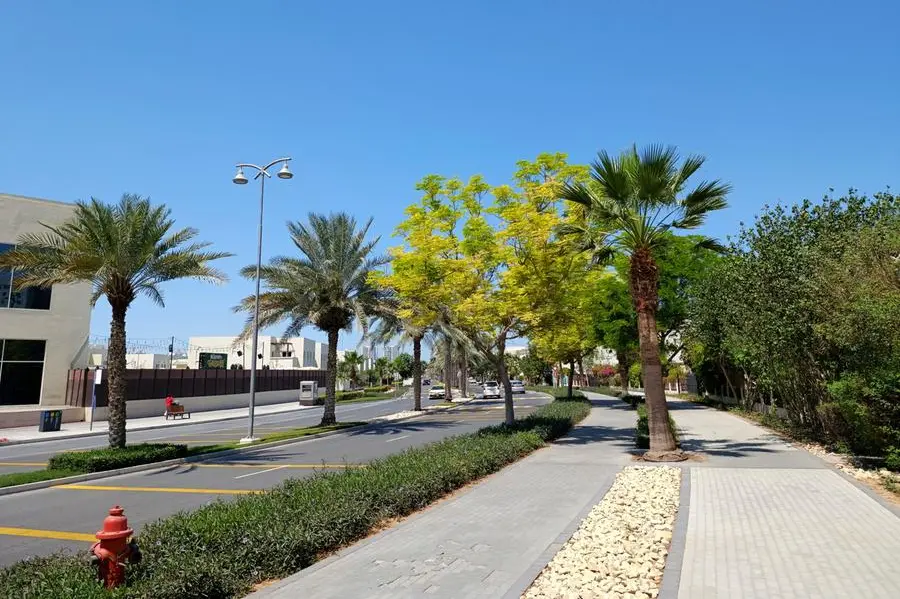
Sharjah, UAE: Real estate transactions in Sharjah have hit new annual records, with AED65.6 billion worth of sales in 2025 – an increase of 64% on the previous year, says leading real estate advisory and property consultancy, Cavendish Maxwell.
Sharjah’s fast-growing real estate sector also began 2026 with remarkable momentum, according to Cavendish Maxwell, which reports that Q1 transaction values rose 41% year-on-year to reach AED18.5 billion. Nearly 9,980 properties were sold in Sharjah between January and March 2026, a jump of 23% on Q1 last year, the company said, adding that sales data takes several weeks to be reflected in official statistics, meaning that Q1 figures are for transactions signed both before and after the conflict began.
Ali Siddiqui, Research Manager at Cavendish Maxwell, said: “Sharjah is entering a new phase of economic ambition. FDI reached AED7.7 billion last year, with H1 alone recording a 361% surge to AED5.5 billion. GDP grew 4.4% with projected 2.5% further growth this year, business licences climbed nearly 9% to reach more than 77,500, and annual real estate transactions reached a record AED65.6 billion. All this signals an emirate at an inflection point.
“Foreign ownership reforms, huge investment in infrastructure projects like Etihad Rail and major road improvements, and Sharjah’s relatively low living costs are driving new and unprecedented demand for real estate in the emirate, where the population is projected to grow from 1.98 million today to 2.1 million by 2030.
“With 33,700 units in the pipeline between now and 2030, Sharjah’s residential market is entering a period of significant supply growth, with the quality and scale of incoming product shifting buyer expectations upward,” added Siddiqui.
Cavendish Maxwell’s Sharjah insight reveals that the cost of living in the emirate is significantly lower than Dubai, with residents paying between 20% and 30% less in rent. As a result, a significant number of residents commutes daily from Sharjah to Dubai for work.
Rental contracts
Nearly 290,000 residential rental transactions were recorded in Sharjah in 2025, compared to 278,000 in 2024, highlighting the depth of underlying housing demand and underpinning the emirate’s long-term market resilience, according to the Cavendish Maxwell study. Families accounted for 86% of rental contracts, with single people representing 10%, and staff/workers the remaining 4%.
Total rental contracts – for both residential and commercial – topped 368,500, an annual rise of 4.4%
Who is buying and who is living in Sharjah?
Freehold reforms introduced in 2022 have diversified Sharjah’s real estate investor base, with almost 130 different nationalities buying property in the emirate last year. UAE nationals remained the dominant buyer group, followed by Arab nationals and other nationalities, with GCC nationals (excluding Emiratis) representing a comparatively smaller share of buyers.
Buyers are increasingly favouring integrated communities offering sustainability features, lifestyle amenities, landscaped open spaces, and family-oriented environments. Residential demand remains strong across both end-users and investors, supported by attractive rental yields, relative affordability, and flexible payment plans across new developments.
Expatriates account for over 85% of Sharjah’s population, with many relocating from Dubai in search of comparatively affordable housing and larger living spaces.
Delivery and supply
Around 2,600 new residential units were delivered in Sharjah last year, with apartments making up 81% of the new supply. A further 1,100 apartments came to the market in Q1 2026.
Some 33,700 additional new units, including 24,800 apartments and 9,900 villas and townhouses are due for delivery between now and 2030. Key developers include ARADA, Alef Group, BEEAH Group, Shurooq and Eagle Hills.
Infrastructure investment
Major infrastructure investments in rail, road, and aviation are converging to strengthen Sharjah's regional connectivity, underpinning long-term demand within the emirate, Cavendish Maxwell said.
The AED40 billion Etihad Rail network connects Sharjah with key emirates, strengthening inter-emirate accessibility and unlocking new demand drivers across residential, hospitality, and medical tourism. Meanwhile, the E611 widening project is expected to cut peak hour travel to Dubai by 45%, and there is a AED2.4 billion expansion at Sharjah Airport, which is targeting 20 million annual passengers by 2027, boosting tourism flows and hospitality demand.
Sharjah’s tourism and hospitality sectors
Sharjah International Airport handled 19.5 million passengers in 2025, up 14% year-on-year, boosted by 8 new routes and 4 new airlines.
Hotel guest arrivals surged 22% to reach 2.1 million, with hospitality revenues reaching AED780 million, an annual increase of 20%. The market is operating at 78% occupancy with an ADR of AED305.
Sharjah currently has 10,700 keys across 102 hotels, most of which are mid-tier. However, with three luxury and upscale hotels totalling 476 keys planned between now and 2030, there is evidence of a gradual shift towards more premium accommodation in the emirate.
Media enquiries: Rebecca Rees at rebecca@rebecomms.com
About Cavendish Maxwell (www.cavendishmaxwell.com)
Cavendish Maxwell is a leading Middle East real estate advisory group and property consultancy, with offices in Dubai, Abu Dhabi, Sharjah, Ajman, Ras Al Khaimah, Kuwait City, Muscat and Riyadh. The company is a member of the Royal Institution of Chartered Surveyors (RICS) and offers the full range of property-related services, including valuation, strategic advisory, research, project and building consultancy and investment and commercial agency expertise. With a team of experienced professionals and a commitment to delivering exceptional service, Cavendish Maxwell has established itself as a trusted advisor in the regional real estate market.