PHOTO
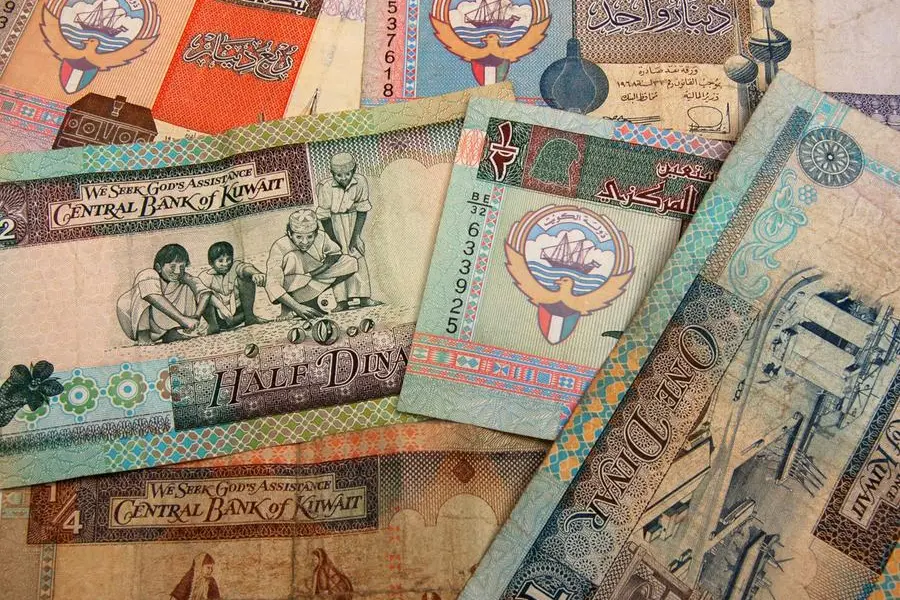
Kuwait: Kuwait Financial Centre “Markaz” stated in its Monthly Market Review that Kuwait markets navigated a challenging month, remaining relatively resilient despite geopolitical turbulence. The mild dip in the monthly returns of Kuwait’s All Share Index was triggered by the weakness in banking sector stocks and subdued activity in the real estate market. Kuwait’s banking stocks remained under pressure, with seven out of nine banks witnessing a fall, dragging the banking index down by 2.8%. National Bank of Kuwait and Kuwait Finance House, the two largest lenders, fell by 5.3% and 1.7%, respectively. Among premier market stocks, Oula Fuel Marketing and The Commercial Real Estate Company were the top gainers, with monthly gains of 24.8% and 10.2%, respectively. Among other key market developments, Boursa Kuwait introduced an Exchange-Traded Fund (ETF) framework with specific governance provisions, enabling the launch of new ETFs. The move is expected to support the exchange’s drive to broaden its product offerings.
Kuwait has issued a comprehensive regulatory framework governing long-term residency permits for foreign investors (up to 15 years). The new rules are designed to streamline investment residency procedures while imposing strict legal, financial, and compliance requirements to strengthen oversight and attract foreign investment. Domestic credit growth strengthened to 6.7% y/y in May, driven by a pickup in corporate lending. Kuwait's real estate market remained under pressure, with total transaction values falling 17.8% m/m and 38% y/y to KD 228.9 million in May 2026. This was the second-lowest monthly sales value in over two years, indicating investor uncertainty.
GCC market performance remained divergent, with markets that have fallen sharply since the start of the U.S.-Iran war exhibiting a mild rebound in June. Dubai’s DFM General Index gained the most at 3.4%, reducing its YTD losses to 1.5%. The rise was driven by foreign investors returning to the markets after assessing developments around a preliminary US-Iran peace agreement, the UAE's resilient economic fundamentals, and strong corporate earnings. Overall, the S&P GCC Composite index declined by 1.3% during the month. Ongoing regional uncertainty surrounding peace negotiations and the lack of a clear resolution kept investors on edge during the month. Saudi Arabia’s Tadawul Index declined by 2.5%. Abu Dhabi’s ADX increased by 1.1%, whereas Qatar’s QSE declined by 3.0% for the month.
Saudi Arabia’s economy remained resilient despite regional headwinds, with the IMF projecting GDP growth to slow to 2.0% y/y in 2026 from 4.5% y/y in 2025, while expecting the fiscal deficit to narrow and inflation to average 2.3%. Meanwhile, Saudi Arabia’s merchandise trade surplus doubled in April as exports rose 9.3% y/y, driven by an 11.7% y/y increase in oil exports, while the Cabinet approved new regulations allowing foreign real estate ownership in selected projects across Riyadh, Makkah, and Madinah to support investment and the property sector. The UAE demonstrated resilience amid regional disruptions, with Moody’s affirming its Aa2 sovereign rating with a Stable Outlook, citing strong fiscal buffers and low debt. The country’s oil exports rebounded to 4.3 mb/d in early June, around 85% of pre-conflict levels, supported by alternative export routes and storage drawdowns.
Global markets ended their two-month bull run in June 2026, with the hawkish stance of the U.S. Fed leading to a retreat in both developed and emerging market equities. The MSCI World Index, the S&P 500, and the Nasdaq Composite index declined by 0.8%, 1.1%, and 0.2%, respectively, during June 2026. Rising expectations of a possible Fed rate hike by September 2026, along with a broad repricing of high-valuation tech stocks amid tighter financial conditions and macro uncertainty, drove risk-off sentiment. Emerging Markets, as measured by the MSCI EM Index, declined by 1.7% during the month, weighed down by a stronger U.S. dollar and expectations of higher U.S. interest rates. Among EM markets, Taiwan and India gained 3.1% and 2.3%, respectively, in June 2026.
The yield on the 10-year U.S. Treasury notes slightly decreased by 1 bps during the month to 4.44%. The U.S. Fed kept interest rates unchanged at 3.50 - 3.75% but remained hawkish by signaling one 25 bps rate hike in 2026, raising inflation forecasts, and ending forward guidance under Chair Kevin Warsh as the Fed shifted to a more data-dependent policy approach, leading markets to increase expectations of future policy tightening.
Oil (Brent) prices declined over the month, settling at USD 72.92/bbl., reflecting a 20.8% monthly drop, as expectations that the U.S.-Iran ceasefire would broadly hold outweighed the impact of recent escalation. Improved oil flows through the Strait of Hormuz and hopes that both sides would avoid a wider conflict helped contain the geopolitical risk premium despite lingering regional tensions.
Looking into July 2026, the trajectory of the U.S.-Iran ceasefire and the direction of diplomatic developments will drive market movements. Although markets have priced in some of this volatility, any material disruption will be reflected both in equity and debt markets. GCC equities are likely to remain sensitive to oil prices, geopolitical events, and expectations of further U.S. interest rate hikes. Inflation readings in the U.S. and comments from U.S. Fed officials are also key market drivers to watch.
About Kuwait Financial Centre “Markaz”
Established in 1974, Kuwait Financial Centre K.P.S.C “Markaz” is one of the leading asset management and investment banking institutions in the MENA region with total assets under management of over KD 1.45 billion (USD 4.74 billion) as of 31 March 2026. Markaz was listed on the Boursa Kuwait in 1997. Over the years, Markaz has pioneered innovation through the creation of new investment channels. These channels enjoy unique characteristics, and they have helped Markaz widen investors’ horizons. Examples include Mumtaz (the first domestic mutual fund), MREF (the first real estate investment fund in Kuwait), Forsa Financial Fund (the first options market maker in the GCC since 2005), and the GCC Momentum Fund (the first passive fund of its kind in Kuwait and across GCC that follows the momentum methodology), all conceptualized, established, and managed by Markaz.
For further information, please contact:
Sondos Saad
Corporate Communications Department
Kuwait Financial Centre K.P.S.C. "Markaz"
Email: Ssaad@markaz.com
markaz.com