PHOTO
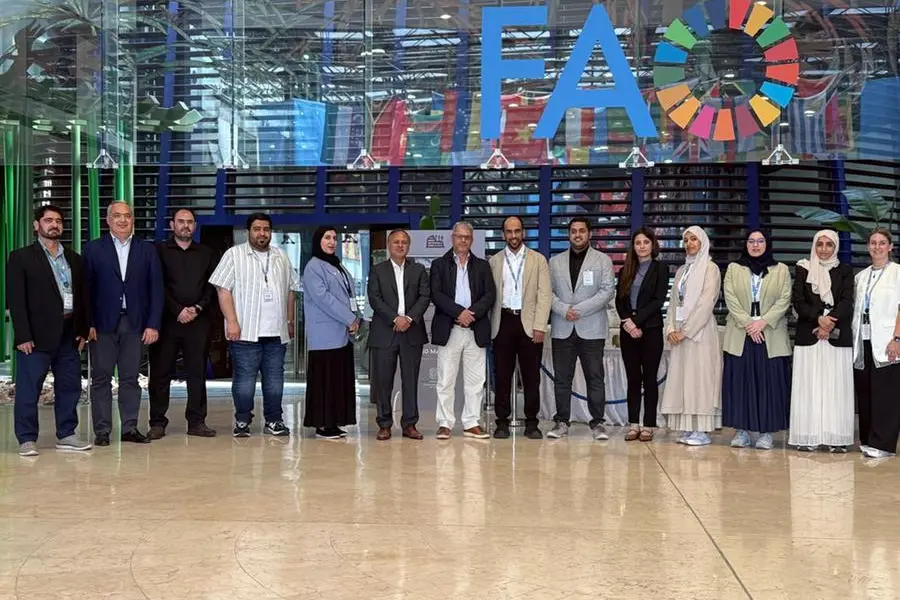
Rome – The Food and Agriculture Organization of the United Nations (FAO) organized two technical workshops at its Rome, Italy, headquarters to advance the understanding of the specialized data-driven and evidence-based tools that contributed to the formulation of the Master Plan for Sustainable Agriculture (MPSA) in Abu Dhabi, United Arab Emirates. Held in close collaboration with the Abu Dhabi Agriculture and Food Safety Authority (ADAFSA), the workshops aimed to enhance national capacities in evidence-based planning, monitoring, and budgeting approaches of relevant programme profiles that make the part of the Master Plan for Sustainable Agricultural Development in the Emirate.
The training brought together a total of 30 participants from the Abu Dhabi Agriculture and Food Safety Authority (ADAFSA) along with technical experts from multiple divisions at FAO including the Land and Water Division (NSL), Office of Climate Change, Biodiversity and Environment (OCB), Agrifood Economics and Policy Division (ESA), FAO Investment Centre (CFI), the International Center for Agricultural Research in the Dry Areas (ICARDA), the International Institute for Applied Systems Analysis (IIASA), and other partners.
The first workshop, held from 19 to 23 May and led by FAO’s Geospatial unit of the Land and Water Division (NSL), focused on crop yield modelling, agro-ecological zoning, and crop suitability assessments. Participants were trained on modelling platforms such as AquaCrop and APSIM, and introduced to an agro-ecological zoning framework developed with IIASA. This framework classifies farming systems based on climate, water, soil, and terrain, and incorporates crop suitability assessments covering 51 crops and key yield-limiting factors.
Participants engaged in practical exercises to simulate crop yields and assess productivity across farming systems. The resulting maps and simulations provide essential inputs to inform decision-making for land allocation and crop selection in Abu Dhabi’s agro-climatic zones.
The second workshop, held from 26 to 27 May and delivered by FAO’s Investment Centre (CFI) staff, focused on project budgeting and costing using applications utilized for estimating and managing agricultural investment and operational costs. The training supported ADAFSA staff in developing cost tables, financing plans, and aligning budgets with implementation strategies, using real cases from the Master Plan.
Armen Sedrakyan, economist, FAO Subregional Office for Gulf Cooperation Council states and Yemen highlighted: “These workshops highlight FAO’s commitment to the discussions and materials shared throughout the workshop will contribute to strengthening the technical knowledge and skills required for the successful implementation of the Master Plan for Sustainable Agriculture in Abu Dhabi”. He added: “By building technical capacities, we help translate the Master Plan into tangible results.”
H.E. Engineer Ahmed Khalid Othman, Deputy Director-General for Operational Affairs at ADAFSA noted: “These workshops reflect ADAFSA’s commitment to driving the successful implementation of Abu Dhabi’s Master Plan for Sustainable Agriculture. Through our strategic collaboration with FAO, we are equipping our teams with advanced analytical tools and evidence-based approaches needed to effectively translate the Master Plan into measurable, on-the-ground outcomes that align with the Sustainable Development Goals.
The workshops are part of FAO’s ongoing technical assistance under the project “ the Master Plan for Sustainable Agriculture in Abu Dhabi.” this project aimed to equip ADAFSA with agricultural background data and information, technical expertise and tools as well as comprehensive planning framework and a 10-year roadmap to accomplish the sustainable transformation of the agricultural sector in the Emirate of Abu Dhabi.