PHOTO
Abu Dhabi, UAE: As governments prepare for a pivotal round of negotiations on the future of global wildlife trade, the Convention on International Trade in Endangered Species of Wild Fauna and Flora (CITES) is once again drawing international attention. The treaty, now more than five decades old, has grown from a technical framework regulating cross-border movement of a few species to one of the world’s most influential conservation agreements.
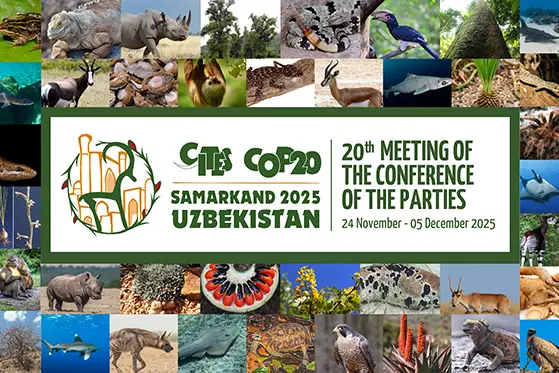
When delegates gather for the 20th meeting of the Conference of the Parties (COP20), they will face questions that cut to the heart of conservation debates: how to tighten enforcement against trafficking networks, how to govern trade in species under increasing pressure, and how to balance sustainability with economic demand.
But behind the negotiations, two countries the United States and the United Arab Emirates are emerging as influential actors whose approaches could shape both the tone and direction of global discussions.
A Foundational Treaty Under Pressure
CITES was established in 1973 to ensure that international trade in wildlife does not threaten the survival of species. Today, the treaty covers more than 40,000 species and has become a cornerstone of global conservation diplomacy.
Yet its challenges are expanding. Illegal wildlife trade is valued at billions of dollars each year, criminal networks have become more sophisticated, and climate change is placing additional stress on species already on the brink.
The upcoming COP20 will test the treaty’s ability to respond to a rapidly changing world and the political will of its most active member states.
The United States: A Rule-Maker with Global Reach
As one of the largest importers and exporters of CITES-listed species—from exotic pets and timber to coral and reptiles the United States carries weight that goes beyond its vote.
Through the U.S. Fish and Wildlife Service, the country enforces what experts often describe as one of the strictest domestic wildlife trade systems in the world. Its officers operate at major ports, airports, and border crossings, using advanced detection technologies and forensic capabilities to intercept illegal shipments. The U.S. also leads international enforcement operations, trains officers from dozens of countries, and supports partnerships aimed at dismantling trafficking networks.
Washington’s regulatory influence is matched by its role inside the treaty structure. It chairs central CITES committees, contributes scientific data for species assessments, and often introduces proposals that other nations rally behind.
At COP20, the U.S. is expected to prioritize stricter enforcement measures, science-driven species listings, and improved traceability for traded products—positions that could set benchmarks for negotiations across multiple regions.
The UAE: A Regional Hub Turning into a Conservation Leader
While the United States brings decades of global enforcement experience, the United Arab Emirates is carving out a rising role within the CITES landscape, driven by its position as a regional trade hub and its desire to strengthen environmental governance.
The UAE has tightened its regulatory framework in recent years, expanding customs capabilities and launching specialized training programs to detect illegal wildlife products as they pass through its ports and airports. Authorities have established dedicated enforcement teams, improved interagency coordination, and engaged actively in international operations targeting trafficking routes.
Beyond enforcement, the UAE is becoming known for its conservation and sustainability initiatives. The country has invested in habitat restoration, species recovery programs, and wildlife rescue centers. It has championed the reintroduction of threatened species such as the Arabian Oryx, supported regional cooperation mechanisms, and promoted educational campaigns on illegal wildlife trade.
As it assumes a more assertive diplomatic role at CITES, the UAE is expected to focus on strengthening regional partnerships, enhancing enforcement standards, and promoting sustainable trade practices. This agenda aligns with its broader environmental vision.
Shaping the Road to COP20
With 184 countries now partying to CITES, the treaty remains one of the world’s most widely adopted agreements regulating international wildlife trade. Within this group, the United States and the United Arab Emirates are seen as two influential participants whose positions could shape negotiations at COP20.
The meeting comes at a time when global trafficking networks have grown more organized and trade flows continue to expand. The U.S. brings decades of enforcement experience and a long-established regulatory system, while the UAE has rapidly strengthened its environmental oversight as a central trade hub.
How both countries approach the talks in Samarkand may influence debates over enforcement measures, sustainable trade practices, and the protection of species under commercial pressure. Their engagement will test whether CITES can adapt quickly enough to rising challenges.
As governments prepare for COP20, the balance between commercial interests, conservation priorities, and international cooperation is once again set to define the direction of the treaty’s next phase.