PHOTO
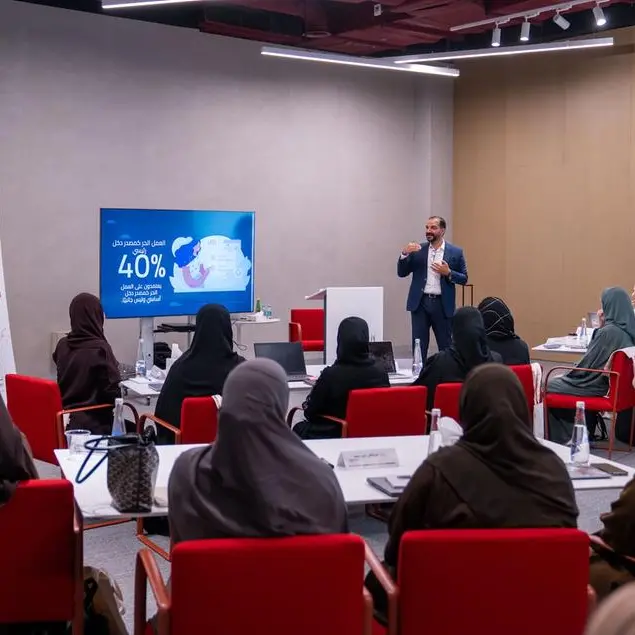
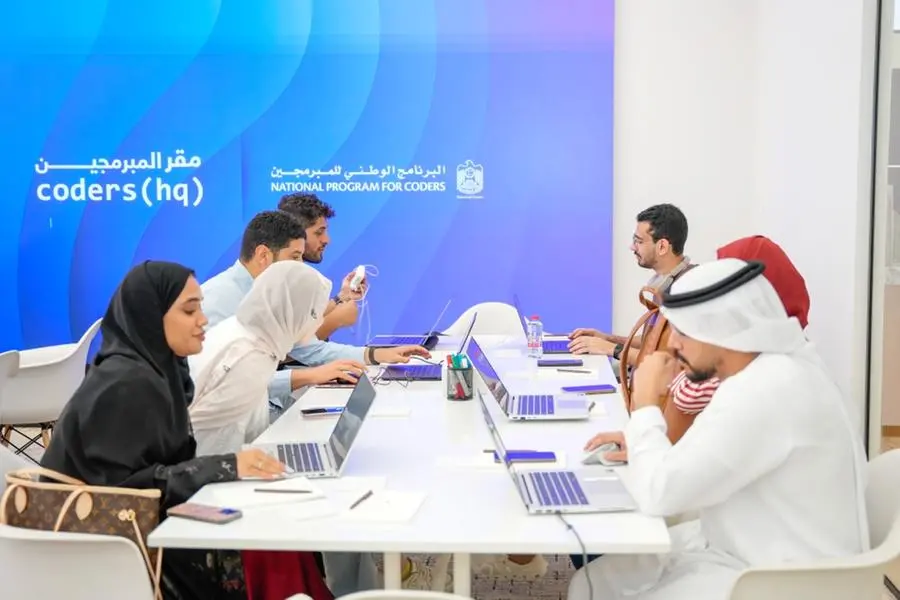
Dubai: The fourth edition of the Arab Youth Tech Fellowship, launched by the Arab Youth Center at the “Coders HQ” in Emirates Towers, Dubai, in collaboration with the Office of AI and Microsoft, featured discussions on methods of using and applying artificial intelligence models to build innovative practical solutions. All 23 participants from eight Arab countries also explored mechanisms for selecting the most suitable models for various fields of work, as well as advanced applications in data analysis and knowledge mining. At the end of the program, participants will receive certificates confirming the completion of their training period.
The recent session, led by Ahmad Hallak, a certified AI trainer and technical consultant in modern productivity at Sulava Gulf, focused on selecting the right AI models for specific sectors, advanced data analysis applications, and pathways to earning Microsoft-accredited AI certifications. Hallak, who brings experience from institutions including Microsoft, Google, and Coventry University in the UK, helped participants simplify complex AI concepts and apply them across academic, professional, and entrepreneurial projects.
“AI tools are now widely available, and anyone can benefit from them,” said Hallak. “Microsoft offers a structured certification path that starts with core concepts and the history of AI, requiring no prior experience in data analysis.”
He added that next sessions would focus on how search engines handle documents and data, and how to assess the relevance of information during research.
Hallak also praised the level of skill and curiosity among participants. “Their knowledge was impressive. I came across ideas I hadn’t encountered before. Some participants are already working in advanced data analysis, while others are leading AI-driven projects as entrepreneurs, actively exploring how to apply these tools more effectively in their work.”
A community of Arab innovators
For the participants, the fellowship offered far more than technical training. It created a regional platform for knowledge exchange and innovation. Through hands-on exercises and collaborative discussions, young professionals tested ideas, learned from peers, and deepened their understanding of how AI can be used to solve real challenges in their fields.
Emad Abbas, a software engineer from Sudan, said the sessions helped him make strategic choices about AI applications: “Choosing the right model improves output quality and saves time. A single AI model can now perform hundreds of tasks that once required large teams, which raises both efficiency and productivity.”
Khaoula Elmajdouli, a PhD student at Hassan II University in Morocco researching hydrogen storage using AI, described how the training transformed her research process: “I no longer need to rely on repeated trial and error. I now have a solid framework to identify the right model for my project. This will accelerate my research and support new academic partnerships with institutions in the UAE.”
For Emirati participant Saleh Hassan Al-Buraiki from Abu Dhabi Ports Group, the experience connected theory to practice in a way that supports the UAE’s innovation goals. “The tools I gained will help me create more effective solutions in investor collaboration and use AI to enhance institutional performance,” he said.
Similarly, Ahmad Mohamed Sayed Aneiba, who leads a drone project in Egypt focused on desert land reclamation, said the training bridged the gap between vision and implementation. “Microsoft’s experts shared tools that help move from theory to execution, cutting down time spent on research and testing.”
Rim Fadaly, a computer engineer from Egypt, highlighted the power of regional collaboration fostered by the fellowship: “It broadened my knowledge and enhanced my AI skills by exposing me to practical ideas I can use in future projects.”