Held in Kingdom of Saudi Arabia
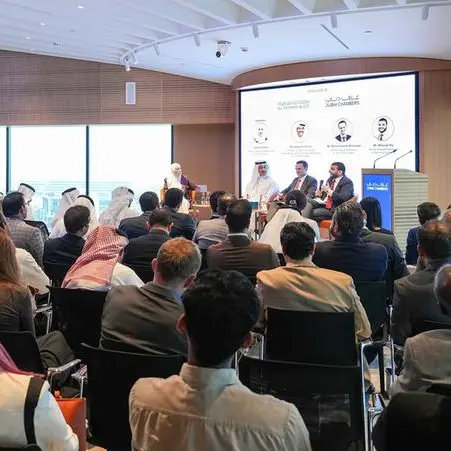
Under aegis of Minister of Communications & Information Technology, Eng. Eng. Mohamed Jamil Bin Ahmed Mulla, an Enterprise Architecture Forum has been arranged by the e-Government Program (YESSR), recently in Saudi Arabia.
Targeting IT and e-Government executives in government agencies and the private sector, the event was designed within the context of e-Government transformation. Local, regional and international experience in the area of Enterprise Architecture were presented by EA professionals.
Mr. Abdullah El-Kadi, managing director of Open Group Arabia defined Architecture as the fundamental organization of something, embodied in:its components, their relationships to each other and the environment, and the principles governing its design and evolution.
He also defined Architecture Framework as a conceptual structure used to develop, implement and sustain an enterprise architecture while it should describe a method for designing target state of the enterprise in terms of a set of building blocks, and for showing how the building blocks fit together. It should contain a set of tools and provide common vocabulary and should also include a list of recommended standards and compliant products that can be used to implement the building blocks.
Then he highlightedTOGAF 9 componentsthat include: 1-Architecture Development Method (ADM) - an interactive sequence of steps to develop an enterprise-wide architecture 2- ADM Guidelines and Techniques - Guidelines and techniques to support application of the ADM 3- Architecture Content Framework.
In a summary to the benefits of Enterprise Architecture, Dr. Ali Al-Soufi, EA Project Director, Bahrain e-Government Authority, confirmed that it aligns business and IT objectives and resources, speeds decision making through established principles, models, standards and processes, reduces integration problems through compliance with architecture, reduces cost by retiring duplicative or outdated assets and improves communication, prioritization and governance of initiatives.
Dr. BallabSaha, senior research fellow & Enterprise Architecture Evangelist from National Universityof Singapore, defined Enterprise Architecture as the ongoing process of building the ability to tackle complexity, with the pivotal goal of creating and sustaining coherent enterprises. Dr. Balab highlighted the challenges encountered by Governments in tackling of complexity in the following brief points:Moving from departmental stovepipes to citizen centric approach in service delivery, transforming and integrating the back office, collaborative working and information sharing, Product and service inclusion, citizen engagement and inclusion, networked form of organization model adding to complexity and enhancing the economic infrastructure and government performance.
Dr. Ballab outlined the following institutional constraints to connected Government: 1-The vertical hierarchical structure of bureaucracy as the fundamental organizational form of government 2- Legislations, mandates and regulations reinforce autonomous decisions and disconnected operations 3- Ambiguous line of accountability discourage integrated systematic thinking 4- The budget process inhibit shared resources negatively influencing the eagerness to embrace collaboration.
Eng. Mohamed Al Otaibi, Director General of Computer Center at the Institute of Public Administration, reviewed the advantage of TOGAF as it provides a reliable, practical method -the ADM -for defining business needs and developing architectures. Moreover, TOGAF is neutral towards tools and technologies and it is designed to be used with whatever set of deliverables the TOGAF user feels they are most appropriate.
He outlined learned lessons that include: A- Select the right EA tool, B-Make a team of architect (Chief Architect, Business ,Data, Application and Technology Architects), C- Write down each architecture's principles, D- Use Technical/Business Reference Models when possible.
Eng. Abdullah Al Otaibi, Strategy & EA Director at the National Information Center outlined the following benefits of the enterprise architecture:
- Ability to develop a vision consistent with business and IT
- Ensure technologies and systems are compatible with strategy objectives
- Ensure integration of systems and business requirements
- Integration of business processes
- Eliminate redundancy
- Ensure efficient management of change.
Mr. MudarBahri, an EA consultant at YESSER Consultant Group, defined the enterprise architecture in the following brief points: 1- A set of business processes and controls that enable the organization cope with change forces it encounters 2- Common vocabulary between business and technology 3-Boosting the ability to identify, analyze and implement necessary change in conformity with the organization's strategy.
Mr. Mudar presented a summary of enterprise architecture benefits that include : (A) Integration and orchestration of business strategies, functional processes and IT components (B) Identification of functional and technological requirements for business development (C) Optimum utilization of technology and efficient management of technology resources to reduce operational costs (D) Integration and orchestration of various existing applications, eliminate redundancy of data and reduce duplication of services and operations ( E) Reduce conflict of technologies that are used to operate applications (F) Establish necessary criteria and controls to ensure information security and integrity (G) Change governance in order to observe both business and technology.
© Press Release 2013