PHOTO
- Accolades reinforce energy technology partner’s global net-zero commitment
- Recognize company’s efforts to elevate the lives of employees every day
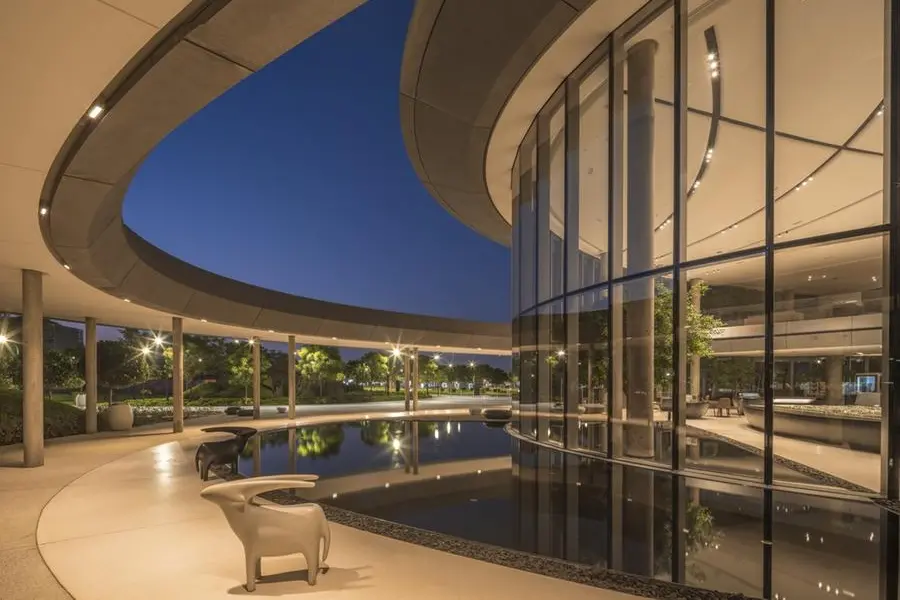
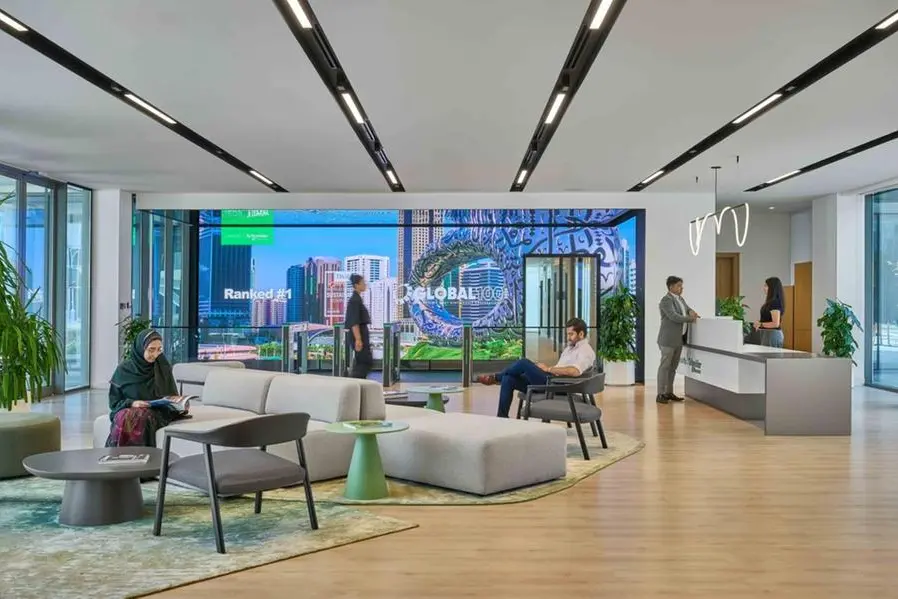
Dubai (UAE) – Schneider Electric, a global energy technology leader, today announced that its Dubai headquarters, The NEST, has received both the LEED ID+C Platinum and WELL Equity certifications. Following on the heels of its perfect 100 score and Platinum accreditation from WiredScore Smart Score last year, the sustainable office space that hosts and supports over 1,000 employees across 10,000 square meters, has yet again demonstrated the company’s commitment to creating workplaces that seamlessly integrate environmental sustainability with human-centric design, accessibility, and equity.
The LEED ID+C Platinum and WELL Equity certifications position The NEST as a standout example of intelligent, future-ready infrastructure in the Middle East, proving that advanced building technologies can address climate imperatives and foster inclusive work environments while prioritizing employee wellbeing and diversity. Schneider Electric worked with a world-class team comprising Gensler, JLL, and Cundall to integrate AI, automation, digital twin systems, and its full suite of EcoStruxure™ solutions into The NEST from the outset - enabling up to 37% energy savings and avoiding 572 metric tons of CO₂ annually.
While validating Schneider Electric’s commitment to global net-zero principles, the certifications are a nod to the company’s efforts at elevating its employee experience all year round.
The NEST: A Living Lab for Energy Breakthroughs
As the flagship Schneider Electric Impact Building worldwide, The NEST’s superlative scorecard includes:
- 48% reduction in energy costs and GHG emissions
- 40% of annual energy demand met through on‑site photovoltaics
- 75% of construction waste diverted from landfill through circular‑economy strategies
- 88% reduction in parking capacity to promote sustainable mobility
- Daylight access for 81% of regularly occupied spaces and quality views for 77%
The LEED Platinum certification recognizes exceptional performance across sustainable site development, water savings, energy efficiency, materials selection, and indoor environmental quality. The WELL Equity certification specifically addresses fairness and inclusion in workplace design, evaluating factors such as equitable access to amenities, support for diverse working styles, and accommodations that enable all occupants to thrive. Beyond badges or accolades, the certifications recognize a workplace designed to perform, adapt, and support people in meaningful ways.
"At Schneider Electric, we go beyond advising our customers on building smarter, more sustainable spaces — we live by these principles every day," said Amel Chadli, President, Gulf Cluster, Schneider Electric. "The NEST embodies our vision of what intelligent buildings should deliver: spaces that are climate-responsible, digitally enabled, and fundamentally designed around people. These certifications validate our approach and demonstrate that sustainability and inclusivity are not competing priorities but complementary pillars of workplace excellence."
The dual certifications establish The NEST as a benchmark for the next generation of commercial real estate in the Middle East, where governments and enterprises are increasingly prioritizing sustainability alongside economic diversification. The UAE's Net Zero by 2050 Strategic Initiative, Saudi Arabia's Vision 2030, and similar regional frameworks are driving demand for buildings that demonstrate measurable environmental and social impact.
"These certifications are proof that intelligent buildings are not aspirational concepts but achievable realities," added Chadli. "We hope The NEST inspires others across the region to recognize that the future of work requires spaces that are as committed to people as they are to the planet."
The Imperative for Intelligent Buildings
Buildings and construction consume 32% of the world’s energy while contributing 34% of its carbon emissions, according to a report by the United Nations Environment Programme (UNEP) and the Global Alliance for Buildings and Construction. [UN Report Calls for Reduction of Building and Construction Emissions Worldwide - EcoWatch] Yet buildings represent more than environmental impact - as spaces where people spend close to 90% of their time, making indoor environmental quality, accessibility, and equitable design essential to productivity and health.
According to recent industry analyses, the global smart building market is forecast to reach US$128.1 billion in value in 2025 and surge to US$1137.3 billion by 2035, registering a compound annual growth rate (CAGR) of 24.4% over the forecast period [Smart Building Market | Global Market Analysis Report - 2035], with the Middle East emerging as a particularly dynamic growth region driven by national sustainability visions, major development projects, and increasing ESG commitments from corporations and real estate developers.
About Schneider Electric
Schneider Electric is a global energy technology leader, driving efficiency and sustainability by electrifying, automating, and digitalizing industries, businesses, and homes. Its technologies enable buildings, data centers, factories, infrastructure, and grids to operate as open, interconnected ecosystems, enhancing performance, resilience, and sustainability. The portfolio includes intelligent devices, software-defined architectures, AI-powered systems, digital services, and expert advisory. With 160,000 employees and 1 million partners in over 100 countries, Schneider Electric is consistently ranked among the world’s most sustainable companies.
www.se.com
Discover the newest perspectives on energy technology on Schneider Electric Insights.
For media inquiries contact: Mohammed Abdulla (mabdulla@apcoworldwide.com) and Hanzla Wajid (hwajid@apcoworldwide.com)