PHOTO
(The views expressed here are those of the author, a columnist for Reuters.)
LAUNCESTON, Australia - Escalate to de-escalate is a well-worn playbook employed by U.S. President Donald Trump, and no doubt global crude oil markets are hoping his promise to blockade the Strait of Hormuz is just the latest example of this ploy.
The announcement that the U.S. Navy will block vessels from Iranian ports using the narrow waterway raises the stakes massively in the six-week-old conflict.
Trump's threat was delivered with his usual bombast in a social media post on Sunday, and it effectively ended the surge in optimism that a ceasefire between the two parties would result in a re-opening of the vital waterway.
Trump's action follows the failure of weekend talks between the two parties in Pakistan, which ended with both sides seemingly far apart on key issues.
The latest escalation saw global benchmark Brent crude futures jump about 8% in early Asian trade on Monday, climbing to $102.80 a barrel from a close of $95.20 on April 10.
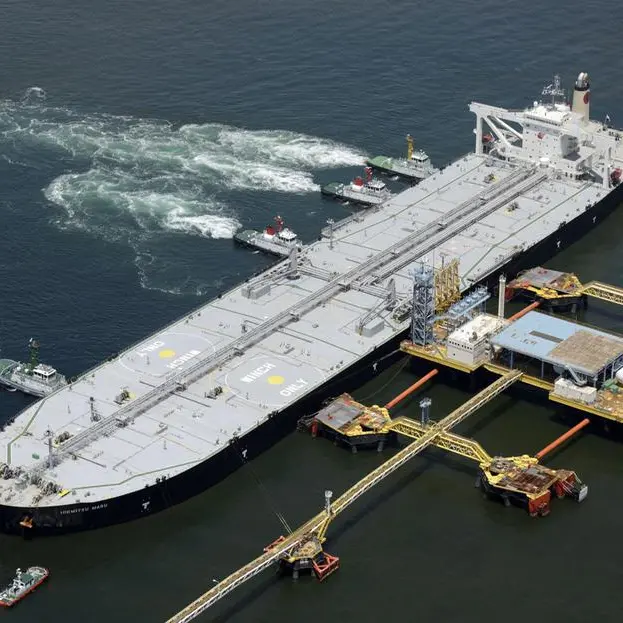
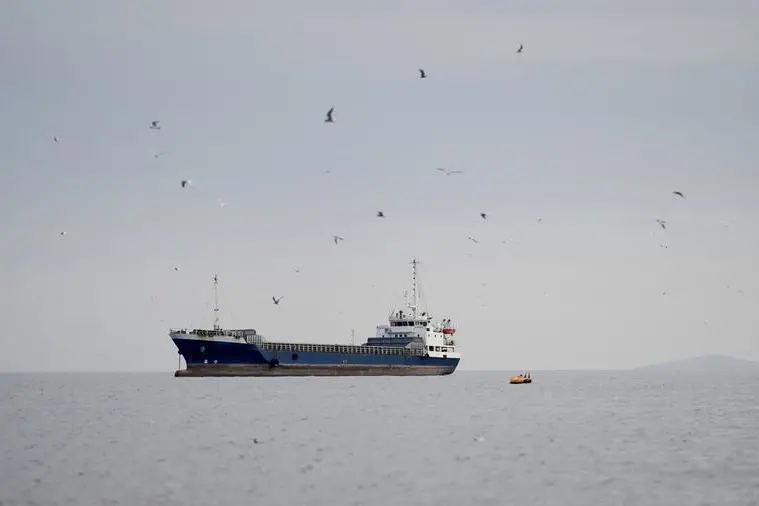
Since the conflict started on February 28, the flow of crude oil, refined products and liquefied natural gas through the Strait of Hormuz has slowed to a trickle from pre-war levels of roughly 20% of global supply.
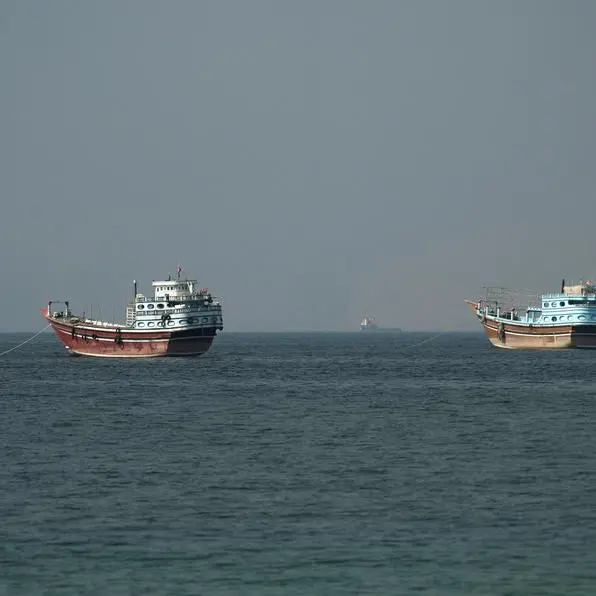
What little traffic that has gone through the strait since the start of April has mainly been from Iran, with data compiled by commodity analysts Kpler showing 15 vessels that loaded at Iran's Kharg Island terminal leaving between April 1 and 12.
Over the same period 12 tankers from other countries have made it through, with four from the United Arab Emirates, six from Saudi Arabia and two from Iraq, according to Kpler.
There are several ways to look at the threat to blockade vessels from using the Strait of Hormuz.
The first is that it's surprising this hasn't happened sooner.
By halting Iran's crude shipments the United States would put serious pressure on Tehran's revenue and also likely force China, the major buyer of Iranian oil, to become more involved, with the hope that Beijing would encourage its ally to make concessions in order to ensure vessels moved freely.
However, there are major challenges to stopping tankers from Iran.
It's unlikely the U.S. military would fire missiles or other weapons at them, given the risk of an environmental disaster.
This leaves the most likely option as trying to force them to change course through threats, and if that doesn't work, launching armed boarding parties to take physical control of the ships.
IRAN REACTION
Another way to look at Trump's threat is that it marks a return to escalation in the conflict, which makes the Iranian reaction key.
So far the hard-line clerical leaders in Iran have shown little sign of bending to U.S. demands, which range from ending its nuclear programme to fully re-opening the Strait of Hormuz.
Iran has largely done the opposite, responding with escalation of its own, such as attacking energy and military installations in its Gulf neighbours that host U.S. bases.
If the U.S. military does successfully interdict vessels from Iranian ports, it would be logical to expect Tehran would launch more attacks on its neighbours, and the most effective targets would be export facilities that bypass the Strait of Hormuz.
Already Iran has damaged Saudi Arabia's east-to-west pipeline to Yanbu on the Red Sea, as well as hitting facilities at the United Arab Emirates' Fujairah terminal on the Gulf of Oman.
Further attacks on these export pathways would inflict maximum damage on the already shaky crude oil markets, and likely turn what is already a crisis into a full-blown emergency.
The hope in the crude market is that Trump is once again escalating to de-escalate, but there are limits as to how many times this can happen before the damage to the world economy becomes severe and long-lasting.
It's a common refrain among U.S. right-wing media and commentators that Trump is playing some sort of four-dimensional chess and will eventually outwit Iran.
But the reality is that Trump appears to be playing noughts and crosses, known as tic-tac-toe to Americans, and he hasn't yet worked out that you cannot win.
Enjoying this column? Check out Reuters Open Interest (ROI), your essential new source for global financial commentary. ROI delivers thought-provoking, data-driven analysis of everything from swap rates to soybeans. Markets are moving faster than ever. ROI can help you keep up. Follow ROI on LinkedIn and X.
The views expressed here are those of the author, a columnist for Reuters.
(Editing by Muralikumar Anantharaman)