PHOTO
LONDON - World markets' tame reaction to President Donald Trump's alarming plan to increase import barriers on European countries opposed to a U.S. takeover of Greenland suggests investors have become inured to the White House's serial tariff threats. But this one is materially different to those batted away last year.
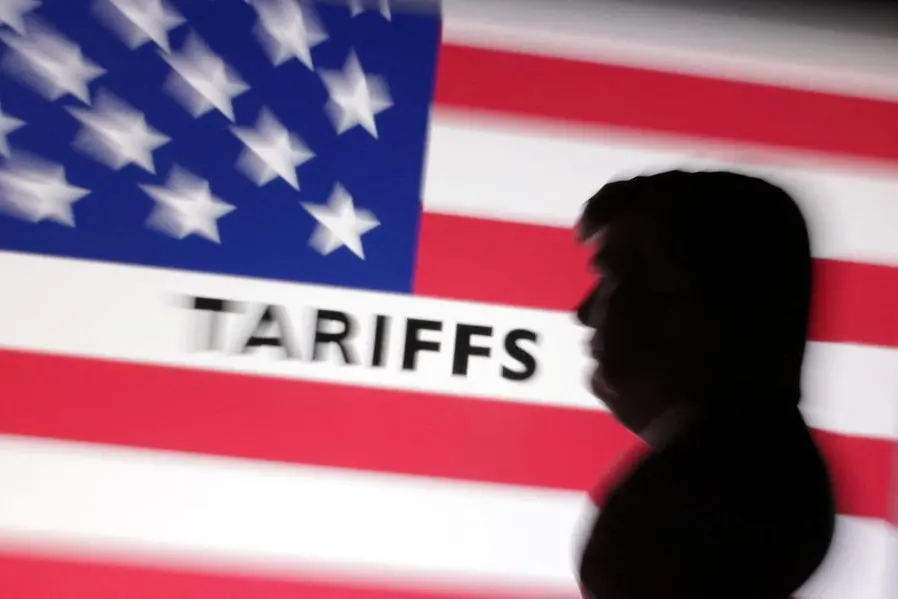
Before heading to the World Economic Forum in Davos this week, Trump insisted that eight European allies who opposed America's claim to Denmark-ruled Greenland will face 10% higher tariffs next month unless they capitulate to Washington's demand that it acquire the island. Those tariffs would increase to 25% by June if the countries haven't backed down by then.
Europe can't just hand over a large chunk of a European Union member's sovereign territory. So short of forcing Norway's Nobel Committee to invent another peace prize to offer him, an issue the President on Monday seemed to link to his latest tariff salvo, it's not clear what would deflect Trump's planned course of action.
Unlike during last year's tariff sweep, when Europe effectively took the hit on the chin, agreeing to a series of vaguely worded deals with Washington, the threatened countries can't easily reverse their position on territorial integrity, so any negotiating room here is narrow.
That significantly increases the likelihood of retaliation and the tit-for-tat Transatlantic trade row that never really materialized last year. Indeed, more than $100 billion of counter-tariffs already tabled by EU members six months ago is set to be reactivated on February 6 if Trump goes ahead with his threat.
What's more, the EU's three-year-old Anti-Coercion Instrument (ACI) - designed specifically for cases where external states use trade policy to try to wring political concessions from members - could ratchet up Europe's response several notches. The ACI could threaten the giant bilateral U.S. trade surplus in digital services, put limits on U.S. firms' access to trillions of dollars of EU public tenders, or even put quotas on U.S. imports.
Europe clearly doesn't want to go there, as evidenced by Monday's early attempt at dialogue. But the bloc may not be left much of a choice, with only 12 days or so left to work this all out.
So if Trump goes ahead with these tariff hikes, the question for Europe is simple: "If not now, when?"
That either leads to a trade war and the sort of 'dangerous downward spiral' that European Commission President Ursula von der Leyen spoke of on Sunday - or it spells trouble for the European Union as a construct.
Neither outcome would be welcome by cross-border investors or global markets.
NEW STRAIN OF TARIFF VIRUS
Considering all this, Monday's market reaction was something of a damp squib, with losses of only about 1% on the major world bourses that were open, some dollar slippage and yet another rise in gold and precious metals prices.
Wall Street was closed for a public holiday, clearly limiting the action. But S&P 500 futures were trading, and they fell less than 1% too.
Explaining the modest fallout, economists pointed variously to the likelihood of limited economic damage and to the potential for more talks before any final triggers are pulled.
Currency fund manager Stephen Jen reckoned the main reason for calm was that investors were down this route just last Spring and they saw markets recover quickly.
"The muted market reactions to the latest skirmish between the U.S. and Europe remind us that the violent selloff and the subsequent rally around 'Liberation Day' effectively inoculated the markets," he wrote. "President Trump is not scared of imposing more tariffs, nor are investors."
The last point is potentially self-reinforcing of course. If Trump only backs down when markets go haywire, then the lack of market volatility risks emboldening him to use tariffs even more - particularly if the long-awaited Supreme Court judgment on his use of emergency powers last year gives him a green light.
But even if investors have been "innoculated" against last year's trade war infection, the nature of the virus has changed with the new territorial demands.
If Europe were to roll over and play dead now, what would stop the U.S. president from using tariff threats for every political demand Washington may have in the future?
The question to seriously consider now then is whether a collapse of the Transatlantic alliance would matter more to U.S. or European markets.
While some banks focused on the possible hit to Europe's slower growing economy and export sectors, the United States also has a massive vulnerability, highlighted only last Friday.
An update from the U.S. Bureau of Economic Analysis showed that the country's net international investment position - the amount of foreign holdings of U.S. assets versus U.S. holdings of overseas assets - ballooned to a record $27.6 trillion at the end of the third quarter last year. That's just shy of 90% of U.S. GDP.
And the total U.S. liabilities to overseas investors is now running close to $69 trillion - more than double what it was a decade ago.
"The mutual inter-dependence of European-US financial markets has never been higher," wrote Deutsche Bank's currency strategist George Saravelos, pointing out that European investors own $8 trillion of U.S. bonds and equities and that the risk of Europe activating the ACI warrants close attention.
"It is a weaponization of capital rather than trade flows that would by far be the most disruptive to markets."
The White House may find it's not the only one who can play hard ball.
The opinions expressed here are those of the author, a columnist for Reuters.
-- Enjoying this column? Check out Reuters Open Interest (ROI), your essential new source for global financial commentary. Follow ROI on LinkedIn. Plus, sign up for my weekday newsletter, Morning Bid U.S.and listen to me on the Morning Bid podcast on Apple, Spotify, or the Reuters app.
(by Mike Dolan; Editing by Anna Szymanski and Alistair Bell)