PHOTO
BEIJING - Chicago soybean futures climbed on Thursday, boosted by U.S. President Donald Trump's comment that China is purchasing more U.S. beans.
The most-active soybean contract on the Chicago Board of Trade (CBOT) was up 0.8% at $11.01-1/2 a bushel, as of 0412 GMT.
Corn and wheat dropped. CBOT wheat was down 0.2% at $5.25-1/2 a bushel and corn fell 0.2% to $4.28-1/2 a bushel.
Soybeans hit a two-month high on Wednesday after Trump said in a post on his Truth Social platform that China is "lifting the soybean count to 20 million tons for the current season (They have committed to 25 million tons for next season!"
China had pulled out of the U.S. market during an extended back-and-forth trade war between the two countries. Traders are watching China closely for any signals that new buying interest is returning.
"Typically Chinese purchases of U.S. soybeans taper off from January. Regardless, the lift to 20 million metric tons of U.S. soybean purchases will add some much-needed boost to the soy complex," said Sean Hickey, analyst at Bendigo Bank Agribusiness.
By late January, China had bought about 12 million tons of U.S. soybeans, meeting a U.S.-announced commitment to reach that total by the end of February, after a trade truce in late October reignited purchases.
However, ample global supply capped gains in soybeans on Thursday.
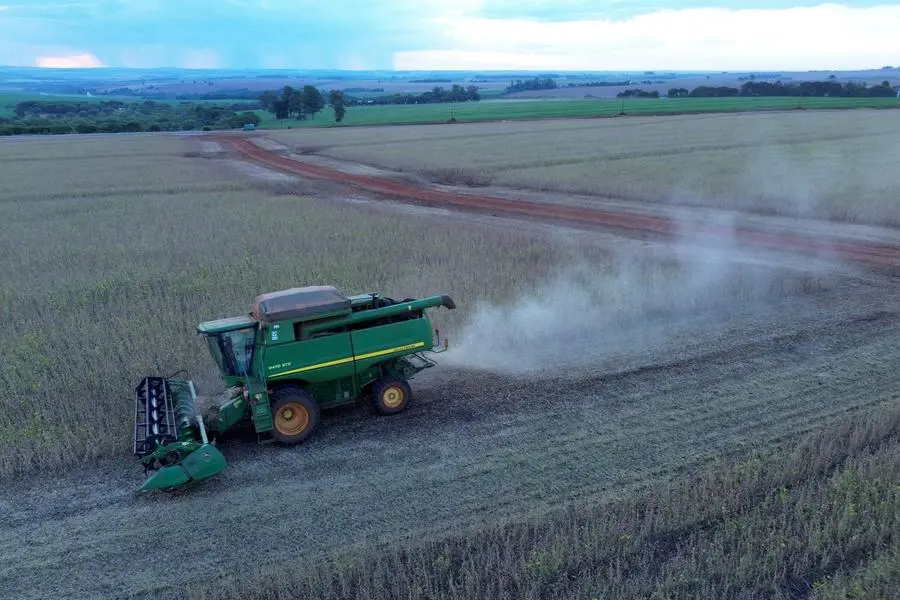
"An all-time record Brazillian crop, which is being quickly harvested, will soon begin to capture Chinese demand," said Hickey.
Brazil, the world's largest soybean producer and exporter, is expected to produce 181.6 million tons of soybeans in 2025/26, consultancy firm StoneX said on Monday, raising its forecast by 2.3% from a January projection.
China, the largest purchaser of U.S. soybeans, is expected to lean heavily on Brazilian soybeans in the first half of 2026 as record production and competitive prices propel shipments, even as US supplies return.
China's soybean imports hit records from May through October last year, as buyers snapped up South American cargoes while largely steering clear of U.S. soybeans due to elevated tariffs.