PHOTO
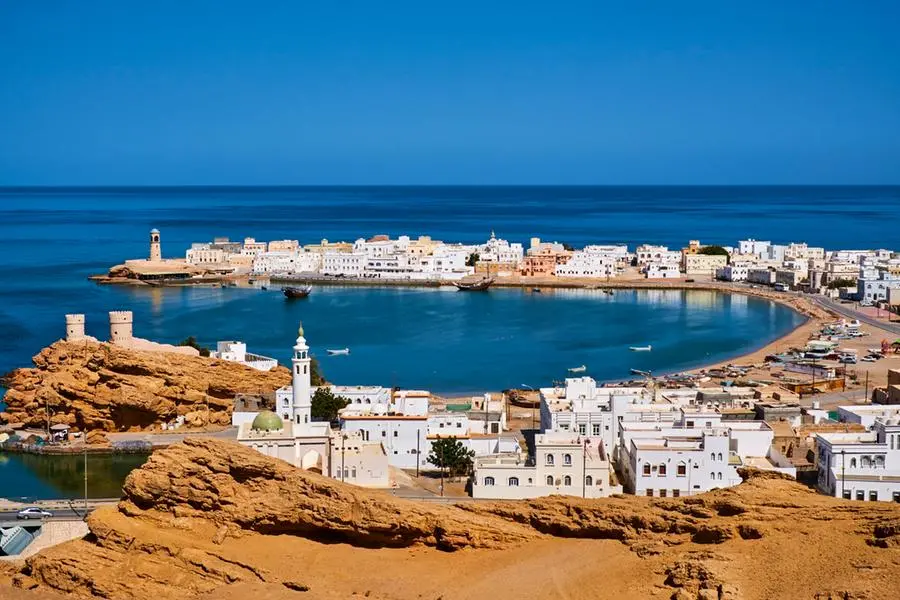
MUSCAT: Oman’s Five-Year Plans — long the cornerstone of the Sultanate’s development strategy — are being restructured into a 2+2+1-year configuration starting from the upcoming 11th Plan, which will span the 2026–2030 period. The move, according to a senior official at the Ministry of Economy, is designed to prioritise both economic growth and development through distinct pathways.
Dr Ahmed bin Mohammed al Qasmi, Head of the 11th Five-Year Plan, announced the new approach during a panel discussion on the importance of agility in planning at the Duqm Economic Forum 2025 held last week.
“The thinking around the methodology has changed for all future Five-Year Plans”, Dr Al Qasmi explained. “For the coming 11th Plan, we will have a government working plan for the first two years — 2026 and 2027 — followed by another for 2028 and 2029, with an evaluation phase in the final year, 2030”,
The underlying objective, he noted, is to integrate two complementary pathways — one focused on economic development, emphasising value addition across diverse projects and another addressing developmental priorities. Al Duqm, in particular, will be a key area of focus under the new model.
Highlighting the need to remain agile amidst rapid change and new challenges, he noted that future Five-Year Plans could potentially include annual planning components.
According to Dr Al Qasmi, Oman became the first Gulf nation to adopt Five-Year Plans in 1976 as a disciplined mechanism to achieve comprehensive development across key sectors. “The first three Plans, from 1976 to 1990, were all infrastructure-focused — we needed hospitals, schools, roads and so on — and that approach was very effective”, he said. “After Covid-19, the government began rethinking the planning process to better adapt to emerging challenges. Accordingly, the 11th Plan reflects this renewed mindset”.
Also shaping this evolution in planning are two key frameworks — Oman Vision 2040 and the UN Sustainable Development Goals (SDGs) — whose alignment with the Five-Year Plans is seen as essential. The 11th Plan concludes in 2030, the midpoint in implementing Oman Vision 2040 and the target year for achieving the SDGs. Given these shared milestones, Dr Al Qasmi stressed the need for close coordination to ensure that performance metrics across all three frameworks are consistent and achieved.
Also participating in the panel discussion were: Musab bin Zuhair al Farsi, CEO — Nafath Renewable Energy (as moderator); Erwin Verstraelen, VP — Port of Antwerp Bruges; Prof Carl Diver, Manchester Metropolitan University; and Marcel van de Kar, MD — Vopak Oman.
2025 © All right reserved for Oman Establishment for Press, Publication and Advertising (OEPPA) Provided by SyndiGate Media Inc. (Syndigate.info).