PHOTO
Seven months after a ground-breaking deal between Uganda and United Arab Emirates investor Alpha MBM Investments Llc to construct a greenfield 60,000 barrels-per-day refinery, executives overseeing the project’s implementation say they have finalised initial contracts to kick-start the development of the $4 billion facility, with a target for the final investment decision (FID) set for July 2026.
Refinery configuration studies have been completed, and technology licensor UOP Honeywell is on board since June this year as the parties prepare to launch front-end engineering design (FEED) and the environmental and social impact assessment studies by November 15.
Officials reveal that the incorporation of a special purpose vehicle Kabaale Refinery Company Limited is complete – with private investor Alpha MBM controlling a 60 percent stake and 40 percent held by Uganda National Oil Company (Unoc) – maintaining a similar shareholding structure as the refinery itself.
The company already has an office in Kampala, pending staffing and operationalisation to execute the project’s development and partner with the investor to build, operate, and maintain the refinery Peter Muliisa, the Unoc Chief Legal Officer told The EastAfrican.
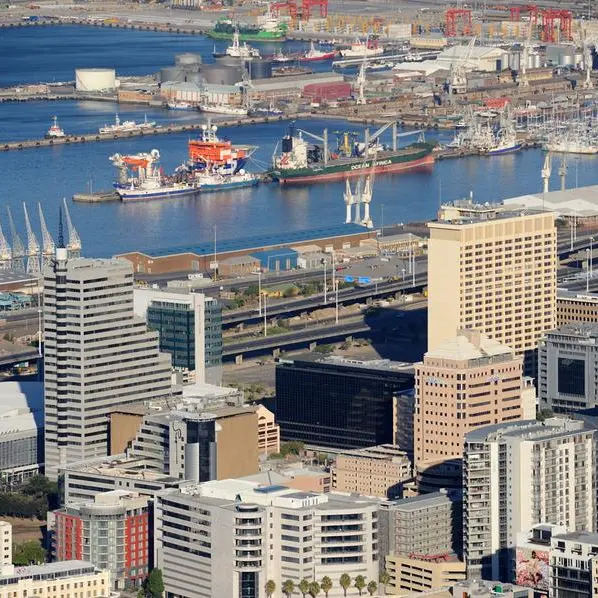
This aligns with project operational timelines as stated last month by Uganda Refinery Holding Company (URHL) General Manager Michael Nkambo Mugerwa during the Africa Energy Week in Cape Town, South Africa, that the Kabaale refinery will begin operations in late 2029 or early 2030.
URHL is a wholly-owned subsidiary of Unoc, the commercial arm of the government’s interests in the oil and gas sector.“If we can have FID by July, we will be on track to meet those timelines,” said Mr Muliisa.
Mr Muliisa reveals that the Crude Supply Agreement – one of three key commercial agreements – has been concluded with the upstream operators, and now await “minor approval elements” aiming to sign all, including the Shareholders Agreement and Host-Government Agreement in March 2026.
The upstream operators are TotalEnergies and China National Offshore Oil Corporation at Tilenga and Kingfisher oil projects respectively, with Unoc holding a 15 percent participating interest in the projects. Based on project progress, the export pipeline will be ready to transport crude exports in the second half of 2026.
These projects will produce a combined 230,000 barrels of oil per day, with Unoc having first call rights on 60,000 barrels that will go to supply the refinery while the rest will be dispatched via the export pipeline to international markets.
However, critics say the process to source new private investors, renegotiate commercial terms and models, has set Uganda’s refining ambitions back by several years and spending.
For instance, the Kabaale refinery is set to come on stream at least three years after first oil, costing the partners three years’ worth of revenue from refining and the anticipated $3-4 billion investments in the attendant petrochemical industrial park, with the potential to attract a further $1-2 billion.
The previous investor Albertine Graben Energy Consortium – whose project framework agreement expired in June 2023 – spent $68 million and delivered the project’s FEED, which was approved by the Petroleum Authority of Uganda in 2021.
Moreover, an expedited FEED for a Greenfield 60,000 bpd capacity refinery could take longer than the projected seven months, potentially spilling into the construction calendar and pushing the project’s delivery beyond 2030.
According to London-based African Energy newsletter, refineries that are not dependent upon traditional project debt finance take longer than expected to reach milestones. The Kabaale refinery will be financed entirely on equity, according to the Implementation Agreement signed on March 29.
Officials hail the current refinery model as a win-win for the investor and Unoc. It comes with a risk profile that is better for the investor as the model creates a refinery that only provides a service while placing the national oil company in a good economic position as it already controls the downstream market.
The refinery will use the Residue Fluid Catalytic Cracker technology to process crude oil into refined products.
Uganda is one of few African countries currently engaged in building their refining facilities. Others include Senegal, exploring an 80,000 bpd refinery with a Chinese state-owned company; Niger is also considering a second refinery of 30,000 bpd to be developed with Algerian firm Sonatrach.
When completed, the refinery will contribute $3.4 billion to Uganda’s GDP per annum and facilitate national capital formulation through annul investment of Ush8.3 billion ($2.36 million) per annum and about 32,000 direct and indirect jobs.
The refinery will also create a balance of payment impact of $591 million per annum and general fiscal impact expected to be $804 million per annum.
© Copyright 2022 Nation Media Group. All Rights Reserved. Provided by SyndiGate Media Inc. (Syndigate.info).