PHOTO
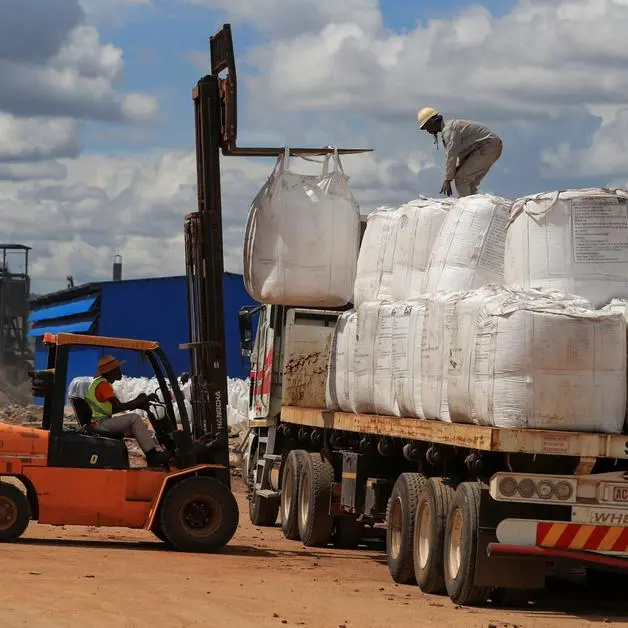
Tanzania’s Amsons Group has tightened its grip on Kenya’s cement industry after its subsidiary, Bamburi Cement Plc, announced plans to build a $250 million clinker plant in Kwale County, a move aimed at cutting reliance on imports and stabilising cement prices.
Bamburi, majority-owned by Amsons, this week signed an agreement to establish a Sh32 billion clinker production plant to reduce dependence on imported clinker and deliver competitively priced cement to Kenya’s construction sector.“The new clinker line will greatly reduce reliance on imported clinker, improve production consistency, and secure supply for the domestic market,” said Bamburi chief executive Mohit Kapoor.“This will save foreign exchange, stabilise pricing, enhance production planning, and help meet rising demand driven by infrastructure projects and private sector development.”Clinker, a key input in cement manufacturing, is subject to multiple taxes. Companies that import it pay a 10 percent duty under the East African Community Common External Tariff, a 17.5 percent Export and Investment Promotion Levy, and a 10 percent excise duty, or Ksh1.5 ($0.01) per kilogramme, whichever is higher.
Firms with local clinker capacity have used this advantage to undercut rivals.
On Tuesday, Bamburi signed an engineering, procurement and construction (EPC) contract with China’s Sinoma CBMI Construction Company Ltd to build a turnkey clinkerisation plant in Matuga, Kwale County. President William Ruto attended the signing.
The plant will have an annual capacity of 1.6 million tonnes and forms part of Bamburi’s strategy to double output of cement and concrete products while supporting infrastructure development.
The project is expected to create jobs, boost local businesses and stimulate economic activity along the Coast. It also aligns with the government’s Bottom-Up Economic Transformation Agenda, which prioritises local manufacturing.
Clinker capacityPresident Ruto said industrial investments such as the clinker line are central to Kenya’s economic transformation. “Projects such as the Bamburi clinker line are foundational to our national growth,” he said.
Sinoma CBMI, part of China National Building Material Group, brings experience in cement plant engineering and construction, and is expected to deliver the project to international standards.
Amsons Group, controlled by Tanzanian businessman Edhah Abdallah Munif, completed the acquisition of a 96.4 percent stake in Bamburi Cement in December 2024 for $180 million. It has also bought a 29.2 percent stake in East Africa Portland Cement for $56 million, strengthening its regional footprint.
The group operates in Mozambique and the Democratic Republic of Congo, with interests spanning fuel distribution, transport, concrete manufacturing, milling, logistics, packaging, construction, real estate and electronics assembly.
Kenya’s installed clinker capacity stands at about 10 million tonnes a year across five producers, with another five million tonnes expected within two to three years, according to the Kenya Association of Manufacturers (KAM). Cement grinding capacity totals 16 million tonnes annually, while domestic consumption is about nine million tonnes. Exports reached 350,000 tonnes in 2024.
A 2021 National Clinker Verification Committee report estimated local clinker capacity at 5.3 million tonnes, leaving a shortfall of 3.3 million tonnes, 59 percent of which was imported duty-free from Egypt. Even at full capacity, the report said, Kenya would still need to import about 40 percent of its clinker.
Since then, manufacturers have more than doubled installed capacity and committed to adding five million tonnes of clinkerisation capacity over the next two to three years, KAM says.
In October 2025, the Ministry of Trade urged lawmakers to scrap the 17.5 percent levy on clinker imports, citing its impact on cement and steel producers. Trade Cabinet Secretary Lee Kinyanjui said the tax, introduced in July 2023 to promote local production, had left many plants operating below capacity.
“So many cement factories are operating sub-optimally because they don’t have enough clinker, and those who do sometimes refuse to sell to competitors,” he said.
President Ruto has, however, ruled out a repeal of the clinker tax.
© Copyright 2022 Nation Media Group. All Rights Reserved. Provided by SyndiGate Media Inc. (Syndigate.info).