PHOTO
Nigerian groaned on Monday as marketers further jarked up the pump price of petrol to between N1200 and N1300 per litre.
The increase was the fourth in less than a week, when petrol sold for N825 – N830 per litre in most states.
The Nigerian Tribune observed that marketers quickly increased the price of PMS to N1,200 per litre across Lagos, Ogun and Delta states, following a fresh raise in gantry price of the commodity to N1,175 per litre by Dangote Petroleum Refinery.
This marked the third upward review of petrol pump price within a week by the refinery.
Dangote Refinery announced the fresh price hike to marketers on Monday.
The gantry price of Premium Motor Spirit was raised to N1,175 per litre from N995 per litre announced last Friday, representing an increase of N180 or about 18.1 percent within three days.
Dangote Refinery also reviewed the gantry price of Automotive Gas Oil, popularly known as diesel, to N1,620 per litre.
Meanwhile, commercial bus operators are already taking the advantage of the situation to hike transportation fare.
Field survey by Nigerian Tribune showed that many filling stations comprising ConOil, Amuf, Rain Oil, Mobil, MRS and TotalEnergies, among others have reflected the new petrol pump price.
This is coming as operators under the auspices of the Petroleum Products Retail Outlets Owners Association of Nigeria (PETROAN) have raised the alarm that prices of PMS could rise close to N2,000 per litre, while Automotive Gas Oil (AGO) may approach N3,000 per litre if the crisis in the Middle East persists.
For this purpose, the group is specifically calling the Group Chief Executive Officer, NNPC Limited, Bayo Ojulari, to facilitate the immediate commencement of production at Nigeria’s local refineries, particularly the Area 5 plant at Port Harcourt Refinery and the Warri Refinery, both of which previously operated briefly before shutdown for profit index evaluation.
PETROAN also urged NNPCL to strengthen domestic refining capacity as a strategic step to shield Nigeria from global petroleum market shocks.
The National President of PETROAN, Billy Gillis-Harry, made the call in Port Harcourt while delivering a keynote address titled “Deconstructing Energy Trilemma,”
organized by the Department of Petroleum Economics and Policy Studies, Ignatius Ajuru University of Education.
In a statement made available on Monday, the president of PETROAN pointed out that the ongoing conflict involving Israel, the United States, and Iran is pushing global petroleum prices to alarming levels.
He noted that sustained drone and missile attacks are now threaten critical oil routes and infrastructure, creating uncertainty in global supply chains.
According to him, with no clear end to the conflict, petroleum product prices in both international and domestic markets are expected to rise sharply in the coming days.
The fear among residents and motorists is that the incessant upward adjustments could erase all the gains of the seemingly economic recovery by the Nigerian government and trigger general inflation.
The cost of goods and services across Nigeria is expected to rise further following the upward review of petrol pump price.
In Ibadan, the price has increased to between N1,200 and N1,300 per litre.
A member of the Independent Petroleum Marketers Association of Nigeria (IPMAN) in Ibadan, who craved anonymity, attributed the increase to the landing cost of the product, stating that the cost of lifting fuel from Lagos is now N1,175 per litre.
This development has invariably spiked the cost of transportation in the state.
Similarly, motorists in Kogi State are bitterly complaining about the increase in fuel pump price, which has risen from N1,050 per litre to N1,097 per litre.
In Benue State, Nigerian Tribune reported that in Makurdi, fuel prices have jumped to between N1,080 and N1,090 per litre.
This contrasts with last week’s prices when the product was sold between N980 and N1,020.
Panic buying was also observed within the city.
Some residents of Sokoto State have expressed frustration over the recent increase in fuel price, which has hit N1,100 per litre at some filling stations in the state.
Findings further confirmed that a litre of the product used to be sold between N830 and N930 just a few days ago.
In Minna, Niger State, a litre of PMS is now being sold at N1,200.
However, the price increase has not affected the supply chain of the product in the state, as most filling stations were seen dispensing fuel.
Residents of Bauchi are groaning following the increase in fuel pump prices, which was effected over the weekend.
Prices now range between N1,000 and N1,200 depending on where the fuel is purchased.
In Ilorin, the Kwara State capital, Tribune gathered that the fuel pump price has increased by an average of N100 compared to previous prices of N930 and N935 per litre.
The current price now ranges between N1,050, N1,080, and N1,100 per litre at most filling stations in the state.
Although prices at the Nigerian National Petroleum Company Limited (NNPCL) differ, PMS is sold at N1,051 per litre.
In Abeokuta, the Ogun State capital, most fuel stations are not open for business, while those dispensing have increased the pump price from N935 to N1,080.
Residents of Ondo State are also grappling with the impact of rising petrol prices, as the product now sells above N1,000 per litre in many filling stations across the state.
Prices range between N1,060 and N1,100 per litre at several outlets.
However, at NNPCL stations, the product is being sold at N980 per litre, leading to long queues.
In Delta State, petrol prices have jumped to between N1,250 and N1,300 per litre, with some filling stations selling within the same range.
In Osun State, the hike has sent shockwaves across the state, as residents struggle with the unpleasant reality of the increase in PMS price, which is now being sold at N1,300, up from the initial price of N830.
The cost of transportation in Abuja has began rising following the adjustments by Dangote Refinery from N774 to N1,175 per litre.
Nigeria Tribune observed that where commuters used to pay N500, vehicles are insisting on N700 citing fuel increase at pump price as the reason.
Our reporter visited A. A Rano in Nyanya and bought fuel at N1094 per litre, same filling station that sold fuel at N887 per litre days back.
A commuter and Resident of Orozo, John Adagi told Tribune that transportation increase is expected.
“It is like a ritual, any time there is an increase at the pump price, transport will also increase, they will tell you it is because of fuel”.
A transporter, Nat Atume said the inter state company has not increased the fare yet, “ but we are considering that, because fuel price may go higher than the current price due to the war.”
In the meantime, the Managing Director of Dangote Petroleum Refinery, David Bird, has reassured Nigerians that the refinery will continue to meet the nation’s fuel needs despite ongoing disruptions in the global oil and gas market.
He noted that while fuel import-dependent countries are already experiencing panic buying and rationing, Nigeria will not face such challenges again as the refinery is committed to ensuring petrol availability across the country.
Speaking during a media chat, Bird said the refinery remains steadfast in supplying uninterrupted fuel to the Nigerian market even as geopolitical tensions in the Middle East drive sharp increases in crude oil prices, freight rates, and insurance costs.
According to him, the global oil market has seen an extraordinary surge within a short time.
“Just a week ago, oil was trading in the mid-$60 range, and it has now climbed to nearly $120 per barrel,” he said, adding that the shock has affected every segment of the world’s energy supply chain.
Bird explained that, like all players in the global refining industry, Dangote Refinery is exposed to fluctuations in crude prices, freight charges, and insurance premiums.
However, he stressed that Nigeria now enjoys a critical advantage: supply security made possible by domestic refining capacity.
“What would be worse than $120 oil is no oil,” he stated, pointing out that some countries are already implementing rationing because they rely completely on imports.
He added that several nations with significant refining capacity have begun restricting fuel exports to safeguard local supply amid the ongoing global supply shock.
Bird emphasised that as long as the refinery continues to receive Nigerian crude through the Federal Government and the Nigerian National Petroleum Company Limited (NNPCL), it will sustain its supply to the domestic market.
“With government support and steady access to domestic crude, Dangote Refinery will continue to meet all of Nigeria’s refined fuel requirements,” he assured.
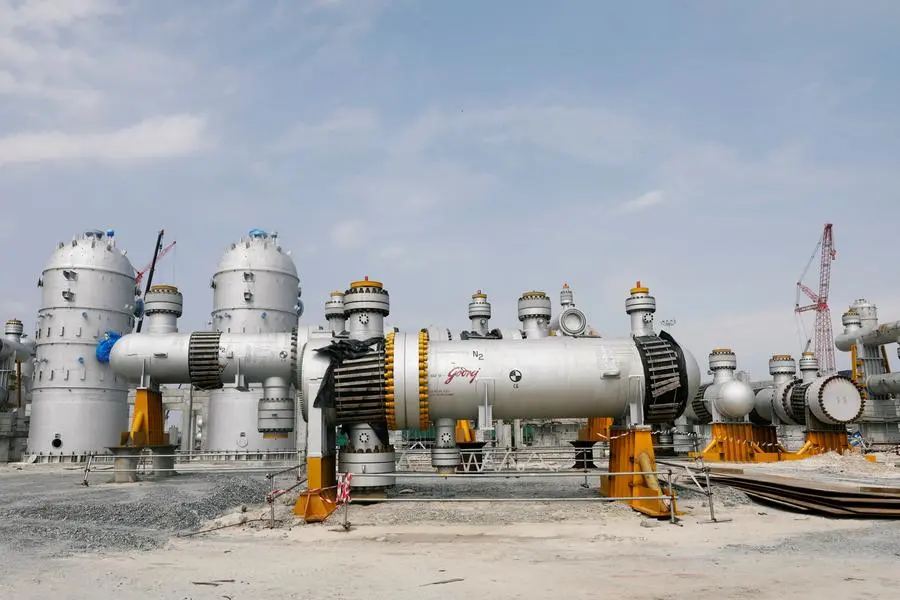
He revealed that the refinery is running at its full nameplate capacity of about 650,000 barrels per day-making it one of the world’s largest single-train refineries.
The facility can produce between 50 million and 55 million litres of petrol daily, with the ability to increase output through blending if needed.
Copyright © 2026 Nigerian Tribune Provided by SyndiGate Media Inc. (Syndigate.info).