PHOTO
Infrastructure funding projects dominated the recent African Investment Forum in Rabat, Morocco, with Kenya and Tanzania seeking funds for energy and transport sectors respectively.
The Africa Investment Forum secured more than $15.3 billion in investment interest for 39 bankable projects, Africa’s most significant public-private partnership (PPP) undertakings, in infrastructure projects, with the Lobito Corridor (Zambia), Bishoftu Airport (Ethiopia) and Mauritania’s main railway corridor taking centre stage.
Of the 41 projects presented this year, 38 were “bankable”; 15 were in the energy sector and renewables, with the transport projects collectively representing the highest value at $17 billion.“I’m excited to announce that our platform, the Africa Investment Forum, this year recorded, in terms of investment interest for this 2025 edition of the Market Days, an amount of $15.263 billion,” said Dr Sidi Ould Tah, President of the African Development Bank Group.
”Among the projects seeking funds from the AfDB are energy and affordable housing by Kenya, transport — especially roads and railway — by Tanzania, airport construction by Ethiopia, and part of the Lobito Corridor by Zambia.
Kenya is in discussions with the African Development Bank (AfDB) for a $150 million project to expand the power grid and connect an additional 1.5 million people.
Kenya is seeking funding to increase electricity generation capacity, due to high demand that is straining its 3,082 MW effective capacity.
During the AIF in Rabat, Morocco, a company in Kenya is seeking $80 million to finance a 150 MW power generation project.“There is a company that is acquiring energy assets in Kenya. It is 150 MW and requires $80 million. We are involved in it,” said Zitto Alfayo, Director, Project Preparation Finance of the African Export-Import Bank (Afreximbank).
As of June 2025, Kenya’s installed electricity capacity stood at 3,840.8 MW, comprising 3,192.0 MW interconnected, 603.8 MW captive, and 45.0 MW off-grid, according to the Energy and Petroleum Regulatory Authority (Epra).
Geothermal leads with 25.9 per cent of installed capacity, followed by hydro (24.0 percent), thermal (17.2 percent), solar PV (14.1 percent), and wind (12.0 percent).
The idea to seek more funding is part of the strategy, which involves deploying up to 2,000 MW from geothermal and 1,000 MW from hydroelectricity to ensure a stable baseload power supply.
The government is looking for funding to support these projects and has identified the need to improve financing competitiveness for energy projects through diversified options and strategic partnerships.
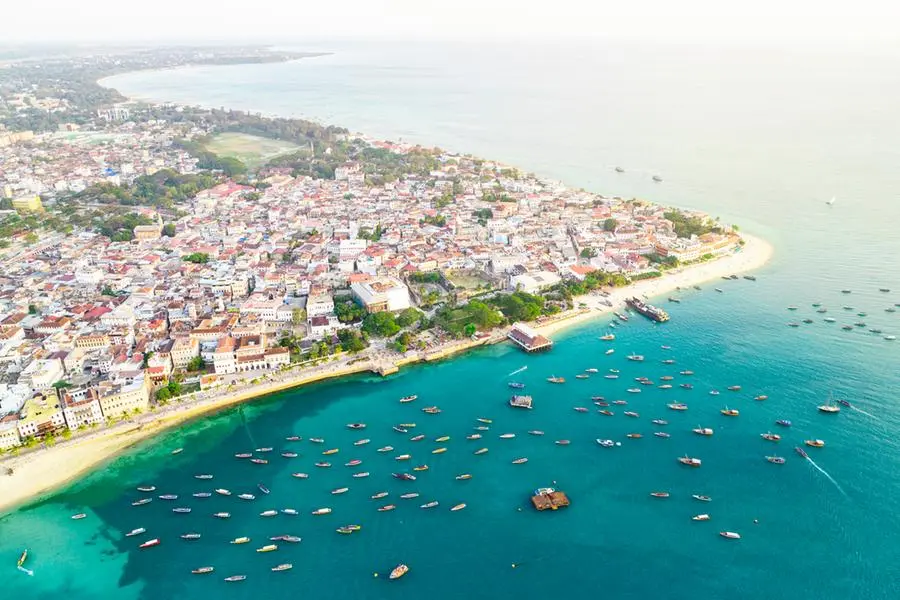
The Bank did not, however, disclose the loans that the Kenyan government is seeking to cover the affordable housing project. Zanzibar is seeking funding for its transport system to support a large-scale infrastructure agenda that includes new roads, airports and improved maritime services, as outlined in the ruling party’s manifesto.
The government aims to secure financing for projects such as the Tunguu–Makunduchi and Fumba–Kisauni roads, with recent efforts including discussions with financiers for the Green Climate Fund (GCF) to support climate-friendly urban transport solutions in Tanzania and Zanzibar.“From the East African point of view, there is the Zanzibar passenger ferry transport project worth $260m, and it is a project which is still in its early stage,” said Mpho Mokwele, Group Executive: Transacting, South Africa’s Development Bank of Southern Africa (DBSA).
Last year, the AfDB signed a coordination letter with Deutsche Bank and Société Générale to establish a syndication strategy to mobilise up to $1.2 billion for Tanzania’s Standard Gauge Railway (SGR) project.
The $2.3 billion project will connect Tanzania’s port of Dar es Salaam on the Indian Ocean to the port of Mwanza on Lake Victoria.
From there, it will extend to neighbouring Rwanda, Burundi, the Democratic Republic of Congo and Uganda.
This will unlock economic potential by creating new mining and agricultural commodity corridors across Eastern and Central Africa.
Other major projects were from the Africa Finance Corporation, which returned to the market with the Zambia portion of the Lobito Corridor.
The rail project links the Zambian Copperbelt to Angola’s Lobito port.
The DBSA sponsored seven projects, including the cross-border Lauca–Kolwezi transmission line – a 1,150-kilometre high-voltage power line connecting Angola’s Lauca hydropower plant to the Democratic Republic of Congo’s Kolwezi mining region.
It also brought a new credit guarantee initiative in which the South African government, DBSA and the AfDB plan to raise $300 million for new energy-transmission projects.
© Copyright 2022 Nation Media Group. All Rights Reserved. Provided by SyndiGate Media Inc. (Syndigate.info).