PHOTO
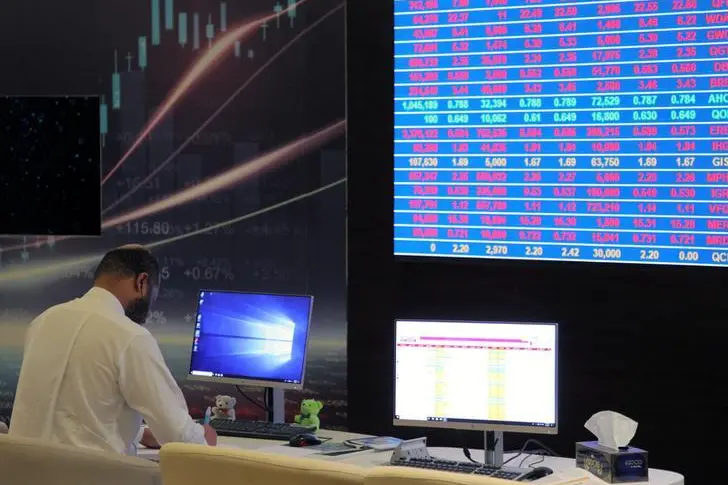
The Nairobi Securities Exchange (NSE) is pushing for listing of the savings and credit cooperatives (saccos) on the stockmarket to boost trading activity and unlock millions of dollars of share capital forfeited by former sacco members on the grounds that they are non-refundable and can only be transferred to an existing member.
Bourse officials say discussions are ongoing with key stakeholders, including government policy makers, regulators, sacco leadership and members to start trading sacco shares on the stockmarket.
This move would give former sacco members and those intending to terminate their membership an opportunity to sell their stake in an open market and at a competitive price determined by market forces of supply and demand.
A final decision on the manner of listing is yet to be agreed upon given that saccos are not corporate entities limited by shares as required by the Kenyan capital markets listing rules.NSE has assembled a special team to specifically reach out to saccos and chamas through creation of awareness on the capital markets investments products and financial literacy programmes, in addition to laying the groundwork for the listing of saccos.“The endgame is that we want to have solutions ,products and activities that are sacco-centred and what will inform our biggest win as a nation and as an economy would be the day we are able to have saccos trading their shares in the open platform , so that today, when I leave Sacco A and I want to sell my share capital I will not have to strain because I can wake up and say Sacco A has got shares listed at the exchange, or Sacco A have their shares trading in whichever manner,” Jackson Kiminje, NSE’s business development leader in charge of retail, saccos and chamas told The EastAfrican.“Of course, if a sacco was able to go a full circle -- like what Co-operative Bank did -- it is possible for the sacco to list on the main market, but, at the moment, our conversation is not more so on where do we list (saccos) -- it is on how do we create an environment where these saccos can trade their shares using legally accepted frameworks that are not compromising any one of the mandates of the sacco. So, at the moment, the biggest engagement we are having is: which is the best route to the market for the saccos to support their members sell their shares freely across membership?”Sacco rules require members to buy shares to build equity, which is non-refundable and can only be transferred to existing members, and not freely traded on a public exchange. This has exposed exiting members to loss of their share capital locked in saccos, with the amounts accumulating into millions of dollars over the years.“For now, we are in that stage of saying let’s weigh which is the best option (of listing saccos). The most critical thing is that we are very clear that we want the sacco members to be able to sell their share capital in one form or another from themselves to another person freely and in a fair environment and in a proper price discovery mechanism,” Mr Kiminje said.“We have to have an objective pricing mechanism. Right now, the way the sacco shares are trading, the purchaser has an advantage because the sacco is still issuing more shares and therefore most of the saccos shares are trading at a discount.”According to Kiminje, listing of saccos would yield a fair pricing mechanism that takes into consideration the duration a member has taken to invest, the growth of the sacco in which a member has invested over time, and the price discovery through demand and supply anchored on the performance of the sacco, its governance and the transparency in the trading of the shares.Currently, saccos are not qualified to list on the NSE by virtue of them not being corporate entities limited by shares and registered under the companies Act.
The Capital Markets Authority (CMA) requirements stipulate that institutions seeking to list on the stockmarket must be companies limited by shares and registered under the Companies Act.Saccos are registered under the Cooperative Societies Act.“We have not yet got to the final decision of saying this is how saccos will trade. This is because for saccos have their unique nature. The current regulations of the capital markets are that you must be a body corporate to list but saccos are not companies limited by shares. They are under the cooperative movement arrangement. These are member-driven organisations,” Kiminje said.“Bearing that in mind -- and that is why we are very keen to engage all these stakeholders to ensure that we walk the right path -- it gives us the understanding that even if saccos were to come to the market there would be special considerations that you have to put in play because of their formation and because of the overall mandate of the cooperative societies Act and regulations and the formation and the purpose.”The talks involve the Ministry of Cooperatives, Capital Markets Authority (CMA), Sacco Societies Regulatory Authority (Sasra), sacco members through their various associations and the chief executives, chairpersons and chief finance officers (CFOs) of saccos to agree on the listing of their shares on the bourse.
Sacco membership more than doubled in 10 years to 7.39 million in 2024 from 3.08 million in 2014, and its total savings and deposits mobilised during the period tripled to Ksh749.43 billion ($5.8 billion) from Ksh205.97 billion ($1.59 billion).In 2024, the number of deposit taking Saccos (DT-Saccos) and non-withdrawal deposit taking saccos (NWDT-Saccos) stood at 177 and 178 respectively, according to data from Sasra.While individual saccos are not typically listed on the NSE themselves, some have structures or affiliated entities that interact with public markets. For example, Co-operative Bank of Kenya went public, but the shares previously held by cooperative societies were ring-fenced under a separate holding cooperative society.
Co-op Bank was initially registered under the Co-operative Societies Act but changed its legal status to a public limited liability company before listing on NSE in 2008.“We saw saccos as a key driver of aggregation of the members because they are spread across the nation and they have a trusted network of members who believe in them and whom they do business with. We are also getting these as additional products. Chamas have also a network of members that can also be utilised,” the NSE official said.
In 2024, the number of share accounts on the NSE stood at 1.58 million, of which only 39,500 share accounts were actively trading.
The share of inactive share accounts -- formerly referred to as dormant accounts -- grew to 97.5 percent in 2024 from 97.15 percent and 97.4 percent in 2022 and 2023 respectively.
© Copyright 2022 Nation Media Group. All Rights Reserved. Provided by SyndiGate Media Inc. (Syndigate.info).