PHOTO
Japan is repositioning its engagement with Africa, offering a broader model of development cooperation while seeking to secure supply chains for critical commodities.
Visiting Foreign Minister Motegi Toshimitsu said Tokyo’s approach would combine development support with trade and strategic partnerships.
At a public lecture in Nairobi, he outlined a three-point approach: long-term peace and stability, and a “virtuous cycle” of growth rooted in societal development.“The prosperity of a society cannot be measured solely by GDP or economic growth rates,” he said at an event co-organised by the Embassy of Japan and the Global Centre for Policy and Strategy.“Each person should be able to live with peace of mind, develop their individual abilities and play an active role in society, while the next generation feels confident that their future will be brighter.”Strategic pivotTokyo’s approach is anchored in its updated Free and Open Indo-Pacific (FOIP) policy, which spans nearly 60 percent of the global economy. First introduced in 2016, the framework has been revised under Prime Minister Sanae Takaichi to reflect shifting geopolitical risks.
The policy retains its focus on openness, rule of law and inclusiveness across the Pacific and Indian Ocean regions. It now also emphasises sovereignty, supply chain resilience and protection of trade routes.“Maintaining and expanding a free and open international order… stretching from Asia to Africa, is key to future prosperity,” Motegi said.
Japan is increasingly concerned that geopolitical tensions are disrupting supply chains. Tokyo has raised concerns over China’s restrictions on critical mineral exports and recent oil shipping disruptions linked to conflict in the Gulf.
Africa playIn Africa, Japan is seeking to deepen its presence, positioning itself as an alternative partner to China and the European Union.
In Kenya, Tokyo remains the largest provider of official development assistance (ODA) in sub-Saharan Africa, with commitments of about $5 billion across energy, agriculture, health, ICT, infrastructure and education.
During the visit, Kenya and Japan signed a human resource development scholarship programme and discussed expanding trade, according to Kenya’s Foreign Affairs ministry.
Through the Tokyo International Conference on African Development (TICAD), Japan has pledged about $30 billion in support over successive four-year cycles. However, its trade volumes with Africa remain below China’s.
Japanese exports to Africa were about $10 billion in 2024.
Motegi said Japan is investing with partners to support continental integration, including implementation of the African Continental Free Trade Area (AfCFTA).
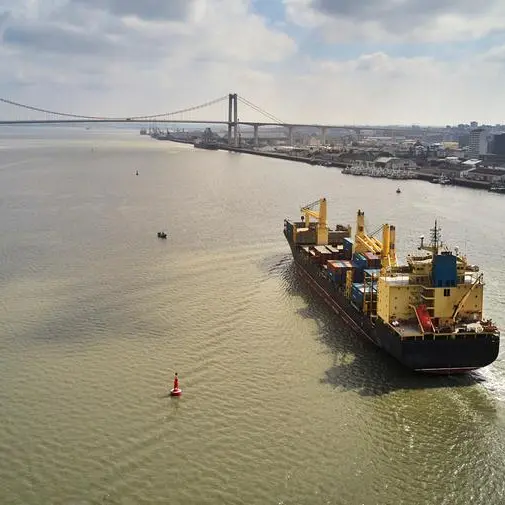
Corridor pushKey projects include transport corridors and logistics hubs across the continent, including the Northern Corridor, Nacala in Mozambique and the West Africa Growth Ring in Nigeria and Côte d’Ivoire.
Japan is also backing the Lobito Corridor linking mining regions to Angola’s Atlantic port, alongside the United States and the European Union.
In Kenya, Japan has financed port expansion at Mombasa, positioning it as a gateway to the Northern Corridor.
Motegi’s tour covered Zambia, Angola, Kenya and South Africa – countries with significant Japanese investment, aid flows or diaspora links.“It is essential for countries to acquire resilience… to maintain a free and open international order,” he said.
Japan has committed $75 million to peacebuilding and is expanding its security role. Since 2023, it has introduced Official Security Assistance, supporting early warning systems and post-conflict recovery.
Tokyo has also signalled openness to future defence cooperation with selected African countries, marking a shift from its traditionally cautious security posture.
© Copyright 2026 Nation Media Group. All Rights Reserved. Provided by SyndiGate Media Inc. (Syndigate.info).