PHOTO
SINGAPORE - Oil prices rose, bonds fell and stocks were mixed at the start of trading in Asia on Monday as U.S. President Donald Trump vowed "hell" if Tehran does not meet his deadline to reopen the Strait of Hormuz.
Trump's repeated threats to destroy civilian infrastructure including power plants and bridges if the vital waterway is not open by Tuesday have put traders on edge for reciprocal attacks by Iran on targets in the Gulf states.
With liquidity thin as many countries around the region observed holidays on Monday, S&P 500 e-mini futures sank 0.2%, while MSCI's broadest index of Asia-Pacific shares outside Japan was up 0.5%.
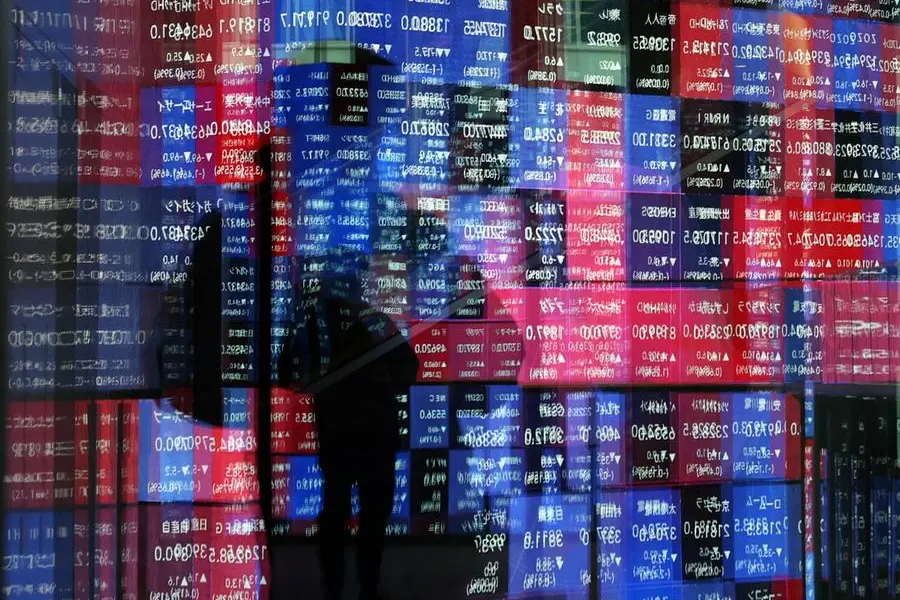
The Nikkei 225 rose 1.2%, as South Korea's Kospi advanced 2%.
Brent crude futures opened higher, rising 1.4% to $110.58 a barrel after members of the OPEC+ agreed on Sunday to raise its oil output quotas by 206,000 barrels per day for May. However, the increase will exist only on paper for several major producing countries behind the Strait of Hormuz that have sustained damage to oil production facilities and transport infrastructure since the war started.
"This week will continue to be dominated by developments in the Middle East, though a heavy slate of data releases — including the FOMC March minutes, February personal income, and March CPI — will compete for attention," said Yardeni Research president and chief investment strategist Ed Yardeni, referring to the Federal Open Market Committee which sets U.S. monetary policy.
"Trump warned Iran that unless the Strait is opened immediately, Monday will be Obliteration Day, when the U.S. will bomb Iran's electric power plants," he wrote in a research report.
On Friday, the U.S. jobs report showed employment growth rebounded more than expected in March, with a 178,000 increase in nonfarm payrolls representing the biggest increase in more than a year. The unemployment rate fell to 4.3% from 4.4%, as people dropped out of the workforce.
The data complicates the picture for the Federal Reserve, which will next decide on monetary policy at a two-day meeting ending on April 29. However, swaps pricing indicates the market is expecting no moves at all from the U.S. central bank until September 2027, according to the CME Group's Fedwatch tool. The U.S. dollar index, which measures the greenback's strength against a basket of six currencies, was steady at 100.23. The yield on the U.S. 10-year Treasury bond was up 1.4 basis points at 4.3584%. In Japan, the yield on the Japanese government bond set a fresh record for the 21st century on concerns about rising inflation. The yield on the notes was up 2.0 basis points at 2.4%, the highest since February 1999. Against the yen, the U.S. dollar was flat at 159.635 yen.
Gold slid 0.8% to $4,638.54. In cryptocurrencies, bitcoin was up 1.9% at $68,915.85, while ether gained 2.4% to $2,117.61.
(Reporting by Gregor Stuart Hunter; Editing by Lincoln Feast.)