Damascus - Phosphate is one of the most significant mineral resources that provide considerable financial revenues to national economy and subsidize the treasury with foreign currency through exporting it in its raw and processed form and investing the rest locally.
Local consumption of phosphate amounts to around 600 to 700 thousand tons at the Homs fertilizer factory, where it is used to manufacture phosphoric acid and triple super phosphate fertilizer. Syria exports 3.2 million tons of this fertilizer, while the rest is used locally.
The exported phosphate is used in the manufacturing of phosphoric acid, yellow phosphorus, simple and compound phosphate fertilizers, and compound phosphorus fertilizers, in addition to manufacturing the animal feed D-calcium phosphate.
The General Company of Phosphate and Mines is currently studying the possibility of developing and increasing phosphate production in order to establish advanced industries in cooperation with the private sector and Syria and international establishments within the framework of the investment law number 10.
The Company mines raw phosphate from two main sources: Khneifees and al-Sharqiya. The two mines have a production consistency of 2,650,000 tons, 800,000 of which is produced in Khneifees while the rest are mined from the Sharqiya A and B mines. The known reserves of phosphate exceed 2 billion tons.
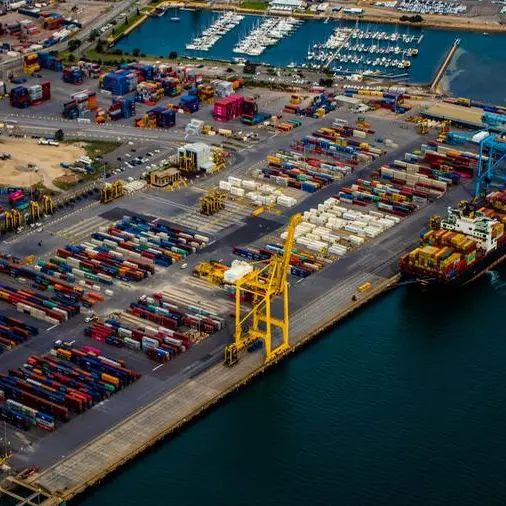
80% of phosphate products are exported after being transported to Tartous harbor 265 kilometers from the mines via trains.
Raw phosphate is sent to the fertilizer factory in Homs, while processed phosphate is sent to Tartous and then exported to Turkey, Greece, Italy, the Netherlands, Belgium, Austria, Romania, Bulgaria, Ukraine and Poland.
Up to the second quarter of 2009, the Company produced 972,702 tons with a 52% accomplishment ratio from the plan, which called for producing 1,884,500 tons. The Company also produced 37,674 tons of rock salt out of the planned 40,300 tons, and 678,956 tons of quartz sand out of the planned 705,000 tons.
During the same period, the Company sold 925,085 tons out of the planned 1.837,200 tons, and sold 37,611 tons of rock salt, achieving 202% of its investment plan.
Several difficulties hindered the production and marketing plans of the Company, most significant of which were the repercussions of the global economic crisis and climate conditions that affected the rock salt production plan.
The Company is currently working to increase production and improve quality, taking several steps and procedures and preparing studies in that regard.
By H. Sabbagh / Kh. Aridi
© SANA (Syria Arab News Agency) 2009