Sending your industrial waste without proper waste treatment into the nearest wadi may be profitable for you this year and the next, but sooner than later the government may decide to fine or somebody could sue you. Worse still, your existing customers or even partners could decide tomorrow that they no longer want to do business with you because you lack proper corporate social responsibility (CSR) certification.
CSR is no longer a vague term that survives solely on lip service. With many versions of CSR at different organisations, the International Organization for Standardisation (ISO) had to step in to codify and standardise the concept. More than six years in the making and with inputs coming in from over 90 partner countries including Oman, the gold standard of CSR - the ISO 26000 - came into force late last year.
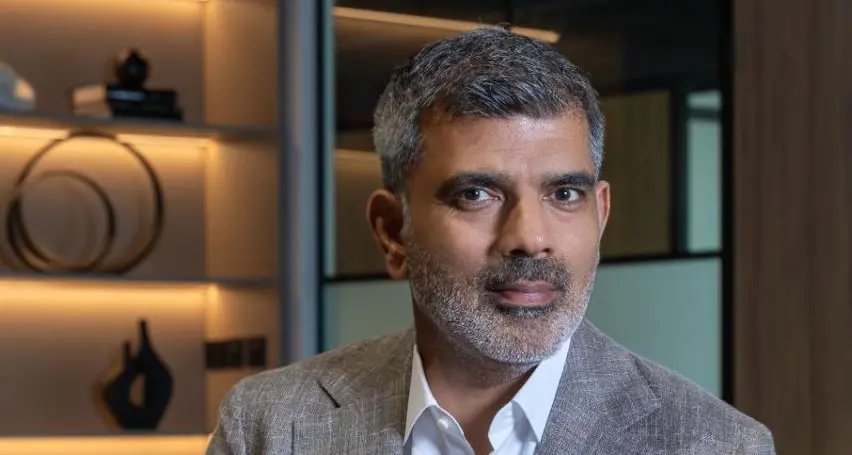
One of the best known faces of CSR consulting, Martin Neureiter, was in Muscat on a 'flying visit' on Saturday to promote the concept to the Omani corporate sector and the government. Neureiter, who wears many hats, has headed the Implementation Task Group of the ISO 26000 standard, is a member of the Austrian CSR-Experts group, lectures at Vienna University and at St Gallen Management Institute.
He is also an adviser to the UAE government, a supporting expert to the Austrian Standards Institute, a senior partner at The CSR Company and a consultant to global conglomerates like Hyundai and Wienerberger - the world's largest brick and tile manufacturer.
According to Neureiter an organisation's performance in relation to the society in which it operates and its impact on the environment will increasingly become a critical part of measuring its overall performance and its ability to continue to operate effectively. He says that organisations and even governments are becoming subject to greater scrutiny by their various stakeholders - customers, consumers, business partners, employees, the community, NGOs, financiers, donors, investors etc.
Neureiter says that in a world where the very perception of an organisation's social responsibility performance can influence its reputation and its ability to attract and retain talented employees and engage customers, investors and the community
Not meant for the Russian Mafia
An important argument in the long CSR standardisation process was about which all companies/entities should be entitled to apply for the certification.The case of tobacco companies being granted ISO certification was particularly interesting as it was opposed by the WHO on the grounds that tobacco products are dangerous.
However, a consensus finally emerged that it was not just the end product that mattered but also how you made the product. So rather than have companies churn out products using child labour in third world sweatshops, it was decided that it was a better idea to co-opt them into the CSR process so that there would be control over their activities and ethics.
"However, there is no question of helping the Russian Mafia become ISO 26000 compliant simply because they are involved in illegal and unethical activities," joked Neureiter.
© Muscat Daily 2011