PHOTO
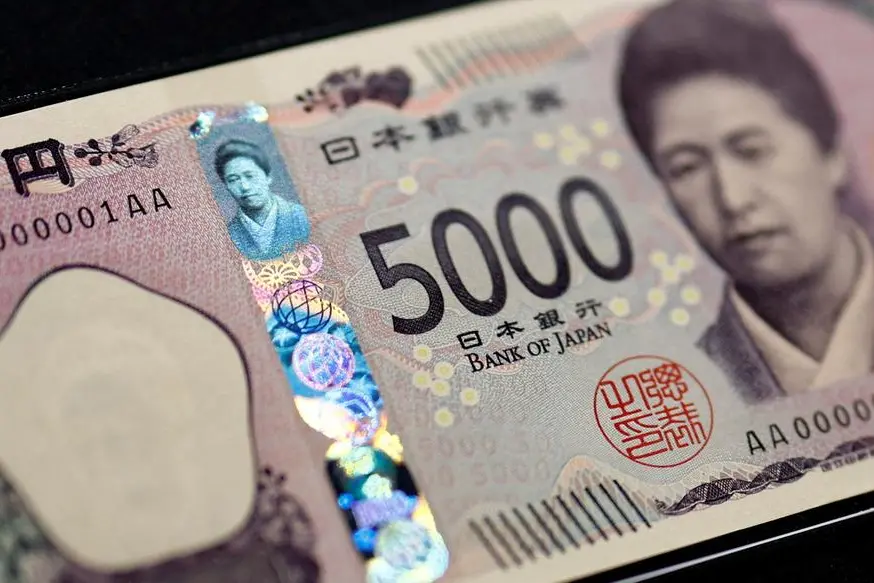
The yen strengthened amid broad U.S. dollar weakness on Tuesday after the severest warning yet from authorities signalling Tokyo's readiness to intervene, as the Japanese currency hovered near recent lows against major peers.
The threat of intervention is keeping yen bears at bay for now, although near-term yen weakness is likely to persist, analysts say, as the cautious tone from the Bank of Japan last week hinted at a slow pace of rate hikes next year.
The yen rose 0.7% to 155.9 per U.S. dollar, extending its gains from the previous session and retracing most of the losses sustained since Friday after the BOJ delivered a well-telegraphed rate hike.
The yen also appreciated 0.5% against the euro, the Australian dollar and sterling on Tuesday, but hung around recent lows.
Japanese Finance Minister Satsuki Katayama said Japan has a free hand in dealing with excessive moves in the yen, the latest jawboning from authorities and the strongest indication yet that Tokyo was ready to intervene.
Matt Simpson, senior market analyst at StoneX, said if Japanese authorities have any intention of intervening at all, "the low-liquidity period between Christmas and New Year would give them the most bang for their yen, so to speak."
"I'm just not convinced they need to, unless we see a volatile breakout above 159. Volatility levels were higher in 2022, when traders were seemingly goading the Ministry of Finance into action, yet that seems lacking this time around."
Japan intervened in 2022 as well as in 2024 to support the yen.
Japanese government bonds pared gains after Reuters reported that Tokyo's new debt issuance for fiscal 2026 is likely to slightly exceed the 28.6 trillion yen ($182 billion) sold during the current fiscal year, citing three sources with direct knowledge of the matter. The government is expected to finalise the fiscal 2026 draft budget on Friday.
The drop in the yen has come in the face of dollar weakness after the Federal Reserve earlier this month cut interest rates and projected another cut in 2026, although traders are pricing in two more rate cuts from the Fed next year.
Charu Chanana, chief investment strategist at Saxo, said a slow BOJ hiking cycle and potential Fed easing in 2026 point to less one-way yen weakness and a better chance of range trading with yen strength likely when U.S. yields fall or risk sentiment turns.
"Biggest risk will be if U.S. stays 'higher-for-longer' and BOJ turns cautious again with key catalysts ahead being the Shunto wage negotiations as well as U.S. rates," Chanana said.
DOLLAR DRIFTS IN DECEMBER
The dollar also remained under pressure, with the euro 0.2% firmer at $1.1784 and sterling rising 0.3% to a two-and-a-half-month high of $1.350.
The dollar index, which measures the U.S. currency against six rivals, slid 0.3% to 97.96 on Tuesday, extending losses into a second day after dropping 0.5% on Monday. The index is on course for a 1.6% decline for the month and a 9.7% drop for the year, its steepest annual fall since 2017.
Strategists at MUFG said the drop for the dollar this year is unlikely to be a one-off with scope for further gains ahead. "We essentially believe the U.S. dollar has peaked and we are now in a multi-year downtrend for the dollar," they said in a note.
Investor focus will be on U.S. GDP data due later on Tuesday. The data was delayed by the 43-day government shutdown and is now outdated, with markets unlikely to be swayed too much by it.
The data will likely confirm what economists call a K-shaped economy in which higher-income households are doing well, while middle- and lower-income are barely staying afloat.
GDP likely increased at a 3.3% annualised rate last quarter, a Reuters survey of economists estimated. The economy grew at a 3.8% pace in the second quarter.
"A print above 3% would confirm that the U.S. economy was on solid footing before the government shutdown began on October 1," said Tony Sycamore, market analyst at IG.
In other currencies, the Australian dollar climbed 0.5% to $0.6691, while the New Zealand dollar was 0.65% higher at $0.583. The Swiss franc firmed 0.5% to a six-week high of 0.788 per U.S. dollar.
(Reporting by Ankur Banerjee in Singapore and Lucy Raitano in London; Editing by Muralikumar Anantharaman, Stephen Coates and Timothy Heritage)