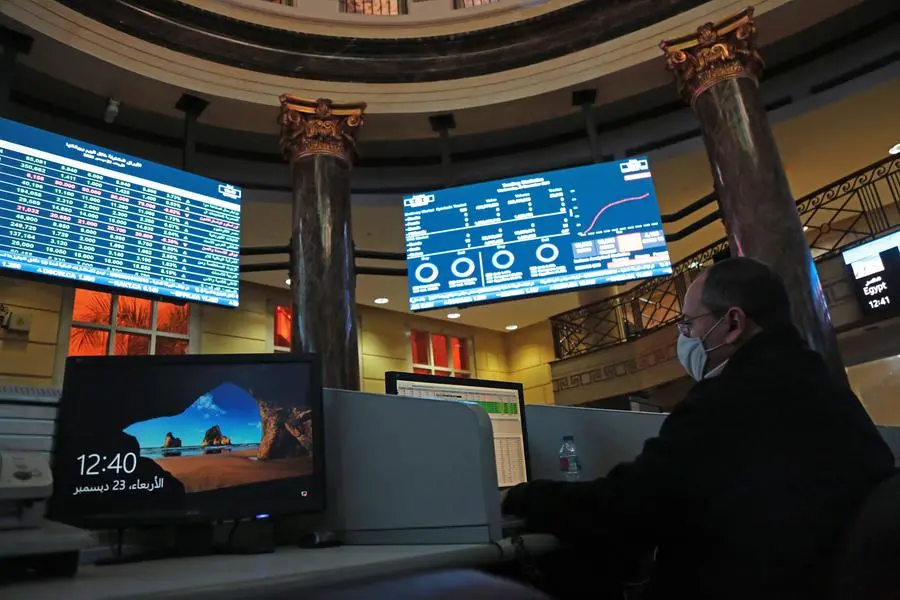
Flush with oil money, Arab financiers are accelerating their investments in the Casablanca Stock Exchange.
Although the first quarter of last year (2005) investors from the Gulf region hesitated to expand into the Moroccan exchange, a new wave of transactions this time indicates renewed commitment to Morocco, in particular as the market has been making double-digit gains.
The Middle East petrodollars are essentially channeled into the Moroccan market through investment brokers based in the British capital London. While Morocco's stockbrokers are quiet about it, they have been franticly fulfilling orders from their London clients who are working on behalf of investors from Kuwait, Saudi Arabia and the United Arab Emirates. Their entry into the Casa Bourse follows their busy 2005 investment spree in Middle East financial and stock markets of Dubai, Egypt, Libya, Saudi Arabia, Jordan, Kuwait, Bahrain, Abu Dhabi and Qatar. As Morocco was left behind last year, there is a perception in Morocco that Casablanca can generate better performance for their investments this year. In the Middle East, investors have done well in 2005, closing the year with gains fluctuating between 47% and a massive 135%. Price earning ratios (P/E) were between 19 and 34.4, while the Casa Bourse ended behind with a 2005 P/E of 17.1 for a dividend yield of 3.7%.
The attraction of Arab investors to the region's stock exchanges has been a natural phenomenon over the past 2-3 years and easily predictable. As cash poured in, petroleum-exporting countries could not absorb the excess liquidity generated from high oil prices, with the tripling of prices since 2003. Meanwhile, Arab investors no longer considered Western Europe and the United States as safe investment destinations for their money as a result of new regulations in the West and a perceived rampant anti-Arab sentiment.
As oil prices remain high this year, the Moroccan traders are expecting a major commitment from Arab investors going forward. They calculate that Arab investors will grow their commitment in Casablanca by "at least 100% this year." In this context, Moroccan legislators have responded fairly quickly to entice foreign investors to commit some of their money in the country. Amendments have been made in the state budget to reduce the value added tax on securities help by foreign investors.
Investments in publicly traded companies are encouraged by Morocco and the outlook is positive as major infrastructure investments are launched and free-trade agreements are implemented, in particular with the United States Jordan, Egypt and Turkey.
How did the Casablanca Stock Exchange actually performed in 2005 and what is the outlook for 2006? See the Casablanca Finance Group's special analysis in this issue.
© The North Africa Journal 2006