Plans for the development of northern Kuwait get ever more grandiose, but much depends on improved regional relations if Bubiyan island is to be developed as its backers would like.
Kuwait must soon decide between a conventional development plan for its main northern settlement and an ambitious proposal for a hightech, ecologically aware city, featuring a 1km-high tower to be sold with Dubai style glitz. A lot of potentially fractious stakeholders are involved.
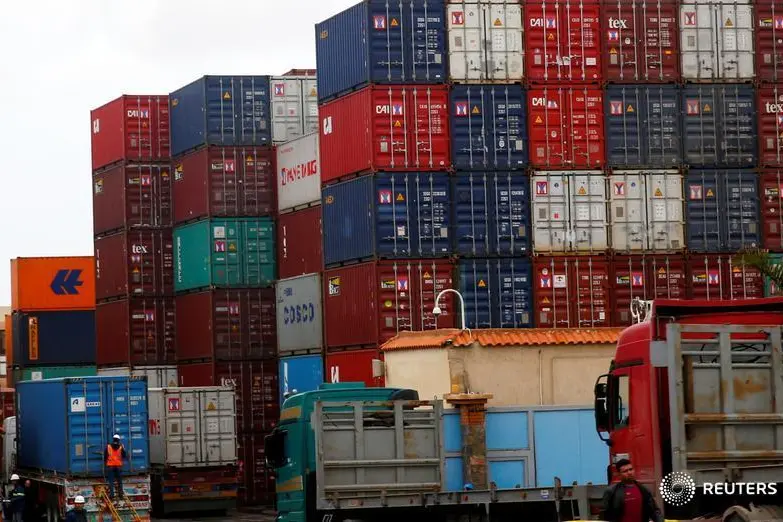
Kuwait's political classes will take an interest, as will the emirate's neighbors construction of a major rail connected port at Bubiyan would make Kuwait the infrastructure gateway for southern Iraq and western Iran.
In one of their final major decisions of this legislature, Kuwaiti parliamentarians passed a motion calling for regular government updates on the progress of big infrastructure projects.
This will bring National Assembly input into the development of a series of major projects that could reshape the north of Kuwait and its relations with its immediate neighbors.
The emergence of plans to develop a new high tech city, airport, rail links and container port in regions neglected for more than a decade because of the Iraqi security threat could make some of those involved very rich. It might also stir tensions in southern Iraq, where politicians like Basra governor Mohammed Mosbeh Al-Waeli argue that local resources and business opportunities are being snaffled by outsiders from Baghdad and abroad.
A major political reason for constructing permanent homes and infrastructure on Bubiyan island which commands the maritime channel giving access to the southern Iraqi port of Umm Qasr and other northern areas is to reinforce Kuwaiti sovereignty.
The new Kuwaiti ideas flesh out earlier proposals for a network of infrastructure connections between Iran, Iraq and Kuwait developed by the Kuwait Centre for Strategic Studies (KCSS) since the late 1990s.
Originally commissioned by Sheikh Nasser Sabah Al-Ahmed Al-Sabah the art collector, who was advisor to former crown prince Sheikh Saad and is now Emiri Diwan affairs minister the plans were updated at the government's request in early 2003, as the United States and United Kingdom were reparing to invade Iraq (GSN 705/10).Sheikh Nasser Sabah remains actively involved.Making it work Dazzling architectural drawings are no substitute for practical progress towards the implementation of major investments in a country notorious for its procrastination over schemes such as the northern oilfields revamp. The picture may be starting to change.Danish consultant COWI has completed a feasibility study for a 22km government-funded causeway bridge across Kuwait Bay. Middle East projects veteran COWI is working on the Qatar-Bahrain causeway, and brings the experience garnered in working on a new bridge across Denmark's Great Bel between Funen and Zeeland islands.
Meanwhile, UK-based Civicarts/Eric Kuhne & Associates has produced proposals for a spectacular new urban development on Kuwait Bay's north shore, at Subiya.Mouchel Parkman, also UK-based, has prepared a north Kuwait masterplan for the government and has carried out a detailed study of the environmental context for this development and the construction of resort areas and a deepwater container port on the neighboring island of Bubiyan.
But the economic and financial underpinnings of these proposals remain vague at best. One expert said the container terminal would only become commercially viable as a trade gateway for handling Iraq's external trade as it would have much deeper water than Iraq's Umm Qasr port, whose development has been slowed by three years of post-invasion crisis.
'City of Silk' and the rural north
The Civicarts proposal seeks to differentiate the Subiya project provisionally named Madinat Al-Hareer (the City of Silk, because of Kuwait's location on one of the old silk routes to the east) by insisting that the scheme is not simply a real estate project. The theory is that the Kuwaiti developments would be rooted in a more productive form of activity than the real estate ventures of Dubai, Manama and Doha. But plans for the futuristic Mubarak tower skyscraper that would be the world's tallest building, almost 1km high are clearly intended to inject some glitz into an economy hitherto known more for oil wealth and unspectacular affluence.
The City of Silk project's main components include a finance city hosting seven business centres for trade and finance; a cultural city with galleries and museums; an environmental city with wild life resorts, parks and lakes;residential areas to accommodate some 700,000 people and a commercial area including a free zone and airport. It will be linked to Kuwait City by a 17-minute drive on the planned Sheikh Jaber Al-Ahmed Al-Sabah causeway.
All this would radically change the aspect of northern Kuwait, whose present population is small, largely concentrated in settlements such as the border farming community of Abdaly.
The Mouchel Parkman masterplan presumes that by 2030 the north would be home to 1m people. But it adopts a much more down to earth approach to planning for the Subiya site, with more detailed plans for a city of 250,000, occupying an orthodox grid-plan of streets in contrast to the sparkly Civicarts proposal.
Crucial to Subiya's success would be construction of the causeway bridge across the bay, which would half the travel time between the new town and Kuwait City. It could be built by 2011.
But the Mouchel Parkman plan also looks further, to detailed proposals for the development of Failaka and Bubiyan islands. Failaka has important archaeological sites, dating from the 4th century BC Dilmun and ancient Greek civilizations, along with relatively diverse flora and fauna. It used to be inhabited, but not since the 1990/91 Iraqi occupation.
The authorities have invited bids for Falaika's redevelopment as a tourist resort on a build operate transfer basis. The deadline for design submissions closed in early June.
Bubiyan, currently an uninhabited secure military zone,occupies a highly strategic position facing the Fao Peninsula.The government commissioned a detailed environmental study as a prelude to development planning and the Bubiyan plan is one of dramatic contrast. A road and rail link would run across the centre to the north-east shore,where the proposed container terminal would be built, perhaps initially with as few as three main berths. South of the transport corridor, a beach resort and residential areas would be developed, but with the eastern and western extremities left undeveloped as nature reserves. North of the corridor, the entire island would be left as virgin territory, as a major wildlife zone. To the west, across the channel separating Bubiyan from the mainland, lies a zone of significant economic activity with a large segment of the northern oilfields separated from the Iraqi border by the Abdaly farming belt in the north.
South of the oilfields would lie an extensive further conservation area.
A rail line would run north to the Iraqi border from Kuwait city, in parallel with the existing main road, with a spur branching off to Bubiyan and the proposed port. The rail connections would be particularly crucial to Kuwait's hopes of becoming a trade gateway for Iraq and western Iran.
Sheikh Nasser Sabah commissioned the KCSS's original study, to create a "zone of peace" and commerce in the region.
The reshuffle that followed January's accession of his father Emir Sheikh Sabah Al-Ahmed Al-Sabah saw Sheikh Nasser promoted to the important post of Emiri Diwan (royal court) minister, a position of considerable influence.
Civicart's proposals revive the Silk Road concept in their choice of name for the proposed new development at Subiya.
The notion of Kuwait as gateway to a new Silk route into Central Asia aroused particular interest from the Chinese and Iranian governments when Sheikh Nasser Sabah, armed with the KCSS report, briefed them three years ago. It could have even more resonance now provided Kuwait, with more than help from its neighbors and feuding factions, can show it can make such a mega-project work.
Kuwait and Iraq: Uneasy rapprochement
Kuwait welcomed the new Iraqi government and is increasing ties to its former enemy. Emir Sheikh Sabah Al-Ahmed Al-Sabah wished Iraq's new cabinet "success in serving the brotherly Iraqi people" and pointedly noted that he hoped that its members would succeed in "closing their ranks and using their capabilities in building Iraq." Kuwait is waiting for Iraq's government to be fully formed so a large deal to import Iraqi gas can be signed. In early June, Undersecretary of Energy Issa Al-Oun said Kuwait was already supplying Iraq with some 3m ltrs/d of petrol and diesel. "We have no objection to supply more, within our production and export capacity," he said.
Kuwait has made overtures by offering donations.
In March, it donated $5m for the restoration of the holy Shia shrine in Samarra . In a neat piece of diplomacy Deputy Prime Minister and Minister of State for Cabinet and Parliamentary Affairs Mohammad Dhaifallah Sharar said another $5m would go to repair Sunni mosques damaged in subsequent reprisals over the attack. In late April, it made a $10m donation to the Iraqi Sunni Muslim Islamic Endowment (Waqf) authority.
Justice, Awqaf and Islamic Affairs Minister Abdullah Al-Maatouq commented: "Kuwait's safety and that of Iraq go hand in hand."
But while bilateral relations are much improved following Saddam Hussein's ouster, tensions persist. Iraq's new government will strongly resist Kuwaiti claims for more compensation to be paid via the United Nations Compensation Commission (GSN 782/10) and Iraqi politicians are wary of schemes that will bring business to Kuwait, Dubai and Amman, while they tough it out in 'impoverished' Baghdad and Basra.
Key Kuwaiti players in the Bubiyan schemes
Emiri Diwan Minister Sheikh Nasser Sabah Al-Ahmed Al-Sabah remains deeply interested in northern developments (see main article) and key Al-Sabah family members are connected to various real estate projects north of Kuwait City.
Local cynics have long criticized Sheikh Nasser and his sons for their property dealings, and the new developments could soon give rise to new whispering campaigns of the sort Kuwaiti politicians specialize in, especially if elements of the region's development usually run by the Kuwaiti state are given over to private enterprise.
Sheikh Nasser Sabah heads United Real Estate (URC), a subsidiary of Kuwait Projects Company (Kipco), in which his brother and sons are heavily involved. In February, URC announced plans to develop the Al-Abdali border passage between Kuwait and Iraq. The KD250m ($855.7m) project includes the construction of warehouses, showrooms and industrial facilities, with hotels and residential property.
According to local media reports, it aims to regulate customs and trading activities in northern Kuwait. URC also plans to develop Failaka Island, in partnership with the Ministry of Public Works.
The two real estate companies behind the City of Silk project, Tamdeen Real Estate and Ajial Real Estate, also have high-level connections.
Tamdeen, in which the Al-Marzouk family, long prominent in real estate are involved, has 'Sheikh of Chic' Sheikh Majid Jaber Hamoud Al-Sabah on its board (GSN 782/10). Kipco is thought to be a major Tamdeen shareholder. Kipco's chairman is Emir Sheikh Sabah Al-Ahmed's son Sheikh Hamad also deputy chairman of Kipco subsidiary United Gulf Bank (which itself has a major stake in Iraq's Bank of Baghdad). Kipco directors include Sheikh Nasser Sabah's sons, Abdullah and Nasser. Meanwhile a major Ajial shareholder is Sheikh Salem Jaber Al-Sabah, son of the late Emir Sheikh Jaber Al-Ahmed.
Gulf States Newsletter 2006