PHOTO
President Cyril Ramaphosa’s public endorsement of Zimbabwe’s decades-old seizure of white-owned farms has sparked alarm among his coalition partners, reigniting fears that Pretoria may emulate its northern neighbour’s controversial land redistribution policies.
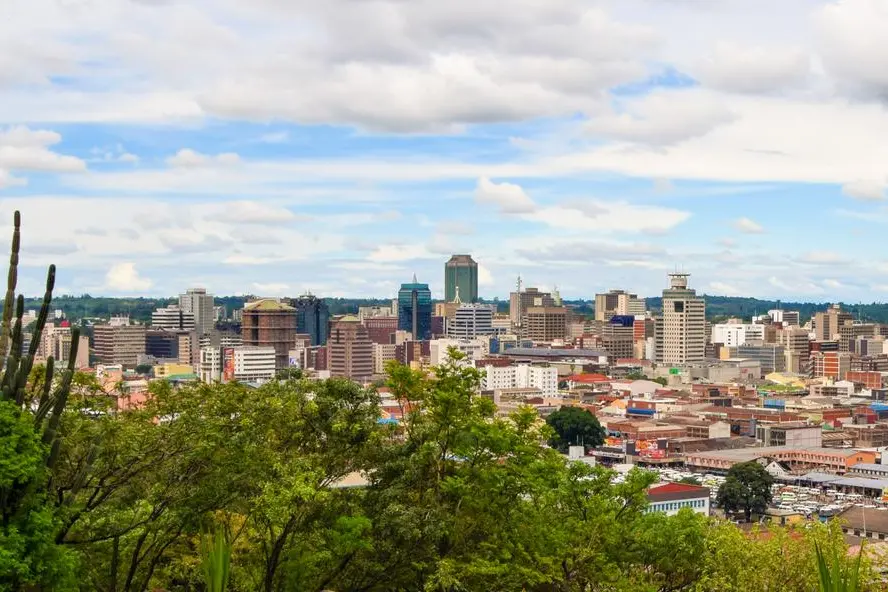
Speaking at the official opening of Zimbabwe’s premier agricultural fair in Harare last Friday, the South African president praised the country’s land reform programme, describing it as “essential and ambitious.”His comment drew swift criticism from the Democratic Alliance (DA), the largest partner in Ramaphosa’s coalition government, which was formed after the African National Congress (ANC) suffered significant losses in last year’s general elections.
The DA, whose supporters include white farmers who own the majority of South Africa’s farmland, has condemned Ramaphosa’s comments.“The DA rejects the praise by President Ramaphosa for a process that left Zimbabwe in tatters—devastating its economy, foreign relations, and causing famine,” said DA spokesperson Willie Aucump.“Because land was not legally transferred, the failed Zimbabwe model led to crippling financial reparations owed to former farmers and landowners. President Ramaphosa is attempting to whitewash Zimbabwe’s disaster to build momentum for the ANC’s land expropriation agenda under the Expropriation Act of 2025.”Mugabe reformsDuring the presidency of Robert Mugabe, Zimbabwe forcibly seized approximately 5,000 commercial farms from the minority white population for redistribution to the black majority, who had been dispossessed during British colonial rule.
The takeovers were marked by violence, with war veterans and ruling Zanu PF supporters leading the invasions. The result was a dramatic economic collapse, international isolation and sanctions from Western nations.
Although Zimbabwe’s economy remains fragile, its agricultural sector has shown signs of recovery, with record tobacco harvests in the past two seasons. However, one of the key conditions for potential debt relief is a $5 billion compensation package for displaced farmers.
SA land expropriationIn June, South Africa enacted the Expropriation Act, allowing the government to compulsorily acquire private land in the public interest. The move nearly fractured the coalition, with the DA accusing the ANC of acting unilaterally on the sensitive issue of land reform.
US President Donald Trump criticised Ramaphosa’s government for allegedly discriminating against white South Africans, and offered refugee status to Afrikaner farmers.
The DA has reiterated that support for Zimbabwe’s land reform is not a shared policy within the coalition.“We believe in redressing past injustices through fair and lawful land reform that restores dignity and economic opportunity,” Aucump said. “But this must occur within the bounds of the Constitution and the rule of law. Expropriation without compensation does not meet those standards.”Wandile Sihlobo, chief economist at the Agricultural Business Chamber of South Africa, echoed these concerns. “Zimbabwe’s land reform was a significant failure, causing economic pain to many,” he wrote on his blog. “Its agriculture has not recovered since the early 2000s. While we wish Zimbabwe well, its land reform is no model for South Africa, which is committed to market-based principles.”
Agri SA, South Africa’s largest agricultural organisation, emphasised the importance of protecting property rights.“Private property rights are the foundation of South African agriculture,” said CEO Johann Kotze.“With agriculture’s debt-to-GDP ratio averaging around 50 percent, land serves as vital collateral. Any threat to these rights jeopardises agricultural sustainability and food security.”While supporting transformation and land reform, Agri SA stressed that these efforts must not undermine the economy or investor confidence.
Currently, about 75 percent of privately owned farmland in South Africa remains in the hands of the white minority, who comprise just eight percent of the population.
In contrast, black South Africans—nearly 80 percent of the country’s 60 million citizens—own only four percent of privately held land.
© Copyright 2022 Nation Media Group. All Rights Reserved. Provided by SyndiGate Media Inc. (Syndigate.info).