Africa is at a crossroads. The continent is rich in resources, brimming with potential, and finally taking control of its own destiny. Nowhere was this clearer than at the MSGBC Oil, Gas&Power 2025 conference in Dakar, Senegal, held December 8-10, which brought together governments, investors, energy companies and multilateral organizations to discuss the next chapter of West Africa’s energy revolution. The event was a showcase of opportunity: Senegal and Mauritania are now oil and gas producers, the region is attracting international investment, and African nations are stepping up to define their energy future on their own terms.
The significance of this moment was underscored by a visit to Gorée Island following the event. The island, a UNESCO World Heritage Site, is a powerful reminder of a time when Africans had no say over their own fate. Walking through the Maison des Esclaves and the “Door of No Return” reflected the parallels between history and today’s energy debate. Just as past generations were stripped of agency, the Western world now pressures Africa to abandon its hydrocarbons ambitions – despite the continent needing its oil and gas to lift millions out of energy poverty and power industrial growth. For the African Energy Chamber (AEC), energy sovereignty represents a pathway toward self-determination, opportunity and a thriving future.
The AEC has long championed the idea that Africa must develop its resources to secure its people’s future. More than 600 million Africans still lack access to electricity, and millions rely on biomass for cooking and heating. Oil and gas development, particularly natural gas, offers a fast, practical and scalable solution to deliver reliable, affordable energy while funding industrialization, education, healthcare and infrastructure. The Chamber frames this as both a moral and economic imperative: energy independence is essential for prosperity, and Africa has the right to decide its own path.
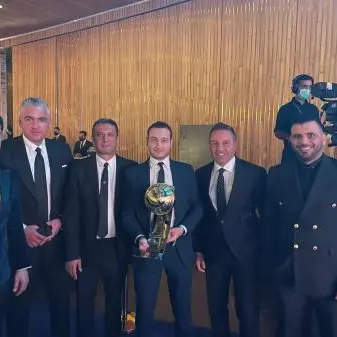
This message resonated throughout the MSGBC conference, where the Gas Exporting countries Forum (GECF) played a central role. Secretary General Eng. Mohamed Hamel delivered a keynote highlighting Senegal’s first oil and gas production from the Sangomar and Greater Tortue Ahmeyim (GTA) projects, praising the country for entering a new era of energy prosperity. Through technical workshops, market outlook sessions and high-level interventions, the GECF demonstrated its commitment to supporting emerging producers, providing data-driven insights and helping African gas resources drive long-term economic growth. Both the GECF and the African Petroleum Producers’ Organization were recognized for their leadership at this year’s conference for leadership in fostering regional and global energy collaboration, reinforcing investor confidence in Africa’s energy sector.
The MSGBC region itself is a story of optimism. The GTA LNG project, a cross-border venture between Senegal and Mauritania led by bp and Kosmos Energy, shipped its first LNG cargo in April 2025, while Senegal’s Sangomar oil field, operated by Woodside Energy in partnership with Petrosen, started producing in June 2024. Exploration is accelerating, with Guinea-Conakry launching a 22-block bid round and The Gambia promoting offshore acreage with estimated reserves of 1.2 billion barrels. Infrastructure projects, gas-to-power plants and regional energy integration initiatives are progressing quickly, while Mauritania positions itself as a global green hydrogen hub.
“The story of Gorée Island and the story of Africa’s energy development are intertwined,” stated NJ Ayuk, Executive Chairman, AEC. “Just as the island is a reminder of lost agency, the continent’s current challenge is ensuring it can use its resources without external interference. Africa is proving it can responsibly develop oil and gas, attract investment and drive sustainable growth – all while asserting its sovereignty.”
For the AEC, the message is clear: Africa’s resources are not a burden or a bargaining chip. They are the engine for industrialization, job creation and energy access. With projects like GTA, Sangomar and future green hydrogen ventures, and with the backing of organizations like the GECF, Africa is seizing control of its energy destiny. Gorée is a symbol for a powerful lesson: Africa is choosing to power its people, secure its future and show the world what self-determined energy development can achieve.
Distributed by APO Group on behalf of African Energy Chamber.