The Portfolio Committee on Higher Education and Training today warned universities and Technical and Vocational Education and Training (TVET) colleges not to misuse internationalisation as a reason for ignoring South Africa’s immigration and labour laws.
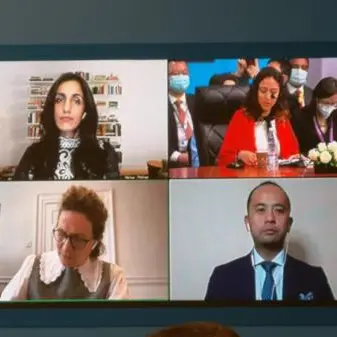
The committee held a joint meeting with the Portfolio Committee on Home Affairs to discuss the employment of foreign academics in universities and TVET colleges.
The Department of Higher Education and Training (DHET) and the Department of Home Affairs (DHA) briefed the committee on their respective roles, regulations and oversight responsibilities regarding the employment of foreign nationals. Thereafter, committee members raised serious concerns about the lack of accurate and reliable data on foreign academic staff across the post-school education sector.
Members stressed that the employment of foreign nationals must align with the Critical Skills List and address genuine skills shortages. It should not replace capable South Africans. The Minister of Higher Education and Training, Mr Buti Manamela, told the committee that without reliable data, it is difficult to determine whether institutions are complying with the law or bypassing it by employing foreign nationals in roles that are not critical or scarce.
The Chairperson of the Portfolio Committee on Higher Education, Mr Tebogo Letsie, said institutions must respect the country’s laws. “When South African students go to other countries, they are expected to follow the laws of those countries. We expect the same from those who come here,” he said.
“Internationalisation is important, but it must not be used as an excuse to ignore immigration laws.” The Chairperson said that if institutions need foreign academics, they must clearly demonstrate that such skills shortages exist. “We are not against foreign academics. We recognise the important contribution many make, especially in critical subjects such as mathematics.”
Members were concerned about weak coordination and oversight that allowed foreign nationals to be employed in positions that are not classified as critical skills. During oversight visits, the committee found that foreign nationals occupied senior management and administrative roles, including principals, Chief Financial Officers and other non-academic posts. The committee also raised concerns about poor vetting processes and recommended that the DHET urgently clean and verify its data, including reviewing the status of at least 67 foreign nationals employed in the TVET sector who are not linked to critical or scarce skills.
Members of the Portfolio Committee on Home Affairs reminded institutions that employing foreign nationals without valid work authorisation is a criminal offence. Section 38 of the Immigration Act (Act 13 of 2002) clearly prohibits employers from hiring undocumented foreign nationals. The committee also raised concerns that some institutions may be using the critical skills system without first confirming whether qualified South Africans are available. Members stressed that the system must not disadvantage South Africans.
The committees acknowledged the ongoing review of the White Paper on Citizenship, Immigration and Protection of Refugees. The committees resolved to interact closely once the Bill is tabled in Parliament. The meeting further resolved to meet with the Department of Employment and Labour in the coming weeks to address the issues raised by members.
Mr Letsie said the committee will continue its oversight to ensure compliance. “We have a serious problem in the sector where some universities and TVET colleges hire foreign nationals without following proper processes. This,” he said, “cannot continue at the expense of qualified South Africans. Institutions must comply with the law, improve transparency and ensure that employment practices are fair and lawful.”
Distributed by APO Group on behalf of Republic of South Africa: The Parliament.