PHOTO
(The opinions expressed here are those of the author, the former head of communications at the Bank of England and a former senior editor at Reuters.)
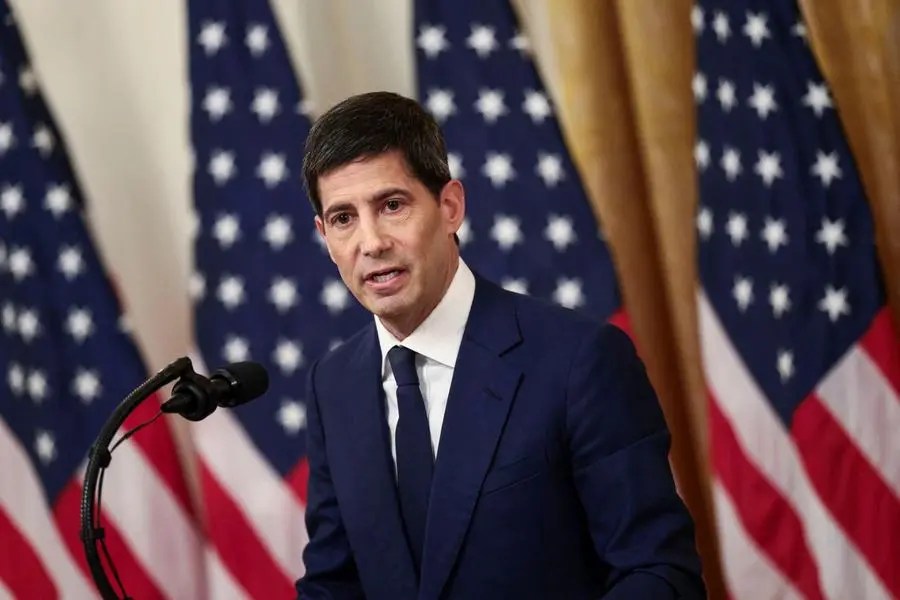
LONDON - As Kevin Warsh has taken the helm of the Federal Reserve, he has pledged to communicate less at a time when most central banks are trying to say more. His first post-meeting press conference on Wednesday will offer an early test of whether reticence is an asset.
Central bank communication can have an enormous impact on the behaviour of businesses and households – almost as much as rate changes themselves. The Fed’s own communications policy cites “considerable evidence” that transparency and public communications increase the effectiveness of monetary policy by helping the public make better-informed decisions.
Effective communication has also arguably never been more important. For starters, it can help set public inflation expectations, which, after a series of price shocks starting with the COVID-19 pandemic and continuing through the U.S.-Iran war, could become unanchored. More broadly, heightened uncertainty from geopolitical tensions and the AI revolution means indecipherability is no longer an option for monetary policymakers – as it could make their already limited tools less effective.
However, there is also a reasonable argument that central bankers talk too much, sometimes at cross-purposes, obscuring rather than improving overall messaging. Saying less could help – especially if it prevents markets from overreacting to subtle shifts in tone.
The marked increase in central bank communication followed the global financial crisis of 2007-2009. Critics argued that policymakers had failed to see the crash coming because they were gripped by groupthink. Greater diversity of views was supposedly the answer – but that might not be the case.
TOO MUCH OF A GOOD THING?
The Bank of England’s nine-member Monetary Policy Committee includes four external members whose role is to challenge the internal view. All are required to demonstrate their independence publicly and explain their individual views in the published minutes of each policy meeting.
Similarly, the European Central Bank’s Governing Council comprises an Executive Board with six seats and 21 national central bank governors, all of whom have a remit to speak on policy.
While all that delivers accountability and transparency, it also makes for a lot of noise from powerful unelected officials.
The BoE and the ECB have also introduced scenario-based economic forecasts, offering both a base case and more extreme alternatives. This gives investors more tools to gauge policy direction, but may confuse companies and the wider public.
And then there’s the Fed’s “dot plot”. This visual representation of Fed policymakers' interest rate projections has been criticized by some Fed members – including Warsh’s predecessor, Jerome Powell. It can be confused for official forward guidance, when it is really just a snapshot of views at a particular moment. One of Warsh’s early moves could be doing away with this tool.
But not everyone agrees with him.
While many politicians, businesses and members of the public may struggle to make sense of a steady stream of policy messaging, most professional investors and economists are well versed in parsing it – and aren’t in favour of cutting back.
A recent Brookings Institution survey of academic and private-sector Fed experts found that nearly all regarded the Fed's post-meeting press conference as "useful or extremely useful", with a majority saying the same about the dot plot.
A leaner approach might reduce the risk that markets overreact to every signal or misread differences among policymakers. But if it leaves investors with fewer guideposts, volatility could rise rather than fall.
QUALITY, NOT QUANTITY
So how have central banks tried to communicate more clearly?
The BoE introduced a “layered communication” approach a few years back to target different audiences with varying levels of complexity. The ECB and others followed suit, using graphics, videos and social media rather than relying solely on formal speeches and interviews with the financial press.
The BoE also turned – somewhat ironically – to Warsh in 2014 to make its operations more transparent. His overhaul cut the number of policy meetings from 12 to eight annually, among other changes.
There is considerable debate about how successful central banks have been in improving clarity with these and other measures.
That is partly because their toolkits have become more complex, spanning quantitative easing and tightening, reserves management and forward guidance.
But that does not dilute the case for trying to be clearer, especially given potential threats to central bank independence from politicians chafing against higher interest rates.
For example, Warsh will be hard-pressed to keep quiet if President Donald Trump puts pressure on the Fed to lower rates even with inflation well above target. Leave a vacuum and others will fill it.
In the end, the answer might be simple: the goal should be better communication, not necessarily more or less of it.
A BoE research paper, recently updated, said plain language, less jargon and a focus on a few key messages improve public understanding, which in turn helps anchor inflation expectations and build trust in the central bank.
Ultimately, if reticence reduces the uncertainty felt by businesses and households about the direction of central bank policy, especially during periods of heightened volatility, then Warsh could be onto something. But that is a big “if.”
(The views expressed here are those of Mike Peacock, the former head of communications at the Bank of England and a former senior editor at Reuters.)
Enjoying this column? Check out Reuters Open Interest (ROI), your essential new source for global financial commentary. Follow ROI on LinkedIn, and X. And listen to the Morning Bid daily podcast on Apple, Spotify, or the Reuters app. Subscribe to hear Reuters journalists discuss the biggest news in markets and finance seven days a week.
(Writing by Mike Peacock Editing by Marguerita Choy and Anna Szymanski)