PHOTO
(The opinions expressed here are those of the author, Christopher Mahon, a senior portfolio manager at Columbia Threadneedle)
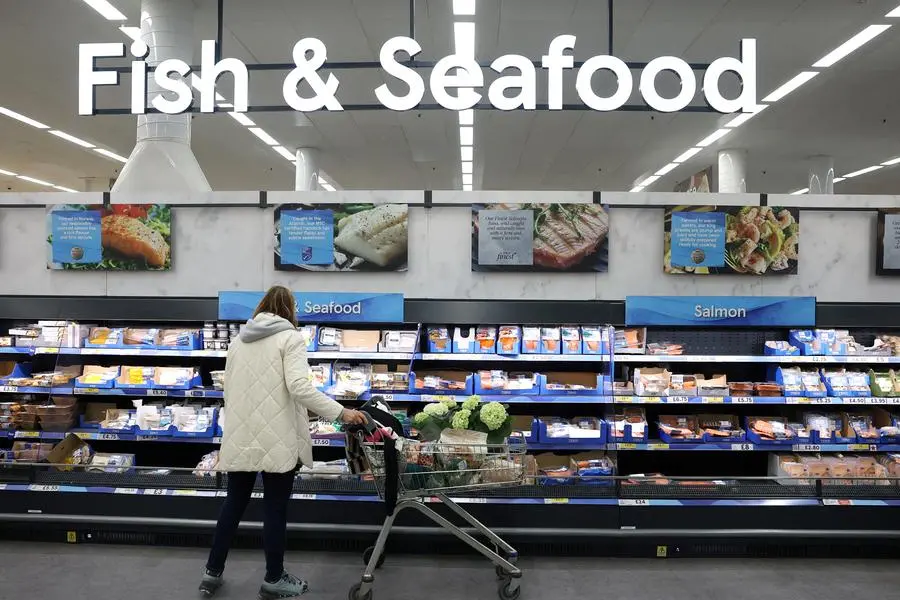
LONDON - It is conventional wisdom to say Britain has an inflation problem. But fears over "sticky" CPI may have finally peaked.
At first glance, this suggestion might look a little premature. UK headline inflation was running at 3.8% in the 12 months through September, much higher than the Bank of England’s 2% target – and, importantly, it's been rising. Inflation was a more reasonable 2.6% as recently as March this year.
While many BoE-watchers perceived the latest CPI print to be somewhat dovish, based on expectations that the figure would be closer to 4%, the consensus is that it will still take a long time for UK inflation to subside. In fact, October CPI, being released on Wednesday, is expected to hit 4.2%, according to a YouGov survey.
But there is another story. Inflation has likely peaked, and the pace of the decline may surprise investors.
The most important reason for this is simple. In open, developed markets like the UK, global inflation patterns tend to dominate. In other words, the UK is not an island – at least when it comes to inflation.
STICKING WITH THE CROWD
Britain’s inflation rate has kept pretty close to those of other developed markets for much of the past 25 years.
Of course, there have been divergences. In the 2000s, the UK experienced lower average inflation than its peers. And in the immediate aftermath of the 2007-8 global financial crisis, the opposite was true. But those deviations are mostly explained by significant shifts in the value of sterling against the currencies of its main trading partners. A stronger pound usually equates to weaker inflation.
Currently, inflation appears to be stabilising at fairly mild levels in many developed markets, and sterling is mildly strong against the dollar. That looks like a recipe for falling UK inflation.
So why hasn’t this happened already?
Partly, this is down to the high degree of government influence over many items in the UK CPI basket. Recently, this has included rail fares, energy costs, water bills, council tax, university tuition fees, even private school bills, to name a few.
In a time of strained public finances, it is no surprise the government has been allowing these charges to go up, putting upward pressure on these categories.
This effect is suggested by the noticeable jump in the absolute level of CPI last April, the start of the UK fiscal year. Since May, CPI has been moving along at an equivalent annualised rate of 2.4%, much closer to target.
Of course, the UK still has the start of the next fiscal year to get through. CPI in April will likely see some uplift from the same price categories.
But the current Labour government’s statements in recent months indicate that it is keen not to repeat the mistakes of the last budget and is intent on tackling the cost of living in general. And the government is unlikely to hike employers' national insurance enough to cause large employers such as supermarkets to raise prices.
And then there is the oil price. It’s down around 20%, measured in pounds, since the start of the year. This could have knock-on effects in related areas such as electricity, natural gas and petrol.
Wage gains were running as high as 6.2% as recently as last December, but they have now dropped to 4.2%.
Of course, other trends could prove less helpful. Inflation in developed markets may be moderate, but in certain areas, it’s ticking up. In Europe, inflation has now risen to 2.2% and is no longer trending down.
And the pound might be strong against the dollar, which is helping keep down oil prices, but sterling has fallen in value against the euro this year, which could lead to higher prices for certain types of imported food and manufactured goods.
It’s also unclear whether hikes to labour costs made last year, such as raising the minimum wage and national insurance changes, have been fully passed on. Firms may still have to raise prices further to compensate for those changes.
Finally, assumptions about the upcoming budget are no more than speculation at this point, and finance minister Rachel Reeves has been sending conflicting signals on taxes in recent weeks. We will have to wait until November 26 to see exactly what is in store for the country.
Nevertheless, if global inflation continues to moderate, the UK’s outlier status will be hard to maintain.
(The views expressed here are those of Christopher Mahon, a Senior Portfolio Manager at Columbia Threadneedle)
Enjoying this column? Check out Reuters Open Interest (ROI), your essential new source for global financial commentary. ROI delivers thought-provoking, data-driven analysis of everything from swap rates to soybeans. Markets are moving faster than ever. ROI can help you keep up. Follow ROI on LinkedIn, and X.
(Writing by Christopher Mahon; Editing by Anna Szymanski)