PHOTO
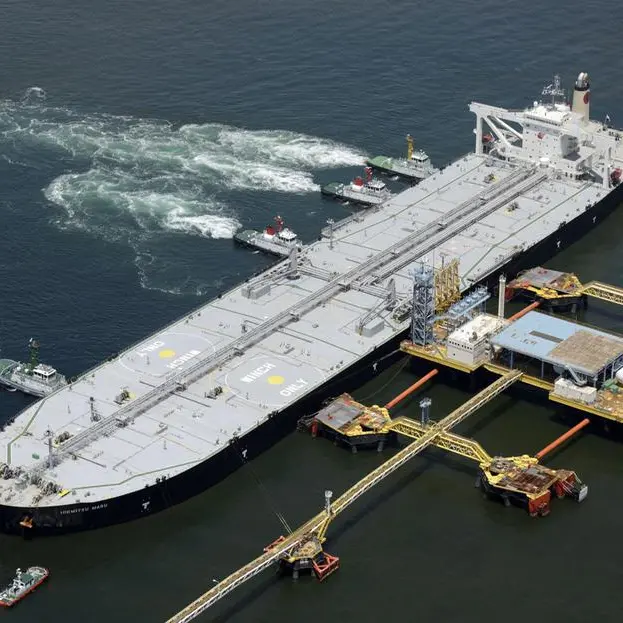
HOUSTON - A full-scale resumption of Venezuelan oil exports would benefit refiners in the United States and lower their fuel production costs, with the refineries capable of absorbing most of the roughly 1 million barrels per day of crude that would trade freely if U.S. sanctions on the South American country are removed.
The losers would be Canadian companies that sell a similar heavy oil as Venezuela, and small Chinese refiners, which would face higher costs if Venezuelan crude diverts to the U.S.
U.S. President Donald Trump wants U.S. billions of dollars to rebuild Venezuela's oil industry, which is dilapidated and producing well below its potential after decades of mismanagement and underinvestment.
Trump has said the U.S. would run Venezuela and its oil sector after U.S. troops snatched President Nicolas Maduro from Caracas on Saturday and transported him to New York to stand trial on drug charges.
U.S. GULF REFINERIES BUILT FOR HEAVY CRUDE
It would take for oil companies to pump a lot more oil from Venezuela. The country's existing exports could, however, quickly redirect to the United States from China if the U.S. lifted a blockade on Venezuelan exports that Trump imposed in December, and removed sanctions on doing business with Venezuela.
Before sanctions were imposed in 2019, several large U.S. Gulf Coast refineries bought and processed about 800,000 bpd of Venezuela's heavy oil, according to U.S. government data, and some were designed to process this type of crude rather than U.S. light oil. Those refineries would be first to benefit, analysts said. "If sanctions are lifted in the short term, the Gulf Coast can absorb a substantial portion of that 1 million bpd operationally, but the barrels would clear by pushing out other heavy crudes and competing aggressively on price," said Rommel Oates, founder of refining software company Refinery Calculator.
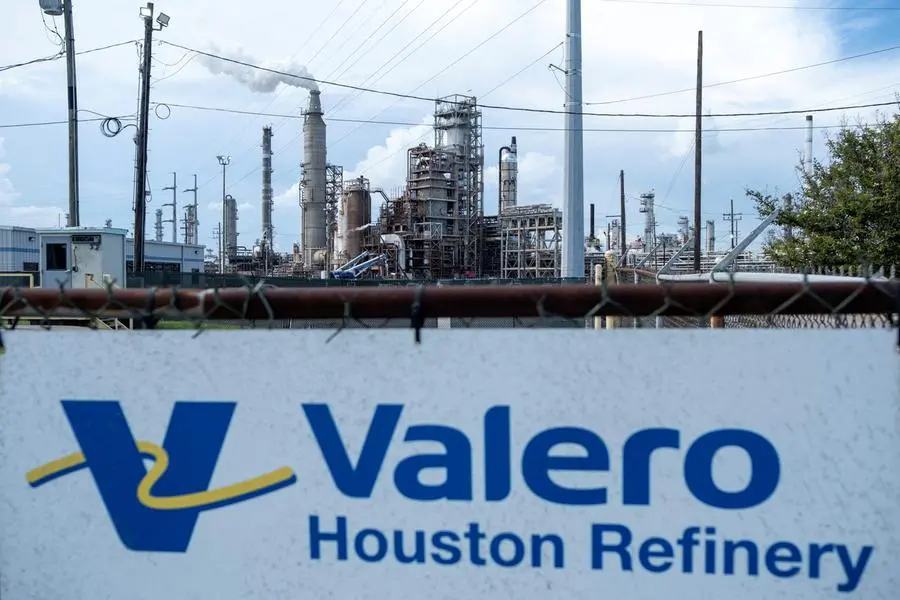
Valero, PBF Energy and Phillips 66 already buy Venezuelan crude from Chevron, and could take more, analysts and trading sources said. Valero alone, the largest Gulf Coast refiner, can process an incremental 300,000 to 400,000 bpd, Barclays analyst Theresa Chen said.
U.S. Gulf Coast refineries can run 3 million to 4 million bpd of heavy crude, analysts noted.
EXXON, OTHERS, COULD BUY FROM VENEZUELA
Chevron imports about 150,000 bpd of Venezuelan crude to the United States. It is the only U.S. oil major operating in Venezuela under a license from Washington that exempts it from sanctions.
Marathon Petroleum , Motiva Enterprises, owned by Saudi Aramco, TotalEnergies and ExxonMobil purchased Venezuelan crude before sanctions and could buy more if it were available.
"Gulf Coast refiners are structurally advantaged to receive Venezuelan barrels due to waterborne access and historical familiarity with these grades prior to the 2019 sanctions," said Barclays' Chen.
The availability of cheaper crude to U.S. refiners could provide some price relief for motorists, Chen added.
U.S. refiners' shares rose between 3% and 10% on Monday, compared to a 3% increase in the broader S&P Energy Index.
The refining companies did not immediately respond or declined to comment
REDIRECTING FLOWS
U.S. refiners have imported more crude from Canada, Mexico, Colombia, Brazil and the Middle East since sanctions were imposed on Venezuela.
Greater U.S. imports from Venezuela would displace those crudes, most notably Canadian.
Canada boosted output to record levels in 2025, exporting about 90% of its crude to the U.S.
Shares of Canadian oil producers Canadian Natural Resources and Cenovus Energy fell between 5% and 6% on Monday.
"Canadian heavy crude had picked up the slack while Venezuela was struggling. The grades will compete, which is good for U.S. refining but also bad for Canada," a refining source, who was not authorized to speak on the record, said.
A long-term increase in Venezuelan output would pressure Canadian oil prices and strengthen the case for a new to the Pacific coast, said Randy Ollenberger, a managing director at BMO Capital Markets. Prime Minister Mark Carney said he expects Canadian crude to .
Chinese independent refiners, known as teapots, are the biggest buyers of Venezuelan crude, and would seek alternatives if those supplies are redirected long-term.
The teapots would likely turn to Canadian and Middle Eastern crudes, sources said. Switching to Canadian oil would drive up Chinese refiners' costs, as Venezuelan Merey crude is the cheapest among their supplies.
Chinese teapot refineries would still have access to discounted Russian and Iranian crude.
Indian refiners Reliance Industries and Indian Oil Corp also buy Venezuelan oil and would do so again if terms were attractive, sources said.
(Reporting by Arathy Somasekhar and Georgina McCartney in Houston, Vallari Srivastava in Bengaluru, Amanda Stephenson in Calgary, Nidhi Verma in Delhi and Siyi Liu in Singapore; Editing by Liz Hampton and Rod Nickel)