PHOTO
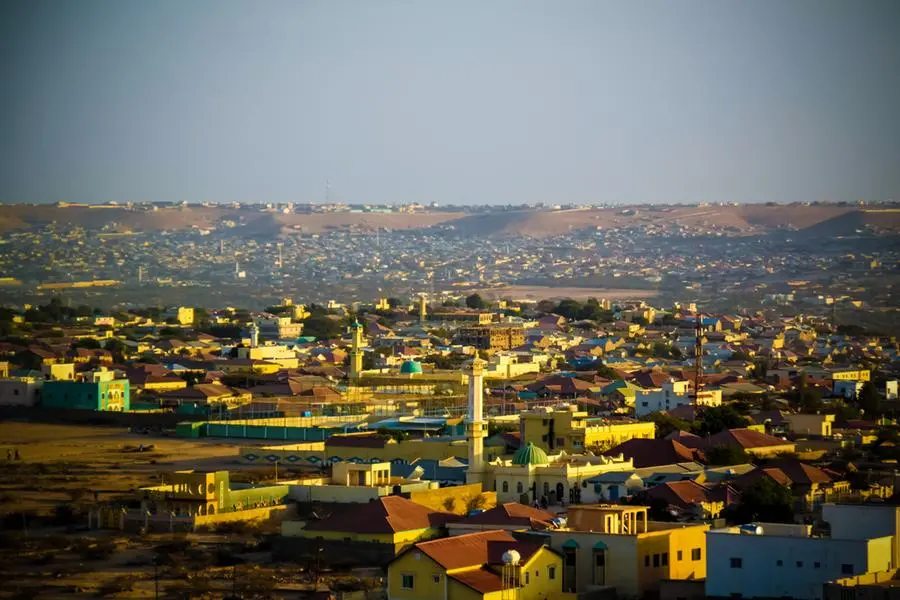
The National Secu- rities Exchange of Somalia (NSES) was launched on 19 June 2025. A coalition of local investors and financial experts established the exchange, which will start operating as a private, self-regulatory organisation. The Central Bank of Soma- lia has pledged full technical support to ensure it follows international best practices.
Speaking at the launch, President Hassan Sheik Mo- hamud of Somalia said: “So- malia is open for business and is open for everyone. Somalia has started launch- ing its stock exchange, where we hope soon there will be a market whereby the Somali people and our international partners can buy and sell the shares of their companies. That is the new Somalia on the horizon.”
Somali Prime Minister Hamza Abdi Barre said the NSES “marks a new dawn” for Somalia’s economy: “We are opening the gates to invest- ment, to entrepreneurship, to progress.” Somalia’s Finance Minister, Bihi Iman Egeh, was also present at the launch.
The move comes as Soma- lia embarks on broader struc- tural reforms to stabilise and modernise the economy. The new bourse will work with the Ministry of Finance and other government agencies to develop the policy and legal frameworks.
Exchange officials are drafting listing and compli- ance regulations and aim to get at least 10 firms listed in the next 2 years. The initial listing requirements were completed in January 2025.
The aim is to start trad- ing shares in early 2026. The NSES said it launched its market data and analytics platform in April 2025.
The NSES has appointed Yasin M. Ibar as CEO. He was previously CEO of the Somali Bankers’ Association. He said: “NSES will create opportu- nities for companies to ac- cess capital, for investors to support Somalia’s growth, and for our economy to inte- grate effectively into regional and global markets. This is more than just a market. It’s a chance to connect Somali businesses to global capital.”
The new bourse will target equity listings by telecom- munications, banking, real estate, energy and agricul- ture companies. It will pro- vide a platform for issuing government-backed, Shariah- compliant sukuk (bonds) to finance priority infrastructure and development projects.
Somalis living abroad may be a key pool of investors for the companies listed on the new bourse. A study by the Danish Institute for Inter- national Affairs reported: “Remittances sent by Soma- lis abroad are estimated at $1.4bn to $2bn a year. As circa 40% of all Somali households receive remittances, for food security, education, health, investments and emergencies, this constitutes an indispen- sable lifeline.” The NSES plans to launch financial literacy campaigns at home and in the diaspora.
This is Somalia’s sec- ond stock exchange, after the Somali Stock Exchange (SSE) was founded by the So- mali Economic Forum (SEF) and began selling its first shares on 1 September 2015 at the exchange’s offices in Ga- rowe, Mogadishu and Hargei- sa. It has 10 listed companies, according to its website. Its aim is to promote foreign direct investment (FDI) into Somalia and promote private sector development.
The SSE and its CEO, Has- san Dudde, organised a So- mali Capital Markets Fo- rum on 23 June, with a heavy focus on green finance, healthcare investment and the evolution of Islamic finance as a cultural and strategic as- set. These sectors are viewed as offering strong returns alongside social value.
The two Somali securities exchanges are among the nine members of the East African Securities Exchanges Association.
ETHIOPIA INVITES FOREIGN BANKS TO OPEN SHOP
The National Bank of Ethio- pia (NBE) issued a directive effective 25 June to allow in- ternational banks and foreign investors to apply for banking licences. This ends decades of isolation in which foreign banks were not allowed to compete in order to build the capacity of domestic banks.
The directive follows a Banking Business Proclama- tion (law) gazetted in March 2025 which formalises that foreign banks can establish a partially or fully owned sub- sidiary in Ethiopia, or open a foreign bank branch or a representative office. This law had been flagged for several years and was endorsed in draft form by the Council of Ministers in June 2024 and passed by Parliament in De- cember 2024.
Foreign banks and for- eign investors can also ac- quire shares in an Ethiopian bank. The direct sharehold- ing by a foreign strategic in- vestor should not consist of more than 40% of the Ethio- pian bank’s shares. Aggregate holdings by foreign nationals and foreign-owned Ethiopian organisations are limited to 49% of the shares. However, the NBE can allow exceptions involving 100% acquisition if it involves attracting stra-tegic investments to benefit the economy, or to resolve a distressed bank and keep the financial system stable.
Foreign banks are keen to join Ethiopia’s market. The 129m population is Africa’s second-largest and the econ- omy is growing fast. A na- tional strategy aims to boost the proportion of adults with a bank account from 45% in 2020 to 70% in 2025.
On 6 June, Kenya’s KCB banking group and the NBE said they were talking about the bank’s entry into the market, the follow-up to similar announcements since 2019. KCB operates in Kenya, Uganda, Tanzania, Rwanda, Burundi, South Sudan and the Democratic Republic of Congo, and has had a repre- sentative office in Ethiopia since 2015. KCB also operates non-banking subsidiaries in investment banking, asset management, and bancas- surance.
Banks headquartered in Egypt, Germany, Kenya, Mo- rocco, Nigeria, South Africa and Turkey are among those that have expressed interest or had representative offices, as well as the export-import banks of India and South Korea and the European Investment Bank. Egypt’s CIB (formerly Commercial International Bank) opened its representative office in 2019.
The change comes as part of wider changes to liberalise the banking sector and create a capital market. The govern- ment set up a reform commit- tee in 2023 to revise financial laws and open the sector to international investors. The NBE and other leaders have introduced sweeping reforms to tackle obstacles for foreign banks, such as the parallel market.
As of December 2024, Ethi- opia had 32 banks. The state- owned Commercial Bank of Ethiopia dominated the mar- ket in terms of total banking assets and deposits. In early July 2025 the CBE announced that its deposits had climbed to 1.69trn birr ($12.3bn).
WAEMU AGRIC COMMODITY EXCHANGE OPENS IN ABIDJAN
The first regional agricultural commodities exchange, situ- ated in Abidjan, Côte d’Ivoire, started trading on 30 May. The official launch of the Bourse des Matières Premières Ag- ricoles (BMPA CI) had taken place two days earlier.
The exchange took seven years to develop. It aims to offer transparency, structure and improved incomes to the farmers and agricultural pro- ducers in the eight countries of the West African Economic and Monetary Union (WAEMU/ UEMOA).
It replaces direct and infor- mal trading between buyers and sellers with a regulated platform that provides real- time information on supply and demand and publishes prices. The first three prod- ucts traded on the exchange are raw cashew nuts, cola nuts and maize – and other regional commodities could be added soon.
The regional exchange, Bourse Régionale des Valeurs Mobilières (BRVM), has been supporting the development of the commodity exchange. Edoh Kossi Amenounve (pic- tured below), Director General of the BRVM, said: “The first transactions that took place on the BMPA CI and the suc- cess of its first day of trad- ing suggest a bright future for this exchange, which, in the very near future, I am con- vinced, will rise to the top five of commodities exchanges in Africa.”
Within a few minutes of being launched, 48 tonnes of cashew nuts, 1 tonne of cola nuts and 40 tonnes of maize were traded, for a value of 30.8m CFA francs ($55,140). Transactions are conducted in standardised spot contracts.
Côte d’Ivoire is the world’s top producer of both raw cash- ews and cola nuts, producing over 1m tonnes of cashews and 250,000 tonnes of cola nuts every year. Maize is central in domestic food se- curity.
Raoul-Alex Zouzou, head of the African Commodities Brokerage House (ACBH), said: “With this receipt, producers will come and meet brokers to sell their produce online. From the exchange platform, the broker – who is also in contact with manufacturers, proces-sors and exporters and exporters – will off er these products to buyers.”
When a commodity ex change works well in Africa it off ers farmers up to date information on the markets and the value of their har vests, leading to fairer prices. The BMPA-CI off ers investors an asset class tied to agricul tural production in the region. It will help stabilise seasonal supply fl uctuations, especially in crops such as cashews.
Farmers deliver their crops to approved and certified warehouses in Korhogo and Bouaké, near production ar eas, and receive warehouse receipts, which serve as trans action documents on the ex- change.
The Warehouse Re- ceipt Regulatory Author- ity (Autorité de Régulation du Système de Récépissés d’Entreposage, ARRE) super- vises the certified warehouses with a total storage capacity of 500,000 tonnes.
The National Investment Bank (BNI Finances) manag- es the financial transactions, under an affiliated Agricul- tural Settlement Bank. The warehouse system guarantees the quality of the agricultural products in terms of grade, dryness and calibration.
There are three brokerage houses: the African Commodi- ties Brokerage House, the West African Commodities Market, and Raw Material Trading.
Market participants include agricultural commodity pro- ducers, cooperatives and other organisations, and industri- al producers of agricultural products. Market intermedi- aries are dealers, derivative traders, speculators, local and international buyers and ex- porters.
The largest of Africa’s 15 commodity exchanges is in South Africa.
ESX MONEY MARKET
ETHIOPIAN CAPITAL MARKET AUTHORITY GETS $400,000 AFDB GRANT
The African Development Bank’s multi-donor capital markets development fund has approved $400,000 in grant funding to the Ethio- pian Capital Market Authority (ECMA) and the Ethiopian Se- curities Exchange (ESX). The funds are to diversify product offerings and strengthen ca- pacity.
Programmes include es- tablishing a public news platform run by the ECMA to disseminate company infor- mation to investors and mar- ket intermediaries. The ESX is expected to expand its of- fers of products that could be traded to include exchange- traded funds (ETFs), sukuks and green bonds, according to the AfDB.
Ahmed Attout, AfDB’s Di- rector for Financial Sector De- velopment, said the grant was a major milestone in expand- ing the Capital Markets De- velopment Trust Fund outside West Africa. Previous AfDB support to developing Ethio-pia’s capital market includes help to develop the Capital Market Proclamation in 2021. The ECMA was also established in 2021 and the ESX was officially launched in January 2025 and saw its fifirst trade on 26 June.
ETHIOPIA SE CELEBRATES EQUITY TRADES
Both trading members of the Ethiopian Securities Exchange (ESX) take credit for the first equity trade on 26 June. “His- toric: CBE Capital Investment Bank successfully executed the first inter-broker stock trade on the new Ethiopian Securities Exchange (ESX), to- day, 26 June 2025. Trading is now Live!” said CBE Capital’s Zemedeneh Negatu (pictured below).
The inter-broker equity trade was also driven by the first stockbroker, Wegagen Capital. The shares traded were in Wegagen Bank S.C., the first company listed on the ESX.
The second listing on the ESX was Gadaa Bank S.C. on 23 June. The Ethiopian Capital Market Authority (ECMA) gave its formal approval of the Bank’s prospectus on 17 June 2025, clearing the way for the listing.
Gadaa Bank was founded in 2021 with 28,000 shareholders and got its operating licence in April 2022. It is the first in its peer group – banks with a relatively short operational history – to reach the listing milestone.
Wolde Bulto, CEO of Gadaa Bank, said that the listing would unlock capital forma tion potential and enable more tailored fi nancial services for customers. Hassen Hussien, the bank’s chairperson, af firmed the institution’s dedi cation to trust and corporate governance as central pillars of its growth strategy.
The ESX published a first trading report for the interbank money market covering the week 30 June-4 July. It provides its electronic trading platform to the National Bank of Ethiopia (NBE), which operates the lending market for traders at the commercial banks in or- der to boost financial liquid- ity. Trading is in overnight and 7-day loans between the banks.
According to the trad- ing report, nearly 9.7bn birr ($71.4m) was lent via the platform in five days in the week to 4 July. The weighted average lending rates for the week were equivalent to 12.0% annual for the overnight and 14.4% annual for the 7-day loans.
Trading started in October 2024, and by 4 July a total of 833.9bn birr ($6.1bn) had been traded on the ESX platform.
The ESX and the Interna- tional Finance Corporation (IFC) on 16 May announced a strategic partnership to devel- op the Ethiopian money mar- ket. A well-structured money market enables market-based pricing of short-term financial instruments such as treasury bills and commercial papers and boosts liquidity, trans- parency and confidence in the capital market.
NIGERIA’S GTCO LISTS ON LONDON SE
Nigeria’s Guaranty Trust Holding Company Plc (GTCO) listed its ordinary shares for trading on the London Stock
Exchange (LSE) from 9 July.
On 3 July GTCO announced that it had raised some $105m through an accelerated book- build offer launched a day earlier. Citigroup Global Mar- kets Limited (Citigroup) acted as sole global coordinator and sole bookrunner and the of- fer was mainly taken up by institutional and qualified investors.
GTCO is the holding com-pany of Guaranty Trust Bank Plc, Nigeria’s biggest bank by market value. The shares will continue to have a primary listing on the Nigerian Ex- change (NGX) under the ticker ‘GTCO’ and eventually they will be transferable between the two exchanges and set- tlement systems, subject to regulatory conditions.
After the offer, the hold- ing company issued nearly 2.3bn new ordinary shares at a reference price of N70.00 per share ($0.0459). The offer proceeds were better than the company’s $100m target. The bookbuild price represented a 15% discount to the price that GTCO shares were trading at on the NGX on 3 July.
GTCO and other banks are continuing efforts to recapi- talise to meet the Central Bank of Nigeria’s requirement that all lenders with interna- tional banking licences raise equity capital to a minimum of N500bn ($327m) by March 2026. (We reported the June 2024 share capital off ers by GTCO, Access Holdings and FBN Holdings in ABK’s Q3 2024 edition.)
GTCO has also given notice that it is to cancel the listing of its existing Global Deposi tary Receipts (GDRs), which were fi rst issued and listed on the LSE in 2007. Trading volume in the GDRs was low. Miguel Azevedo, manag ing director and vice-chair for investment banking, Middle East & Africa, at Citigroup Inc., said that the sale “effectively marks the reopening of international equity markets for non-South African sub-Saharan African issuers. Dual listing with London offers international investors better liquidity in the stock allowing for re- newed interest.”
Segun Agbaje, CEO of GTCO, said the listing in London represents a “pivotal moment in GTCO’s growth, reinforc- ing our position as a forward- thinking African financial services institution.”
ZIMBABWE STOCK EXCHANGE LISTS ON ITSELF
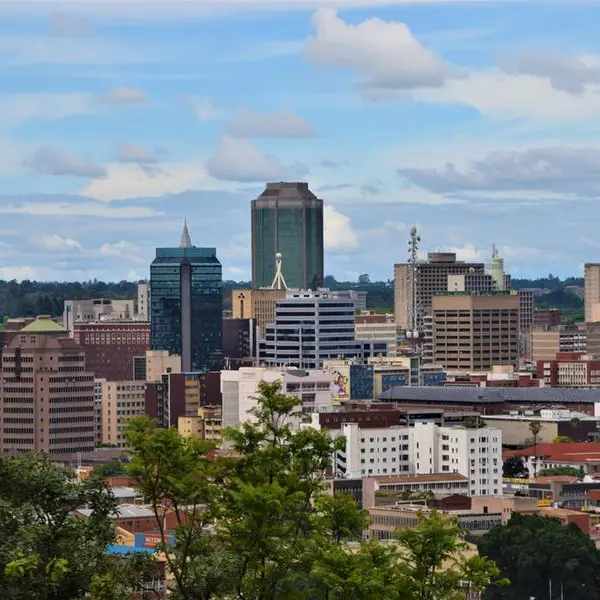
The Zimbabwe Stock Ex- change listed its shares for trading on its own trad- ing board on 9 July. Holding company Zimbabwe Stock Exchange Holdings Limited (ZSEHL) self-listed its shares by introduction, meaning that existing shares were listed without any capital raising or issue of new shares.
The restructure of ZSE Limited (ZSE) was approved by directors in September 2024 and by shareholders at an extraordinary general meet- ing (EGM) in October. In the restructure both ZSE and its Victoria Falls Stock Exchange Limited (VFEX) became sep- arate subsidiaries of ZSEHL.
The Securities and Exchange Commission (SECZim) approved the listing on 9 June.
The ZSE was founded in 1894, and the VFEX in 2020. ZSEHL’s top fi ve sharehold ers at 18 June were: Govern ment – 32%, FBC Securities – 10.26%, IH Securities – 8.79%, John Legat – 3.73% and Mark Tunmer – 2.26%.
Zimbabwe follows four other exchanges which have self-listed their shares for trading: South Africa’s JSE and the Nairobi, Dar es Salaam and Nigerian stock exchanges.
The first transactions that took place on the BMPA CI and the success of this first day of trading suggest a bright future for this exchange.
© Copyright IC Publications 2022 Provided by SyndiGate Media Inc. (Syndigate.info).